


Double 11 in 2025 data
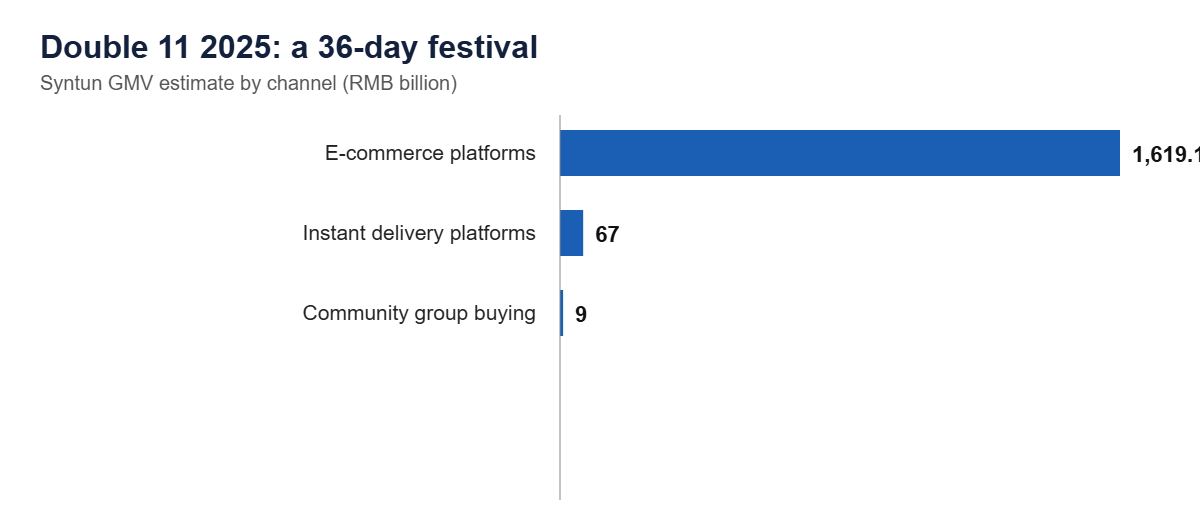
- Syntun estimated Double 11 2025 GMV at RMB 1,695 billion (about US$238 billion) over a record-long period from October 7 to November 11, reports TechNode Global.
- E-commerce platforms accounted for RMB 1,619.1 billion, instant delivery platforms RMB 67 billion and community group buying RMB 9 billion.
- Tmall Global welcomed more than 1,700 overseas brands from 43 countries and regions, with newcomers led by the US, South Korea, Australia, Japan and New Zealand, says Dao Insights.
- Nearly 600 brands passed RMB 100 million in sales on Tmall, and tens of thousands grew two to five times.
- Sentiment was described as muted, as The Star reported, since the festival lasted weeks and discounts spread across the year.
In 2014, the record was US$9 billion in 24 hours. In 2025, the festival is a five-week season and the headline number is almost impossible to compare.
When it started
The British Boxing Day and the American Black Friday were seen as the stars of global e-commerce sales events, but China took the limelight with Double 11, the yearly online shopping festival. In the first twenty minutes of November 11, Chinese buyers had already bought goods worth US$1 billion. The festival had only started a few years earlier, yet it showed an impressive retail organization and broke records every year.
In 2014, Alibaba announced more than US$9 billion of sales in the 24 hours of the festival, up 63% from 2013, and 46% of its transactions went through mobile. The event also proved that Chinese millennials’ opinions were decisive for the next trends in e-commerce. Western brands wanted a share of the profits and were adjusting their strategies.
The festival comes from Singles’ Day, and Alibaba ruled the event,, though it was still unknown in most Western countries.
What changed by 2025
- Length. Kuaishou started on October 7, Douyin and JD.com on October 9, Tmall on October 15 and Pinduoduo on October 16, so the shopping window was over a month long.
- Channels. Instant delivery from platforms such as Taobao Shangou, Meituan Shangou and JD’s service accounted for RMB 67 billion, a new layer that did not exist in 2014.
- Consumers. Buyers are more rational and look for experience as well as value, and the old frenzy has eased.
- Creators and AI. Coverage of the 2025 season noted that famous live-stream hosts stepped back while AI tools gained space in shopping assistants and product search.
- Foreign brands. More than 1,700 overseas brands entered Tmall Global, and even large names like Apple used creator live streams, with Apple’s Tim Cook appearing on a Douyin livestream in October to promote the iPhone Air.
Lessons for international brands
- Treat Double 11 as a planned season, with a start date, a product plan and a stock plan, not a last-minute discount.
- Choose two or three hero products and make clear offers. Complex discounts confuse buyers.
- Prepare the supply chain early. Delivery delays and returns hurt reviews after the peak.
- Use the pre-sale period to collect data, and warm up customers who joined groups or added products to carts.
- Protect the brand price. Deep discounts every year train customers to wait.
A planning calendar for a foreign brand
- Six months before. Choose products, check the registration and labeling rules, and sign with a local service partner for customer support and logistics.
- Three months before. Test content with creators, collect first reviews and set the price ladder for the pre-sale, the early bird and the final day.
- One month before. Brief creators, load stock to the warehouses, train customer service and prepare replies for the most common questions.
- During the festival. Watch stock and ad spend daily, move budget to what converts and reply to messages within minutes.
- After the festival. Handle returns quickly, collect reviews, ask buyers to join the brand’s group and plan the next sale.
Brands that follow a simple calendar like this tend to avoid the usual problems of stock-outs, late delivery and unplanned discounts. The festival then becomes a repeatable process instead of a yearly crisis, and the learning from each season feeds the next one.
The risk of dependency
Sales events can make a brand look healthy on one day and weak in the other months. A brand that makes a large part of its year in the festival must still fund traffic, warehouse. and customer service for weeks, and many small foreign sellers finish the season with low margins. Platform fees and ads also rise in the season, since all rivals bid for the same attention.
Daxue Take
We would consider these options, with their limits:
- If the brand is new to China, enter through a cross-border store and limit the first Double 11 to a test of two or three products.
- If the brand is established, add Douyin and instant delivery to the plan, as they are growing as sales channels.
- If the brand is premium, keep prices stable, and focus the festival on gifts and sets, which protect image.
- If the brand has weak stock control, use fewer products, because returns after the festival can erase the profit.
The limit is the quality of the data. GMV estimates come from third-party trackers and not from audited results, so brands should rely on their own sales data.
What to watch next
- Whether the festival shortens again or stays at five weeks.
- Growth of instant delivery inside the event.
- The role of AI shopping assistants.
- Our related reading on online shopping in China, online advertising and Suning.
FAQ
How big was Double 11 in 2025?
Syntun estimated GMV at RMB 1,695 billion, or about US$238 billion.
How long did it last?
From October 7 to November 11, about 36 days.
How many foreign brands took part?
More than 1,700 overseas brands entered Tmall Global from 43 countries and regions.
What happened in 2014?
Alibaba reported more than US$9 billion of sales in 24 hours, up 63%.
Is it still worth joining?
Yes, for tests and brand building, but with strict control of price and stock.
About Daxue Consulting
Daxue Consulting is a market research and strategy consulting firm focused on China, founded in Beijing in 2012, with offices in Shanghai, Beijing and Hong Kong. We have delivered more than 800 projects for international brands. To discuss e-commerce festivals in China, see our market research services or contact our team.