

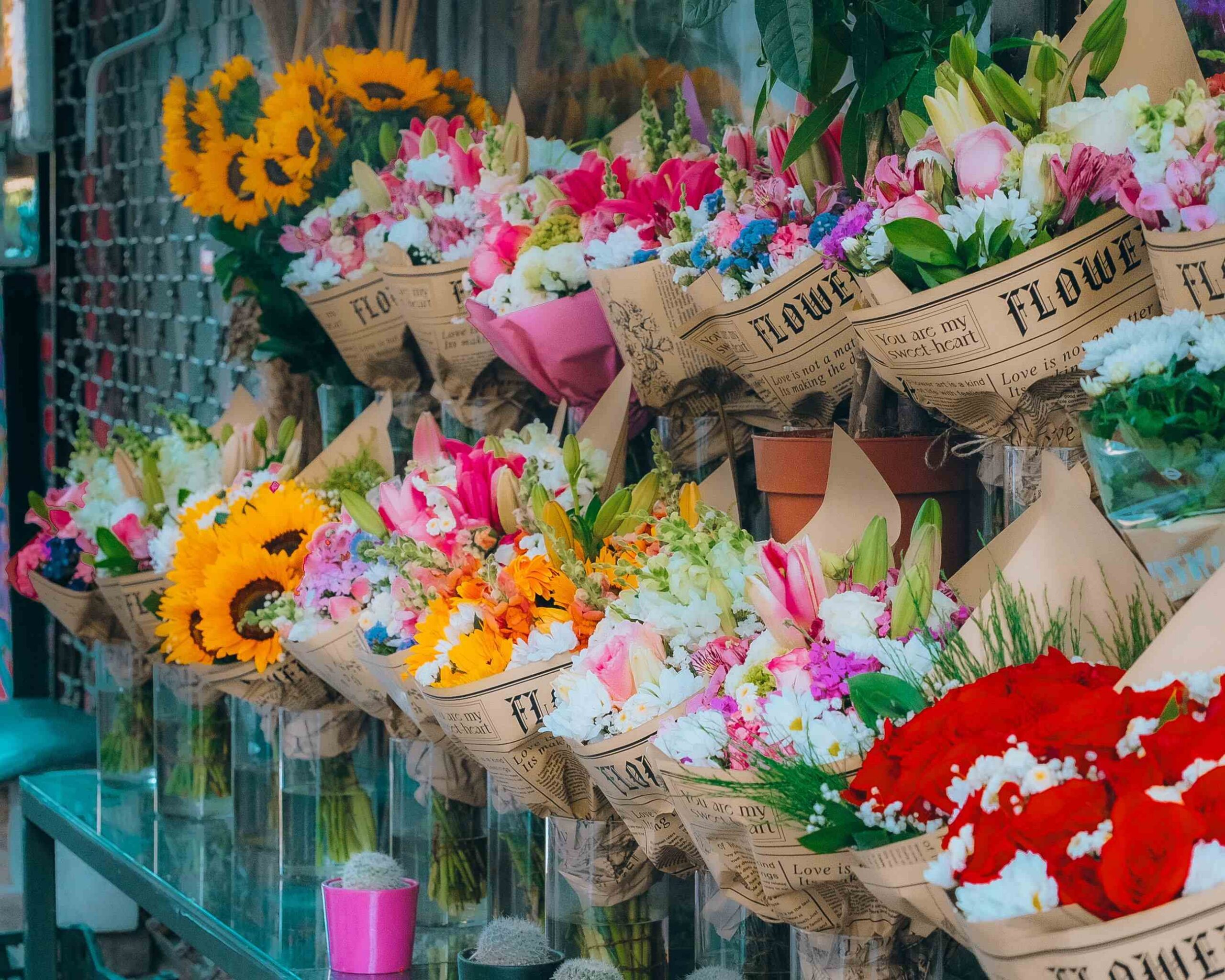
While flowers remain important within Chinese gifting habits, market growth is increasingly being driven by daily consumption. In China’s emotional purchase economy, flowers are playing a more important role in bringing comfort, happiness, and a sense of healing into everyday life. Consumers either gift flowers for themselves or for others on non-special occasions, creating small memorable moments. In 2024, the flower retail market reached RMB 220 billion (USD 32.5 billion), representing an 8% year-on-year growth. Fresh, personalized, and diverse flowers are very accessible, driving consumers to buy them conveniently online. In 2024, e-commerce generated about RMB 120 billion (USD 17.8 billion), accounting for about 55% of sales.
Instant retail is turning flowers into emotional takeout
In China, instant retail is shortening the flower buying journey, with Meituan Flash Purchase’s flower category GMV growing 15.7% year-on-year in 2024. A flower purchase can now move from impulse to search, payment, and delivery within roughly the same emotional moment, making flowers closer to milk tea, coffee, or dessert than to a pre-planned formal gift. Orders below RMB 50 have also become more important since 2020, with their transaction-value share increasing 1.5 times, showing how affordability is making flowers buying more repeatable.
Meituan’s role is strongest at the purchase and fulfillment stage, where speed, delivery certainty, and local coverage shape consumer expectations. The platform has more than 200,000 flower shops, covers around 3,000 counties, and offers an average 30-minute delivery, creating a channel where flowers can be bought with the immediacy of food delivery. This changes the competitive logic for florists: the bouquet still needs emotional value, but the transaction now also depends on whether it arrives quickly, looks fresh, and matches the online image.
Lower-tier cities are expanding the target audience
Flower consumption in China is spreading beyond tier-1 lifestyle consumers, with fifth-tier city flower transaction value on Meituan growing 24.6% year-on-year in 2024. Third-, fourth-, and fifth-tier cities together contributed more than one-third of flower transaction value, showing that the category is becoming more mass-market as delivery platforms lower access barriers. Women accounted for 50.5% of Meituan flower users, while under-30 consumers have become an important force, linking flower purchases more closely to mood, daily rituals, and affordable lifestyle upgrades.
Lower-tier consumers don’t demand the same products or price points as those in top-tier cities. When consumers buy flowers more often and through local delivery platforms, low-priced daily bouquets become more relevant than large ceremonial arrangements. Therefore, the market can grow even when flower purchases become smaller, more spontaneous, and less attached to formal gift occasions.
Xiaohongshu is shaping floral aesthetics before purchase
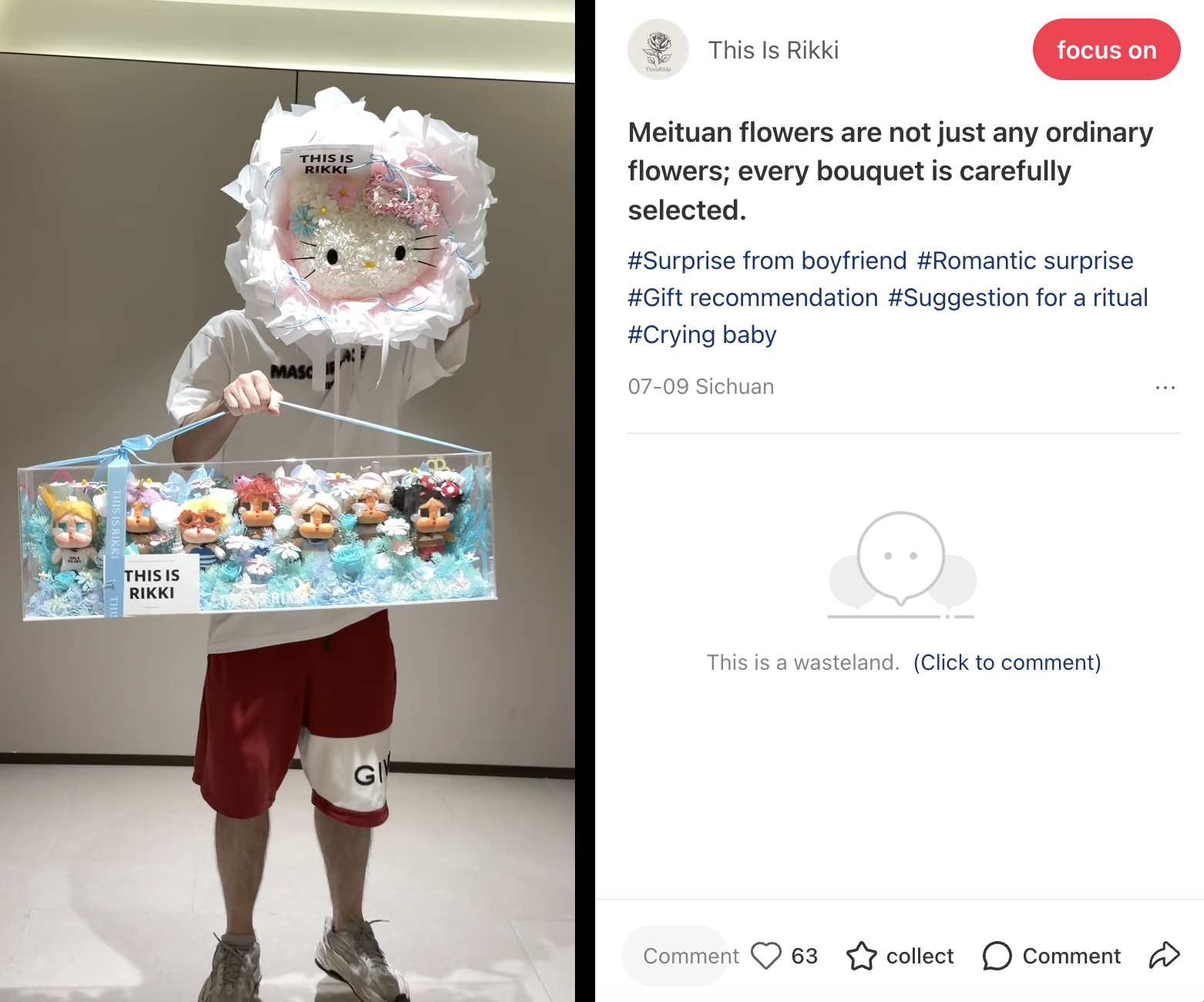
Xiaohongshu in China is becoming an important inspiration layer in the flower consumer journey, with more than 43,000 active flower and green-plant merchants on the platform by February 2025. Its flower and plant audience is highly aligned with the emerging consumer base: post-95 users account for 50% and post-00 users for 35%. Users search for bouquet references, home-flower setups, office plants, niche green plants, and “healing” flowers before deciding what looks tasteful enough to buy or share.
Social platforms are also changing what Chinese consumers consider visually desirable in floristry. Low-saturation colors, relaxed lines, niche flowers, and natural arrangements are gaining visibility. Flowers are therefore becoming a visual identity product, used in living rooms, selfies, WeChat Moments, and lifestyle content rather than only as a direct symbol of romance.
Creative Chinese-style bouquets are becoming holiday growth products
Holiday floristry in China is becoming more localized and playful, with new Chinese-style bouquets recording 1,709% year-on-year order growth during Valentine’s Day 2025 on Meituan Flash Purchase. Overall flower category sales on the platform grew 120% year-on-year during the same period, while toy bouquets and gift-related orders also rose 120%. Cultural elements, IP collaborations, plush toys, personalized names, and mixed gift sets are turning bouquets into designed experiences that carry both emotional value and social-media appeal.
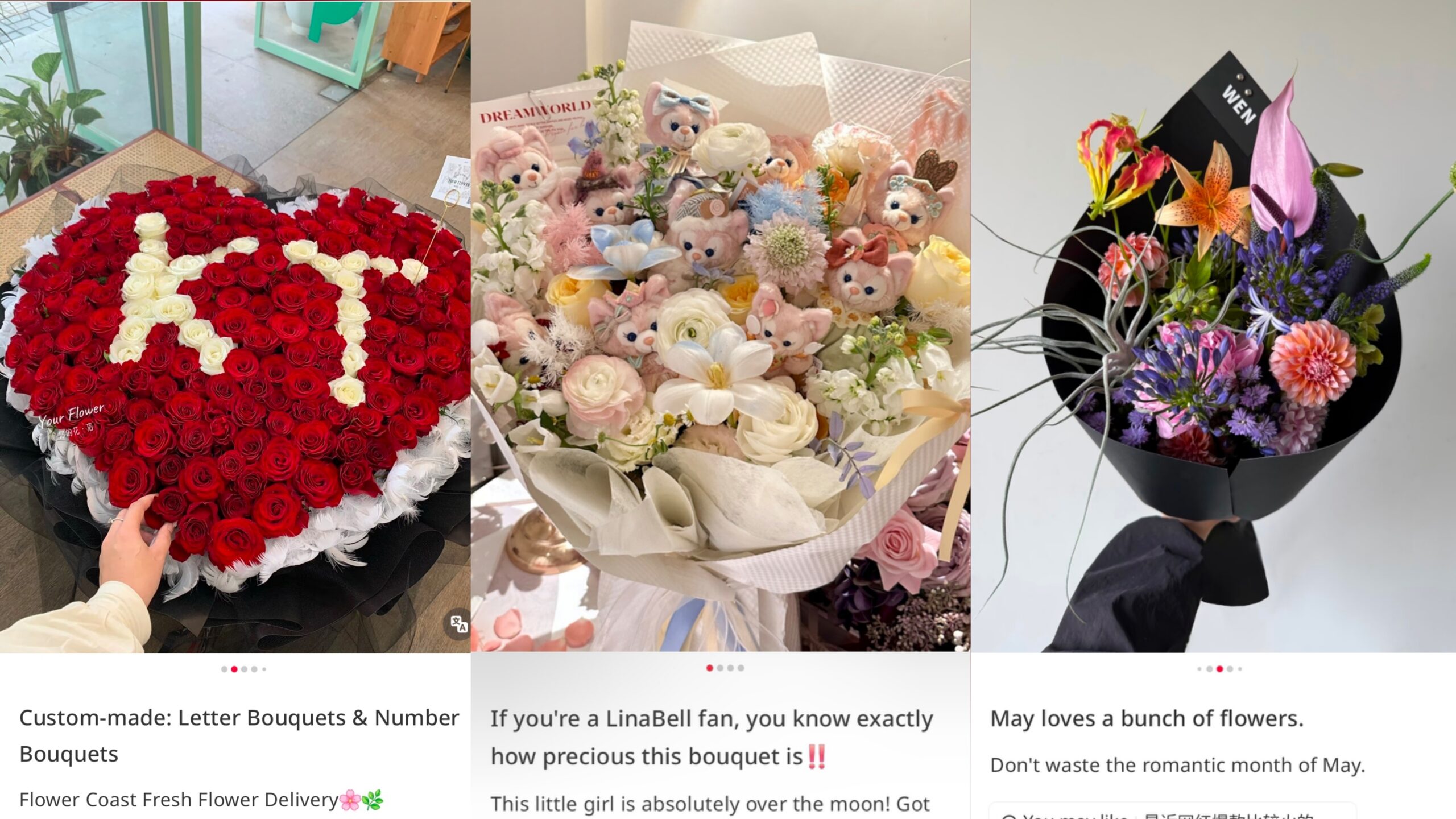
The rise of creative bouquets reflects a broader shift in Chinese gifting from symbolic flowers to personalized scenes. A bouquet can now combine fresh flowers with toys, chocolates, cartoon characters, museum themes, Guofeng colors, or custom details, giving consumers a gift that feels more specific than a standard rose arrangement. The strongest holiday products are those that can be photographed, recognized quickly, and linked to the recipient’s identity or the festival’s cultural mood.

Competition is shifting toward platforms and supply-chain capability
Competition in China’s flower market is moving from pure emotional branding toward platform visibility, delivery reliability, and supply-chain control, as earlier vertical flower e-commerce models face stronger pressure. FlowerPlus became a cautionary case in 2024 when its parent company entered bankruptcy liquidation proceedings, showing how subscription-based or traffic-led models can struggle when retention, freshness, and profitability become harder to balance. Local florists now compete across Meituan, Taobao/Tmall, Douyin, and Xiaohongshu, each of which plays a different role in discovery, conversion, delivery, and content.
Yunnan’s Dounan remains the backbone of China’s fresh-cut flower supply chain, with 14.176 billion stems traded in 2024 and transaction value reaching RMB 11.574 billion. Dounan has ranked first in China for both flower transaction volume and value for 25 consecutive years, while exporting to more than 50 countries and regions. Its role matters because more fragmented consumer demand requires a supply chain that can support both mass-market daily bouquets and more differentiated holiday products.
International suppliers remain relevant in premium, seed-bulb, and niche categories, although China’s domestic flower supply is becoming stronger. In 2024, China’s flower import-export trade reached USD 782 million, with exports rising 17.78% to USD 516 million and imports falling 2.16% to USD 266 million. The trade pattern shows a market where domestic production is becoming more competitive, while imported varieties and upstream categories still help shape higher-end and differentiated supply.
How China’s flower market grows as consumers seek emotional comfort
- In 2024, the flower retail market reached RMB 220 billion (USD 32.5 billion), an 8% year-on-year growth.
- Instant retail makes it a lot more accessible for consumers to get flowers on-demand. This has turned flowers into emotional regulators, like how desserts and coffee can work.
- In addition to gifting, flowers are lifestyle symbols. They can be used as home décor, for social media posts, or selfies.
- Lower-tier cities are becoming an important growth engine, supported by local delivery platforms.
- Xiaohongshu shapes floral aesthetics, while Meituan shortens the path from emotion to delivery.
- New Chinese-style, IP, toy, and personalized bouquets are making holiday floristry more localized and social-media-friendly.
- Competition is shifting from emotional branding alone toward fulfillment, freshness, platform operations, and supply-chain control.
Author: Sory Park, with additional research by Kate