
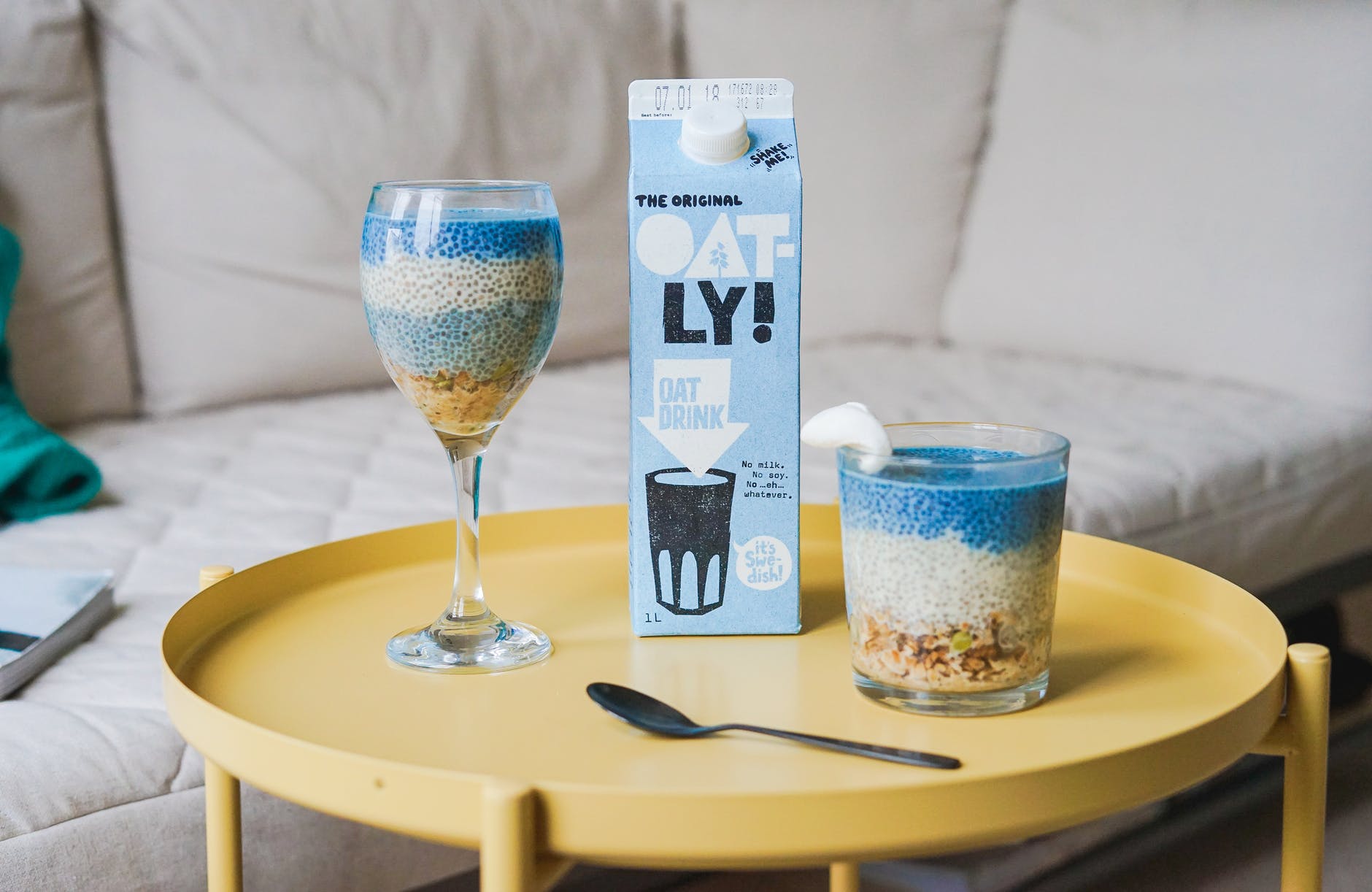
The oat milk market in China reached RMB 14.53 billion in 2024, up 35-fold from RMB 410 million in 2018 and reached RMB 20.98 billion in 2025. China’s broader plant-based milk market, including soy, almond, and coconut alternatives, grew alongside oat milk but at a slower rate. Lactose malabsorption is widespread among Chinese adults, creating a structural opening for dairy alternatives. Yet the growth did not come from targeting that population; instead, it came from coffee shops. When Oatly entered China in 2018, it built its approach around the Three One Strategy, targeting one product, one city, and one market segment, turning specialty cafés in Shanghai into the primary sampling network for the category.
Download our China F&B White Paper
China oat milk market size and growth (2018–2025)
| Year | Market Size (RMB 100 million) | YoY Growth Rate | Key Driving Factors |
| 2018 | 4.1 | – | OATLY entered China market; coffee channel breakthrough |
| 2019 | 6.9 | 68.3% | Gradual expansion of coffee channels |
| 2020 | 17.5 | 153.6% | Post-COVID health demand growth |
| 2021 | 42.3 | 141.7% | Capital influx; new brand explosion |
| 2022 | 65.6 | 55.1% | F&B channel stabilization; retail expansion |
| 2023 | 98.6 | 50.3% | Category diversification; price competition |
| 2024 | 145.3 | 47.4% | Tea beverages; functional product innovation |
| 2025 | 209.8 | 44.4% | Entering comprehensive functional innovation era; improving national daily dietary structure |
Foodservice accounts for 72% of Oatly’s Greater China revenue, and 73% of oat milk GMV on Alibaba in 2024 came from coffee and latte-related products, two different lenses on the market (one brand’s revenue mix, one platform’s sales mix), not a single number. Foodservice volume more broadly is expanding at 25 to 30% annually, led by barista-grade formulations. At the retail level, the picture is different: oat milk retail sales peaked at RMB 696 million in 2022 and fell to RMB 512 million by 2024, contracting in both 2023 and 2024. Retail represents roughly 3% of the total RMB 14.53 billion market by value, which is why its decline barely moves the overall growth figure: the category’s 44% expansion is driven almost entirely by the foodservice channel. That divergence between foodservice growth and retail decline defines where this market stands today, and where the next phase of competition is heading.
The oat milk market in China grew more from café shop counter instead of supermarket shelf
China’s coffee shop network gave oat milk its first mass audience. Luckin Coffee reported 93.1 million average monthly transacting customers in Q1 2026, up 25.3% year-over-year, with 33,596 stores across its network. The headline growth is real, but same-store sales at self-operated locations turned negative for the first time in three years, a signal that per-store productivity is flattening even as the network expands. Oatly built this channel deliberately, concentrating on Shanghai’s specialty cafés before expanding nationally. That focus on foodservice over retail explains the structural gap that still defines the market today, and Luckin’s own numbers suggest the coffee channel that built this category is entering a more competitive, lower-margin phase.
The reason consumers keep choosing oat milk, which has been the direct reason that oat milk market in China growth outpaced the total dairy market, is closer to identity than nutrition. Younger urban consumers in China increasingly associate plant-based drinks with modern, lifestyle-oriented choices rather than nutritional need. On RedNote (小红书) and Douyin (抖音), content creators built recurring scenarios around oat milk and coffee, reinforcing the category as part of how a certain type of urban consumer eats and presents themselves. An oat latte signals something in China that a regular dairy drink does not. Consumers did not seek out oat milk because they needed a dairy alternative. They encountered it in their café, saw it on their feeds, and it became part of a lifestyle they wanted to signal.

Oatly’s premium positioning in the oat milk market in China is colliding with market realities
Oatly remains the category leader, holding 62.9% of the oat milk market in China in H1 2025, a figure covering all channels, including foodservice, where Oatly dominates. Greater China revenue grew 13.1% to USD 130 million for the full year, and retail revenue, which had been declining industry-wide since 2022, grew 150% for Oatly specifically, a sign the company was taking share inside a shrinking channel rather than riding a broader recovery.
In Q1 2026, Greater China revenue fell 2.1% and adjusted EBITDA swung to a loss of USD 800,000. The cause was the cafés: coffee chains launched price wars and pushed back on supplier contracts. 72% of Oatly’s Greater China revenue depends on that channel, and cutting prices in response is not straightforward. The café is not just a revenue source. It is the mechanism that built oat milk’s lifestyle identity in China. Compromising on it to protect volume risks undermining the reason consumers choose the product.
Structural challenge: Domestic brands have grown by not competing with Oatly directly
Freenow(菲诺), known in China primarily as a coconut-milk brand before expanding into oat milk, grew its Alibaba platform GMV share from 2% to 7% between 2022 and 2024 by targeting the new-style tea drink channel at a lower price. TRU OUT (纯澳) reached 4% on the same platform through regional supply chain advantages. Note that these Alibaba GMV figures are not directly comparable to Oatly’s all-channel 62.9% share: the two domestic brands’ percentages reflect one retail platform only, while Oatly’s figure includes the much larger foodservice channel where it has no meaningful domestic rivals. Neither Freenow nor TRU OUT entered the premium coffee segment; both accumulated retail presence in the channel where Oatly’s premium positioning is hardest to defend.

The online storefronts make the strategy visible: Freenow and TRU OUT lean on member discounts and bulk subsidies to win price-sensitive volume, while Oatly’s Tmall presence leads with barista credentials and recurring-purchase positioning rather than discounting, which suggests that the same premium-versus-volume split playing out in foodservice, just visible at checkout.
China oat milk market share by brand (2019-2024)
| Brand | 2019 | 2020 | 2021 | 2022 | 2023 | 2024 |
| OATLY | 93% | 77% | 65% | 65% | 65% | 66% |
| Freenow (菲诺) | 2% | 6% | 7% | |||
| TRU OUT (纯澳) | 3% | 3% | 3% | 1% | ||
| Vita (维他) | 2% | 2% | 3% | 1% | ||
| Soyog (颂优乳) | 2% | 2% | ||||
| fix-x body | 2% | |||||
| Feichang Mai (非常麦) | 2% | |||||
| Other Brands | 7% | 23% | 30% | 18% | 18% | 15% |
Data source: White Paper of China Oat Milk Industry (中国调麦奶行业白皮书), designed by Daxue Consulting, Oat Milk Market Share By Brand In China (2019–2024)
Tier-one cities built the oat milk market in China, tier-three cities will decide how big it gets
Oat milk awareness in tier-one cities exceeds 70%. In tier-three and tier-four cities, it sits below 30%. That gap exists because the café-first strategy that built the category was concentrated in dense urban centers where specialty coffee was already embedded in daily life. The brands that built oat milk in China did so through channels that reached at most a third of the country’s population, and they did it well. The problem is that the market they built has started to plateau: the national retail decline noted earlier is concentrated almost entirely in the tier-one and tier-two cities where the category is already established, and the category cannot meaningfully grow further in cities that already know it.
What remains unreached is most of China. 1 billion people, representing 71.4% of the country’s total population, live in tier-three cities and below. Oat milk awareness in these cities sits below 30%, compared to over 70% in Shanghai and Beijing, which indicates a gap that defines where the category’s next phase of growth will come from.
These are not peripheral markets. According to Bain’s 2025 Chinese Shopper Report, tier-three to tier-five cities contributed 80% of China’s FMCG incremental growth in the first three quarters of 2025. Luckin Coffee, which ended 2025 with 31,048 stores after adding more than 8,700 new locations that year that increasingly concentrated outside tier-one, is already replicating in smaller cities the introduction mechanism that made oat milk mainstream in Shanghai. The window before these consumers form brand loyalties is short. The brand that enters these cities first does not need to build a market from scratch. It needs to show up before someone else does.
Key takeaways on the oat milk market in China
- The next phase of growth sits in cities where oat milk barely exists. 1 billion people, representing 71.4% of China’s population, live in tier-three cities and below, where awareness sits below 30%. Bain found these cities contributed 80% of China’s FMCG incremental growth in the first three quarters of 2025. The brand that builds recognition there first inherits a market that took tier-one cities seven years to create.
- The oat milk market in China reached RMB 20.98 billion in 2025, but the structure is lopsided. Foodservice accounts for 72% of Oatly’s Greater China revenue, and 73% of oat milk GMV on Alibaba comes from coffee-related products. The retail channel has been contracting since 2022.
- Consumers chose oat milk for identity, not health. The category’s breakout was driven by RedNote and Douyin content that framed the oat latte as a lifestyle signal for urban consumers, not by nutritional messaging. The product spread because it meant something, not because it solved a nutritional problem.
- Oatly holds 62.9% of the oat milk-specific market in H1 2025 but is the most pressured brand in it. Greater China revenue fell 2.1% in Q1 2026 as coffee chains entered price wars, and Luckin’s own customer numbers suggest the coffee channel that built the category is starting to mature.
Author: Ming Yii Lai, with additional research by Zekai Zhang