
Updated on 5 June 2026
Cheese found its Chinese consumers through children’s snacks and restaurants rather than the cheese course, and the leader that emerged is a Chinese company controlled by Mengniu.
By Daxue Consulting
Milkground (妙可蓝多), China’s cheese leader, made RMB 4.62 billion of cheese revenue in 2025, up 22.84% YoY and more than 82% of its total revenue of RMB 5.63 billion (National Business Daily (每日经济新闻), March 2026). Its main product is cheese sticks (奶酪棒) for children, sold to parents as a healthy snack.
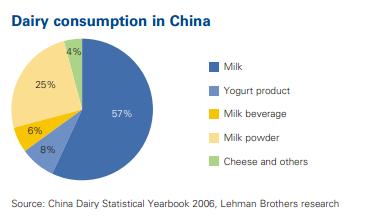
The category is still small. Cheese, butter and other processed dairy products make up only 7.3% of China’s dairy market (China Dairy Association, cited by National Business Daily). Imports keep growing: cheese imports in the first nine months of 2025 were 8.7% above the same period of 2024 (Daily Dairy Report via The DairyNews, November 2025). This analysis of the cheese market in China examines who buys cheese in China, how foreign and Chinese brands compete, and what this implies for international dairy brands and exporters.
| Daxue Overview |
|---|
| Market: processed dairy (cheese, butter, cream) is 7.3% of China’s dairy market. |
| Leader: Milkground, controlled by Mengniu: RMB 4.62 billion of cheese revenue in 2025 (+22.84% YoY). |
| Two engines: children’s cheese snacks at retail, and foodservice (pizza, Western fast food, bakeries, milk tea). |
| Foreign players: Fonterra (Anchor), Bel (La Vache qui rit), Savencia (President), Lactalis, Arla. |
| Next stage: cheese for adults, as a snack and for home cooking. |
Cheese market in China: key figures
Exhibit 1: A small category with a fast-growing local leader
| Indicator | Figure | Period | Source |
|---|---|---|---|
| Processed dairy share of China’s dairy market | 7.3% | Latest available | China Dairy Association via National Business Daily |
| Milkground revenue | RMB 5.63 billion, +16.29% YoY | 2025 | National Business Daily |
| Milkground cheese revenue | RMB 4.62 billion, +22.84% YoY | 2025 | Same |
| Milkground net profit | RMB 118 million | 2025 | Same |
| Cheese imports | +8.7% YoY | Jan-Sept 2025 | Daily Dairy Report via The DairyNews |
| Fonterra Greater China foodservice revenue | NZ$3.39 billion, +22% YoY | FY2025 | Beijing News (新京报) |
Source: compiled by Daxue Consulting.
Milkground built the category around children
Milkground built its success on cheese sticks, positioned as a snack with more milk protein and calcium than a glass of milk. Its range now covers cheese sticks, triangles, slices and butter, and it supplies restaurants: Yum China, owner of KFC and Pizza Hut, is one of its clients. Its 2025 net profit was RMB 118 million (National Business Daily).
Mengniu (蒙牛), China’s dairy giant, is the controlling shareholder and took full control of management, appointing former Mengniu executives as general manager and chief financial officer. Milkground has spoken of a RMB 10 billion revenue ambition. Its trajectory shows that Chinese parents bought cheese for their children before eating it themselves.
Four groups of buyers drive cheese demand
- Children. Cheese sticks and triangles are sold to parents as nutrition; parents look for high milk content, low sugar and short ingredient lists.
- Restaurants and bakeries. Pizza chains, Western fast food, bakeries and tea drinks with “cheese foam” (芝士奶盖) use large volumes of mozzarella, cream cheese and processed cheese. Fonterra’s Greater China foodservice business, built on Anchor, reached NZ$3.39 billion in FY2025 (see Fonterra in China).
- Young urban adults. They discover cheese through travel, social media and Western food, and buy it as a snack, for breakfast or for home cooking.
- Premium buyers. A small group buys French, Italian and Dutch cheeses at Sam’s Club, Ole’ and imported food shops, often to pair with wine.
Foreign brands are strong in foodservice and challenged at retail
- Fonterra (Anchor) leads in foodservice, supplying mozzarella and cream cheese to restaurants and bakeries.
- Bel (La Vache qui rit, 乐芝牛) competes in children’s and family cheese at retail and now produces locally in Shandong.
- Savencia (President), Lactalis and Arla sell imported and premium cheeses and supply restaurants.
At retail, they face Chinese brands with lower prices, faster launches and stronger e-commerce. In foodservice, quality, consistency and supply security matter more than price, which favours established exporters.
Exhibit 2: Cheese segments in China
| Segment | Trend | Leaders | Room for foreign brands |
|---|---|---|---|
| Children’s cheese snacks | Largest retail segment, maturing | Milkground, Chinese dairy groups, Bel | Medium: nutrition claims, trusted origin |
| Foodservice (pizza, bakery, tea) | Growing with Western food and tea drinks | Fonterra (Anchor), imported cheese | High: quality, consistency, supply |
| Adult snacks and home cooking | Early stage, growing | Chinese and foreign brands | High: new formats, recipes |
| Premium imported cheese | Small, urban | European brands | Medium: wine pairing, gifting |
Source: Daxue Consulting.
Cheese is sold through content on Xiaohongshu and Douyin
On Xiaohongshu, parents compare cheese sticks by milk content and sugar, and young adults share cheese recipes, “cheese tea” and baked cheese desserts. On Douyin, brands sell family packs in livestreams. On Tmall and JD, reviews decide which children’s cheese is repurchased. Foodservice also shapes taste: cheese in pizza, burgers and tea drinks introduces the flavour to consumers who would not buy a block of cheese. The adaptation of Western food to Chinese tastes is analysed in glocalization in China’s food and beverage brands.
How China’s cheese market has changed over the past decade
Exhibit 3: From expatriate shelves to children’s snacks and foodservice
| Early 2010s | Today | |
|---|---|---|
| Consumers | Expatriates, curious urban adults | Children (snacks), families, young adults; restaurants |
| Leader | Bright Dairy in processed cheese | Milkground, RMB 4.62 billion of cheese sales (2025) |
| Hero product | Processed cheese slices | Cheese sticks for children, mozzarella for pizza |
| Supply | Largely imported | Strong local processing; imports for foodservice and premium |
| Channels | Hypermarkets, imported food shops | Supermarkets, Tmall, Douyin, foodservice, Sam’s Club |
| Foreign brands | Testing the market | Strong in foodservice and premium; challenged at retail |
Daxue Take: implications for dairy brands and exporters
Cheese entered the Chinese diet through new uses rather than as it is eaten in Europe: parents bought cheese sticks for their children, restaurants put cheese in pizza and tea, and young people discovered it online. The window for foreign brands remains open because cheese is still a small part of Chinese consumption, but Chinese dairy groups now have the factories, brands and distribution.
- For exporters entering China, foodservice is the lowest-risk entry: restaurants, bakeries and tea chains buy volume and value quality and consistency more than brand awareness.
- For retail cheese brands, origin, milk content and short ingredient lists are the claims that resonate with parents. Competing on price against Milkground is difficult without local production.
- For brands targeting adults, home cooking and snacking are at an early stage. Recipes and content on Xiaohongshu are likely to build this segment, which favours brands with content budgets.
- For all foreign dairy players, Mengniu’s control of Milkground gives the leader the resources to grow quickly. Competitive plans that assume a fragmented market may need updating.
Questions for leadership teams: Is the brand’s China use case snack, ingredient or cheese course? Which foodservice chains could anchor volume? Can the price gap with Chinese brands be justified by origin?
What to watch next
- Milkground’s full-year 2026 results and progress toward its RMB 10 billion ambition.
- Cheese import volumes for 2026.
- New cheese formats for adults from Chinese and foreign brands.
- Cheese use in tea and bakery chains.
FAQ about the cheese market in China
Do Chinese people eat cheese? Increasingly. Cheese is still a small part of the Chinese diet, but it is popular as a children’s snack, in pizza and Western food, in bakeries and in “cheese foam” tea.
Who is the biggest cheese company in China? Milkground (妙可蓝多), controlled by Mengniu, with RMB 4.62 billion of cheese revenue in 2025.
What is the most popular cheese product in China? Cheese sticks for children, sold as a healthy snack.
Which foreign cheese brands are popular in China? Anchor (Fonterra), La Vache qui rit (Bel), President (Savencia) and imported European cheeses. Anchor is especially strong in restaurants.
Is the Chinese cheese market growing? Yes. Milkground’s cheese sales grew 22.84% in 2025, cheese imports rose 8.7% in the first nine months of 2025, and processed dairy products make only 7.3% of China’s dairy market.
About Daxue Consulting
Daxue Consulting is a market research and strategy consulting firm focused on China. For dairy brands and exporters, Daxue Consulting sizes cheese segments, maps foodservice buyers such as pizza and bakery chains, tests products and claims with Chinese parents and young adults, and tracks competitors on Tmall, Douyin and Xiaohongshu. Related analysis: La Vache qui rit in China. Learn more about our China market research and consumer research services, or contact our team.
Author: Daxue Consulting