
Updated on August 11, 2026
China imports far less wine than at its peak, but at higher prices per liter. The channels that sell it have shifted from banquets and hypermarkets to e-commerce, instant retail and membership stores.
By Daxue Consulting
China imported 207.2 million liters of wine in 2025, down 26.7% YoY, for a value of €1.26 billion, down 14.6% YoY, according to customs data analyzed by OIVE (Vinetur, March 2026). The average import price rose 16.5% YoY to €6.07 per liter. The decline continued in the first half of 2026, when bottled wine imports fell 14.6% YoY in volume but rose 1.9% in value (Jiemian (界面新闻), July 2026).
The scale is small for a country of 1.4 billion people. 207 million liters of imported wine is about 0.15 liter per person a year, or one glass. Imported wine in China remains a category of occasions and urban niches, which is why distribution choices matter more than national advertising.
Behind these figures, the buyer has changed. Premium wine demand was once driven by banquets and gifts paid for by organizations; it now depends on individuals who compare prices on their phones. This analysis of wine distribution in China examines how the end of banquet demand reshaped the market, how each distribution channel works today and what it implies for foreign wine brands and importers.
| Daxue Overview |
|---|
| Imports: 207.2 million liters (-26.7% YoY) and €1.26 billion (-14.6% YoY) in 2025; average price +16.5% YoY. |
| Origins: Australia 41% of import value in 2025, after China removed its duties in March 2024; France -18.8% YoY in value. |
| Demand: from banquets and gifting to small dinners, home drinking and lighter wines (white, sparkling, low alcohol). |
| Channels: e-commerce sets prices, instant retail delivers bottles, membership stores grow, hypermarkets and banquet venues decline. |
| Importers: fewer and more selective after waves of closures in 2014 and 2024. |
Wine distribution in China: key figures
Exhibit 1: Volumes fall while the price per liter rises
| Indicator | Figure | Period | Source |
|---|---|---|---|
| Wine imports, volume | 207.2 million liters, -26.7% YoY | 2025 | Customs data via Vinetur |
| Wine imports, value | €1.258 billion, -14.6% YoY | 2025 | Same |
| Average import price | €6.07 per liter, +16.5% YoY | 2025 | Same |
| Bottled wine imports | 141.7 million liters (-18.8% YoY); €8.49 per liter (+5.9% YoY) | 2025 | Same |
| Bulk wine imports | 65.4 million liters, -39.6% YoY | 2025 | Same |
| Australia | €515.6 million (-5.4% YoY), 41% of value, 34% of volume | 2025 | Same |
| France | €370.1 million, -18.8% YoY, second by value | 2025 | Same |
| Bottled wine imports | Volume -14.6% YoY, value +1.9% YoY | H1 2026 | Jiemian |
| Changyu wine revenue | RMB 2.14 billion, -12.3% YoY | 2025 | The Paper (澎湃新闻) |
Sources: as listed in each row; table designed by Daxue Consulting.
The end of banquet demand changed the buyer
On December 4, 2012, the Politburo adopted the Eight-Point Regulations (八项规定) against extravagance in official life, targeting public-funded dinners, official gifts and expensive alcohol (NBD (每日经济新闻), 2014). Import growth slowed from 50-70% a year to about 5% in 2013, and bottled imports fell 5.7% YoY in the first half of 2014. Sales of Changyu fell 23% in 2013, Dynasty 18% and China Foods, owner of Great Wall, 52% (The Drinks Business, January 2015).
A new directive in May 2025 again restricted alcohol at official meals. Treasury Wine Estates cited the shift away from banquet drinking when it cut its Penfolds growth outlook for China in October 2025 (Vino Joy News, October 2025). Wine was once bought by organizations to impress; it is now bought mainly by individuals for their own consumption.
Origin and tariffs concentrate the market
Australia took 41% of China’s import value in 2025, after China removed its duties on Australian wine at the end of March 2024 (Wine Australia). Bottled wine from countries with free trade agreements, such as Australia, Chile and New Zealand, enters at 0%, while wine from the European Union pays the 14% most-favored-nation rate. The gap is larger than it looks once taxes are added. Import duty, the 10% consumption tax and 13% VAT apply in sequence, so an EU bottle reaches the importer at about 43% above its customs value, against about 26% for an Australian bottle. On the same customs value, a French wine therefore starts roughly 14% more expensive before any distributor or retailer margin, a difference that weighs most in the mid-price bands where buyers compare. Domestic producers are also under pressure: Changyu, China’s largest producer, sells more than 80% of its revenue through 5,228 distributors and saw wine revenue fall 12.3% YoY in 2025 (The Paper).
Each distribution channel now plays a distinct role
E-commerce sets the reference price. JD.com, which sells wine through its own stores with a “zero counterfeit” promise, had Penfolds, Changyu, Great Wall and DBR Lafite at the top of its 2025 wine ranking. A sweet, non-alcoholic brand also reached the top five (Vino Joy News, February 2026). Douyin serves as a launch channel: Changyu’s low-alcohol white wine Changweimao (长尾猫) reportedly sold RMB 3 million in one day (Jiemian). When Great Wall and Changyu wines were served at a high-profile banquet in May 2026, their sales on JD Supermarket rose 15 to 19 times within 24 hours (Securities Market Weekly (证券市场周刊), May 2026). Some best-selling “Italian imported wines” on JD are bulk wines bottled in China (Vino Joy News), which shows how trust can be eroded online.
Instant retail delivers in minutes. Consumers order wine through delivery platforms such as Meituan, and some diners have bottles delivered to the restaurant rather than pay its markup (Vinetur, June 2026). Importers at a Vinexpo Hong Kong panel advised separate product ranges for instant retail, e-commerce and restaurants so that one channel does not undercut another.
On-trade builds brands but has shrunk. Premium wine now sells mostly in venues where spending exceeds RMB 2,000 per person (Vinetur, June 2026). Many wine-focused venues closed in 2024, including Ultraviolet by Paul Pairet in Shanghai, and Camel Hospitality Group closed all the restaurants it controlled (Vino Joy News, December 2024). Restaurants that remain have adapted: according to sommelier Lu Yang, some now price wine at about two times cost instead of three, use QR-code wine lists and accept guests’ own bottles (Vinetur).
Importers are fewer and more selective. China had more than 5,000 wine importers in 2012; almost 800 left the industry in 2014 (The Drinks Business), and nearly 800 wine companies were deregistered in 2024 (Vino Joy News). ASC Fine Wines returned to its founding St. Pierre family in June 2025 after 15 years under Suntory, with more than 1,200 labels (Decanter, 2025). Woolworths placed Summergate under review in 2023, including a possible closure (Vino Joy News, April 2023). Remaining importers tend to reduce stocks of mass-market brands and keep wines that are hard to find elsewhere.
Hypermarkets have become a support channel. Once the main off-trade channel for imported wine, hypermarkets have lost traffic to e-commerce and membership stores. They remain useful for entry-price wines and visibility in lower-tier cities.
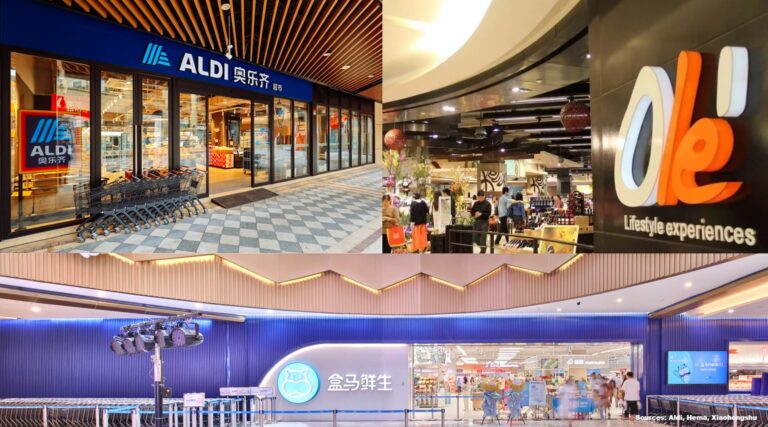
Membership stores are rising. Sam’s Club operates 67 stores in more than 30 Chinese cities, close to 500 front warehouses and a JD flagship store with more than 13 million followers. Costco has 7 stores (Jiemian, 2026). The model offers a small range, large volumes and sharp prices, with frequent reviews of slow sellers.
Exhibit 2: Wine channels in China differ in role and risk
| Channel | Current situation | Best suited to | Main risk |
|---|---|---|---|
| Banquets and gifting | Strongly reduced by the 2012 and 2025 rules | Top Chinese and iconic foreign labels | Policy, image |
| E-commerce (JD, Tmall) | Reference price for all channels | Known brands | Price wars, fake “imported” wines |
| Douyin and social commerce | Launch channel for new and light wines | Young buyers, new products | Short-lived hits, heavy discounts |
| Instant retail (Meituan) | Bottles delivered in minutes, including to restaurants | Mainstream wines in large cities | Undercuts restaurant prices |
| On-trade | Fewer venues, markups moving toward 2x cost | Brand building, premium wines | Unpaid invoices, closures |
| Importers and distributors | Fewer, smaller, more selective | Access to cities and accounts | Partner failure, stock |
| Hypermarkets | Support channel | Entry-price wines, lower-tier cities | Low margins, falling traffic |
| Membership stores | Rising channel | Value wines in volume | Delisting, price pressure |
Source: sources cited in this article; assessment by Daxue Consulting.
Known brands carry less risk for buyers
Chinese buyers have encountered too many unknown “châteaux” to trust a label alone, and known names reduce the perceived risk of a poor or fake bottle. Treasury Wine Estates keeps strict price discipline on Penfolds and acts against parallel imports to protect its value in China (Vino Joy News, 2025). Lighter styles are gaining: white wine consumption grew about 18% a year for three years. Buyers born after 1985 account for more than 47% of white wine buyers, according to a 2025 industry white paper quoted by Jiemian.
Exhibit 3: Leading wine brands use different routes to market
| Brand | Origin | Main route to market in China |
|---|---|---|
| Penfolds (Treasury Wine Estates) | Australia | Distributors and e-commerce; gifting and corporate occasions |
| Changyu (张裕) | China | More than 5,000 distributors, plus Douyin launches for light wines |
| Great Wall (长城, COFCO) | China | National distribution, official occasions, JD |
| DBR Lafite | France | Importers and e-commerce, top of JD rankings |
| ASC Fine Wines portfolio | Several | Importer-led, on-trade and premium retail |
Sources: Vino Joy News, The Paper, Jiemian, Decanter.
How wine distribution has changed over the past decade
Exhibit 4: From banquets and hypermarkets to price-transparent channels
| Early 2010s | Today | |
|---|---|---|
| Main buyer | Organizations, for banquets and gifts | Individuals, for dinners, home and outdoor occasions |
| Imports | Fast growth | 207 million liters in 2025, far below the 2017 peak |
| Restaurant markup | 250% to 300% over distributor price | Moving toward about 2x cost in some venues |
| Online | Specialist sites (Jiuxian, Yesmywine) | JD and Tmall set prices; Douyin launches; Meituan delivers |
| Importers | More than 5,000 (2012) | Fewer, smaller, more selective |
| Off-trade | Hypermarkets | Membership stores and e-commerce |
Daxue Take: implications for foreign wine brands and importers
- For brands planning China volumes, a plan built on individual consumers is more consistent with the data than one built on banquets, which are unlikely to return under current rules. Gifting can still matter for iconic labels.
- For brands without a known name, competing above mid-range prices is difficult; below it, bulk wine bottled in China sets the floor. Testing a price band in one or two channels before scaling reduces the risk of price conflicts.
- Where a brand depends on one importer, the partner’s financial strength is the first risk after two waves of closures. Checking how many active accounts the importer serves, in which cities and with what payment terms, is one way to assess it.
- For brands with white, sparkling or lighter wines, occasions such as dinners with friends, hotpot pairings or outdoor drinking may resonate more than regional education. The opportunity is strongest among younger urban buyers.
- For all brands, separate ranges for e-commerce, instant retail and restaurants, with monthly price monitoring, can limit channel conflict. A single deep discount on Douyin can undermine on-trade pricing.
Questions for leadership teams: Which price band and channel does the brand target first? How strong is the importer? How is price consistency monitored across platforms?
What to watch next
- China’s customs wine import data for the full year 2026.
- Further rules on alcohol at official meals.
- Membership store expansion by Sam’s Club and Costco.
- Results of Chinese wine producers and Treasury Wine Estates in China.
FAQ about wine distribution in China
How is wine distributed in China? Most imported wine goes through an importer, then regional distributors, to restaurants, shops, membership stores and online platforms. Delivery apps such as Meituan now bring bottles directly to homes and restaurants.
How did the anti-corruption campaign change the wine market in China? The Eight-Point Regulations of December 2012 cut public-funded banquets and gifts, which had driven premium wine demand. Import growth fell to about 5% in 2013, and almost 800 importers left the market in 2014. A new directive in May 2025 again restricted alcohol at official meals.
Which countries sell the most wine to China? Australia led with 41% of import value in 2025, ahead of France. Chile was second by volume.
What opportunities remain for wine exporters in China? They are concentrated in some wines and price points. Volumes have fallen, but the average import price rose 16.5% YoY in 2025, and white, sparkling and light wines are growing.
About Daxue Consulting
Daxue Consulting is a market research and strategy consulting firm focused on China. In wine and spirits, Daxue Consulting maps importers, distributors, platforms and membership stores, monitors prices online and offline, runs store checks and mystery shopping, and interviews buyers, sommeliers and consumers. Public case studies include interviews with 140 wine professionals in seven cities, a go-to-market study for a sparkling wine producer, mystery shopping for a wine wholesaler and in-depth consumer interviews for a cognac house. Learn more about our market entry strategy and consumer research services, or contact our team.
Author: Daxue Consulting