

The market for live performances in China continues to grow at a rapid rate as consumers demand experience-based activities. In 2024, the market size for music performances alone reached RMB 38.7 billion, growing 46.6% YoY, according to the 10th Music Industry Forum hosted by the Communication University of China. The sector’s resurgence can largely be attributed to a combination of pent-up consumer demand, an expansion of cultural spending, and a rise in experience-based consumption.
Download our report on young consumers in China

Today, live performances in China are increasingly diverse and are surpassing pre-pandemic volumes, reshaping domestic tourism patterns and youth culture, and redefining the nation’s experience economy.
A diverse consumer base with varying demands
China’s live performance sector is shaped by a diverse and rapidly evolving consumer base comprised primarily of Gen Z and young millennials. High consumer participation rates in fandoms and the prevalence of China’s idol economy fuel premium ticket purchases, high spending on merchandise, and repeated attendance. Younger consumers tend to gravitate towards platforms like Xiaohongshu (or Little Red Book in China) and Douyin for event discovery and social validation when creating digital content.
However, urban professionals and affluent families still represent another aspect of the consumer segment, delivering consistent demand for theater, musical, and culturally oriented performances with a focus on quality education. More traditional cultural performances such as opera tend to attract a more price-sensitive, older generation.
Live performances drive domestic tourism
The draw of popular domestic and international artists has led to an increase in concert-driven cultural tourism, with growing shares of consumers planning trips around performances. Thus, artists essentially uplift the local economies of the places that they tour. During his three-day tour in Nanning, singer Jay Chou attracted more than 140,000 attendees and generated roughly RMB 1.2 billion in revenue.
Additionally, festival culture has expanded beyond first- and second-tier cities like Beijing and Shanghai, as local governments in emerging-tier cities host festivals to boost tourism, GDP, and regional branding. By combining festivals with other experiences unique to the specific city or province, the festivals can promote the culture of the city and boost the local economy.

Types of live performances
The live performance industry in China is primarily driven by large-scale concerts and festivals, with the segment accounting for roughly RMB 29.6 billion in revenue in 2024. The number of medium and large-scale concerts and music festivals with over 2,000 participants has nearly doubled from 2019 to 2023.
Large-scale concerts dominate the market
Large-scale concerts are defined as concerts utilizing entire stadiums and arenas, featuring top-tier domestic or international artists such as Jay Chou, Mayday, TFBOYS, and Blackpink. These concerts typically boast very high production value with immersive effects such as LED lights, pyrotechnic effects, and augmented reality.
The prominence of these artists will often lead to rapid ticket sellouts within minutes or even seconds; tickets often have premium pricing tiers and options for VIP add-ons for the most devoted fans.
The explosion of the festival scene
Another driver of the prevalence of live performances in China has been a boom in the music-festival scene. Music festivals are typically multi-day, outdoor concerts featuring multiple stages and a lineup of prominent artists. These events are mainly youth-driven, with opportunities to showcase fashion on social media.
The expansion of festival culture has also led to a hybridization of genres and experiences — festivals are increasingly featuring artists from a variety of genres and are integrating other cultural elements such as art installations, yoga and meditation, and even half-marathons.
Prominent festivals include the Strawberry Music Festival, a diverse, multi-city festival often described as China’s Coachella; the MIDI music festival, considered the “godfather” of Chinese rock festivals; and the Modern Sky Festival, organized by a major independent music label featuring a wide array of artists.

Live houses center on affordability and authenticity
“Live houses” refers to small live-music venues, which are typically intimate concert halls, clubs, or bars that host smaller, underground or indie artists, niche genres, and touring musicians. These venues typically seat anywhere from a few hundred to less than a hundred people, offering a much more personal, authentic, and immersive live-music experience compared to large-scale concerts.
As a result of being smaller and more casual than traditional large-scale concerts, live house performances tend to be higher frequency with affordable ticket prices. The smaller scale also contributes towards showcasing more localized, community-driven performances, aligning with China’s movement towards distinctive regional and cultural pride. Many of these venues were also historically associated with underground music deviating from typical mainstream artists, thus contributing to the growing alternative scene among different subcultures in China.
While live houses elsewhere tend to be independent venues, the Chinese live house scene is seeing the rise of national chain brands such as MAO Livehouse, Modern Sky’s Taihe spaces, and Omni Space in Beijing expanding to other cities.
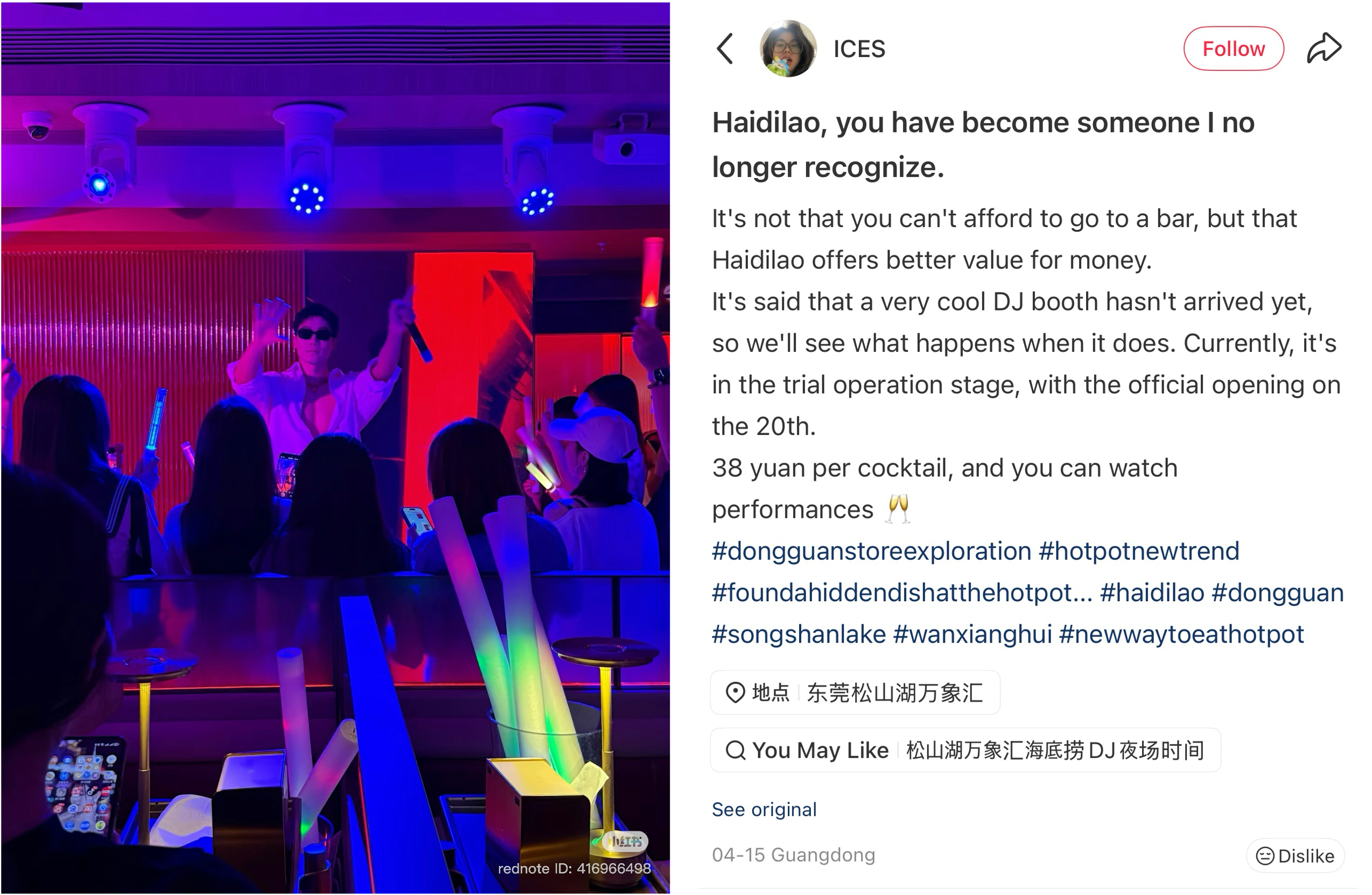
An example of a brand in the food and beverage industry in China is Haidilao. The hot pot brand is introducing “Hotpot Livehouse” concept stores, where it provides special late-night menus (including bullfrog and crayfish, and braised dishes), diverse craft beers, DJs, dance shows, and cocktail performances. They aim to tap into the Gen Z’s desire for emotional value, personalized social spaces, and multi-sensory nightlife through these immersive experiences.
Traditional performances are rooted in culture
The more traditional segment of live performances in China includes longstanding cultural art forms such as Peking Opera, classical Chinese music, and traditional and ethnic folk dances. The primary target of these performances is older audiences, tourists, and individuals seeking an experience rich in heritage and connection to Chinese history and identity.
Although these segments tend to grow slower than more contemporary concert and festival categories, they play an integral role in cultural preservation and tend to benefit from strong government support. Additionally, young Chinese consumers are increasingly valuing Chinese cultural heritage and prioritizing a connection with Chinese identity, as reflected by the rising prominence of the Guochao movement.

Key takeaways: Growing demand for diverse experiences
- Strong post-pandemic growth shows no sign of slowing down as consumers increasingly demand in-person cultural and entertainment experiences.
- Youth audiences are the main drivers of growth for the dominant concert and music festival sector within the live performance market. A combination of high digital engagement, fandom participation, and willingness to pay premium prices fuel rapid growth rates.
- The live performance sector in China is no longer only comprised of traditional performances. Growth is largely being generated by concerts and music festivals as opposed to the slower, steadier growth of the traditional performance sector.
- Beyond traditional concert venues, live performance spaces are becoming increasingly diversified. They include malls and commercial complexes, restaurants and themed cafes, and even cultural heritage sites and outdoor tourist zones such as Lijiang Ancient Town and Shanghai West Bund ice rink.
- Live shows are increasingly important drivers of domestic tourism, as consumers center trips around concerts and music festivals.