

Updated on August 10, 2026
More Chinese people exercise than ever, but the gym market is consolidating and Chinese equipment makers are moving up-market, which pushes premium brands toward hotels, residences, homes and wellness.
By Daxue Consulting
Technogym (泰诺健) supplied the equipment of the Beijing 2008 Olympic Games and has been selling in China for more than 25 years. In 2025, its global revenue was above €1 billion, up 13.1%, but Asia-Pacific grew only 5.3% to €128.7 million, about 13% of the total and the slowest region (Technogym FY2025 results, March 2026). The company does not give figures for China alone.
More people are doing sport: in 2025, 69.1% of Chinese people aged 7 and more exercised at least once a week, against 61.9% in 2015. But the number of small fitness studios went from 43,232 in 2024 to 18,646 in 2025, while fitness clubs went up to 38,523 (PEdaily (投资界), July 2026). In this article, we will see where Technogym is in this market, the competition from Chinese makers, and what it means for premium fitness and wellness brands.
| Daxue Overview |
|---|
| Company: global revenue €1,019 million in 2025 (+13.1% YoY); Asia-Pacific €128.7 million (+5.3% YoY). |
| Participation: 69.1% of Chinese aged 7+ exercised weekly in 2025, up from 61.9% in 2015. |
| Gym market: studios fell 56.87% in 2025 while clubs rose 34.31% YoY to 38,523. |
| Competition: Chinese makers such as Shuhua and Impulse, and connected home fitness. |
| Premium demand: luxury hotels, residences, corporate wellness, rehabilitation and fitness for older adults. |
Technogym in China: key figures
Exhibit 1: Participation rises while the gym market consolidates
| Indicator | Figure | Period | Source |
|---|---|---|---|
| Technogym global revenue | €1,019.3 million, +13.1% YoY (+14.6% at constant rates) | 2025 | Technogym |
| Revenue by region | Europe excl. Italy €479.7m (+15.3%); Americas €168.2m (+14.9%); MEIA €134.7m (+6.5%); APAC €128.7m (+5.3%); Italy €108.0m (+19.9%) | 2025 | Technogym |
| Revenue by channel | Field sales €691.2m (+15.9%); wholesale €230.0m (+6.7%); retail €34.1m (+40.7%) | 2025 | Technogym |
| People aged 7+ exercising weekly | 61.9% to 69.1% | 2015 to 2025 | General Administration of Sport, via PEdaily |
| People exercising three times a week or more | 33.92% to 38.52% | 2015 to 2025 | Same |
| Fitness studios | 43,232 to 18,646 (-56.87%) | 2024 to 2025 | Shanghai University of Sport and IWF report, via PEdaily |
| Fitness clubs | 38,523, +34.31% YoY | 2025 | Same |
| Lefit (乐刻) stores | More than 2,000; market share under 5% | Mid-2026 | PEdaily |
Sources: as listed in each row; table designed by Daxue Consulting.
Technogym’s position combines heritage with a slower China business
Strengths. With its Olympic history, its Italian design and a “wellness” positioning in line with the health trend in China, Technogym is a natural supplier for luxury hotels, premium residences, corporate gyms, rehabilitation centers and wealthy homes. Its retail channel grew by 40.7% in the world in 2025, so home and personal customers are becoming more important.
Constraints. In China, commercial gyms, the main clients of Technogym, are under pressure. Many low-cost chains buy cheaper Chinese equipment, and Chinese brands sell connected machines at lower prices. In 2025, Asia-Pacific was growing slower than every other region.
The gym market splits between low-cost chains and premium settings
Traditional big gyms and personal training studios are closing, and 24-hour and unmanned gyms are growing. If we put the figures together, the market got smaller: studios and clubs went from about 72,000 places in 2024 to about 57,000 in 2025, so around one place in five lost, while more people were doing sport. Sport is moving to fewer and bigger gyms, to outdoor activities and to homes. Lefit (乐刻), the biggest low-cost chain, has more than 2,000 stores but less than 5% of the market. It is making its gyms bigger, with up to half of the floor for strength training (PEdaily). For equipment makers, the mass market now means fewer buyers, bigger and more careful with prices, and premium demand moved to hotels, residences and homes.
Chinese equipment makers like Shuhua Sports (舒华体育) and Impulse (英派斯) first grew with exports and are now moving up-market in China, selling to gyms, schools and public fitness projects. Home fitness brands sell connected treadmills, rowing machines and smart mirrors online.
Exhibit 2: Fitness players in China compete on different models
| Player | Type | Strength in China |
|---|---|---|
| Technogym (泰诺健) | Italian premium equipment | Design, Olympic heritage, wellness, hotels |
| Life Fitness, Matrix | US and Taiwanese equipment | Commercial gyms |
| Shuhua (舒华), Impulse (英派斯) | Chinese equipment makers | Price, public projects, exports |
| Boutique studios (e.g. Supermonkey 超级猩猩) | Chinese studio chains | Classes, community, pay-per-class |
| Low-cost chains (e.g. Lefit 乐刻) | Chinese 24-hour gyms | Monthly fees, density |
Source: Daxue Consulting analysis.
Fitness content lives on Xiaohongshu and Douyin
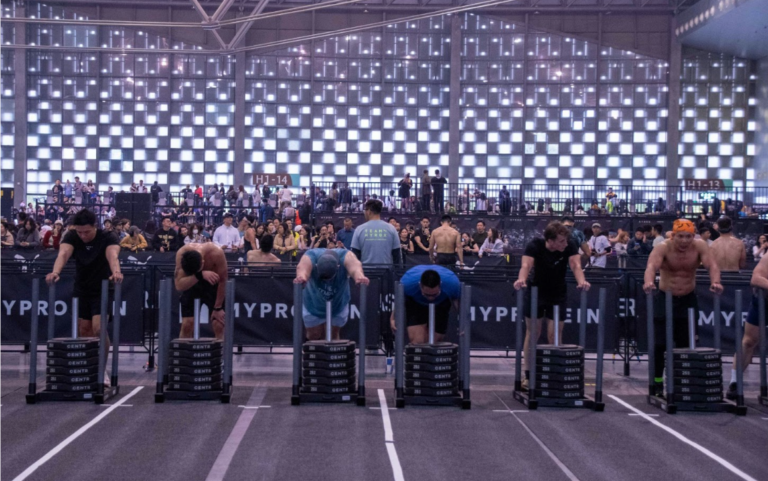
The WeChat account and mini-program of Technogym are for B2B customers, hotel partners and home buyers, and its official Tmall and JD stores sell home equipment. On Xiaohongshu, people talk a lot about home gym designs, luxury hotel gyms, pilates and strength routines, which fits well premium home equipment. On Douyin, fitness creators and training videos make the trends. Trends like Hyrox in China spread through these platforms.
How Chinese fitness has changed over the past decade
Exhibit 3: From an urban elite activity to a mass habit with new formats
| Early 2010s | Today | |
|---|---|---|
| Who works out | A small urban elite | A mass urban habit, from running to strength training |
| Where | Hotel gyms, a few large clubs | 24-hour gyms, low-cost chains, boutique studios, outdoor, home |
| Business model | Annual memberships, prepaid cards | Monthly and pay-per-class models after prepaid card scandals |
| Trends | Treadmills and machines | Strength, functional training, Hyrox, pilates, rehabilitation |
| Equipment | Imported brands lead the premium end | Chinese makers move up-market; smart and connected equipment |
| Media | Magazines, TV | Xiaohongshu, Douyin, Keep, fitness creators |
Daxue Take: implications for premium fitness and wellness brands
- For premium equipment brands, hotels, residences, offices, hospitals and wealthy homes care less about price than gyms. If the China sales of a brand still depend on commercial gyms, going to these segments may reduce the risk linked to gym closures.
- For wellness-positioned brands, the health trend in China is not only fitness, it also includes sleep, posture, rehabilitation and longevity. A wellness message using Chinese words will probably work better than only a performance message.
- For brands selling connected equipment, working with apps that Chinese users already use, like Keep and smartwatch platforms, will probably count more than their own software.
- For brands with medical credibility, rehabilitation and strength training for people over 55 are a premium niche in an aging population. But it needs partnerships with hospitals or rehabilitation centers.
- For all premium brands, Chinese equipment makers will probably continue to move up-market, like in cars and appliances. Design, data and service are where a brand can keep a lead.
What to watch next
- Technogym’s full-year 2026 results for Asia-Pacific.
- Closures and openings of gyms and studios in the second half of 2026.
- Growth of strength-focused formats in low-cost chains.
- Public fitness and silver-age health policies.
FAQ about Technogym in China
How long has Technogym been in China? More than 25 years. Technogym supplied the Beijing 2008 Olympics and equips gyms, hotels and homes.
How much does Technogym sell in China? Technogym does not publish its China sales. Its Asia-Pacific revenue was €128.7 million in 2025, up 5.3% YoY.
Who are Technogym’s competitors in China? International brands such as Life Fitness and Matrix, and Chinese makers such as Shuhua and Impulse, which are moving into higher-end equipment.
What fitness trends are growing in China? Strength and functional training, Hyrox-style races, pilates, rehabilitation and fitness for older adults.
About Daxue Consulting
Daxue Consulting is a market research and strategy consulting firm focused on China. For premium fitness and wellness brands, Daxue Consulting sizes B2B segments such as hotels, residences and rehabilitation centers, interviews buyers from hotel managers to gym owners, benchmarks Chinese and foreign competitors, and tracks fitness trends on Xiaohongshu, Douyin and Keep. Related analysis: sportswear brands in China. Learn more about our consumer research services or contact our team.
Author: Daxue Consulting