
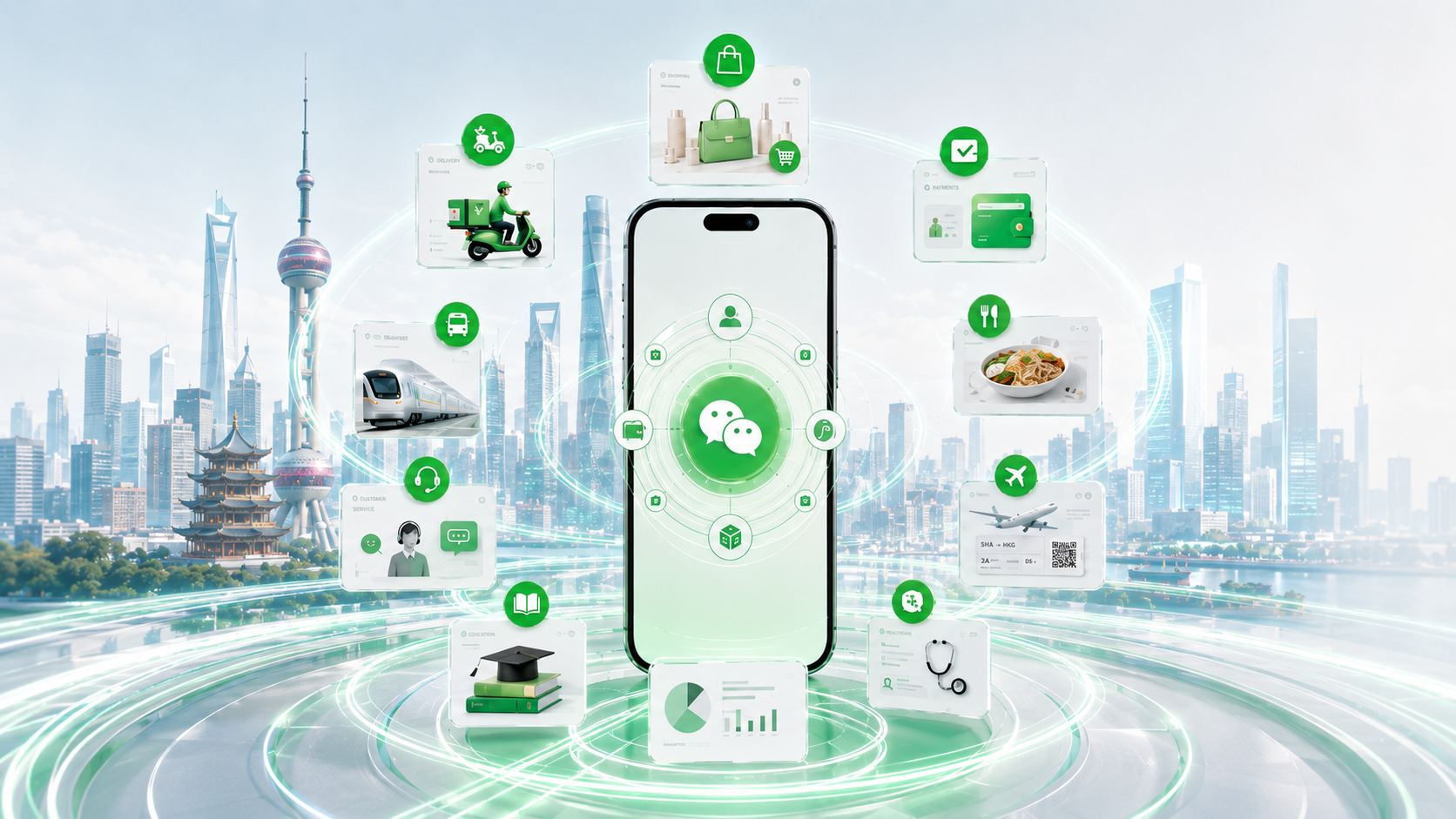
WeChat (微信) has evolved from a basic social messaging app into one of China’s leading digital ecosystems. Within this system, WeChat Mini Programs (小程序) act as a platform enabling companies and brands to connect directly with Chinese consumers. These Mini Programs provide an app-like experience seamlessly integrated into WeChat, which includes features like identity verification, payments, messaging, and content sharing. Instead of downloading separate apps or visiting websites, users can access a brand’s Mini Program via WeChat search, QR codes, shared links, Official Accounts, service messages, or in-store help. Inside the mini program, users can browse products, book services, pay, redeem coupons, join loyalty programs, and reach customer support, all within the WeChat environment.
WeChat’s growing infrastructure establishes the Chinese consumer market
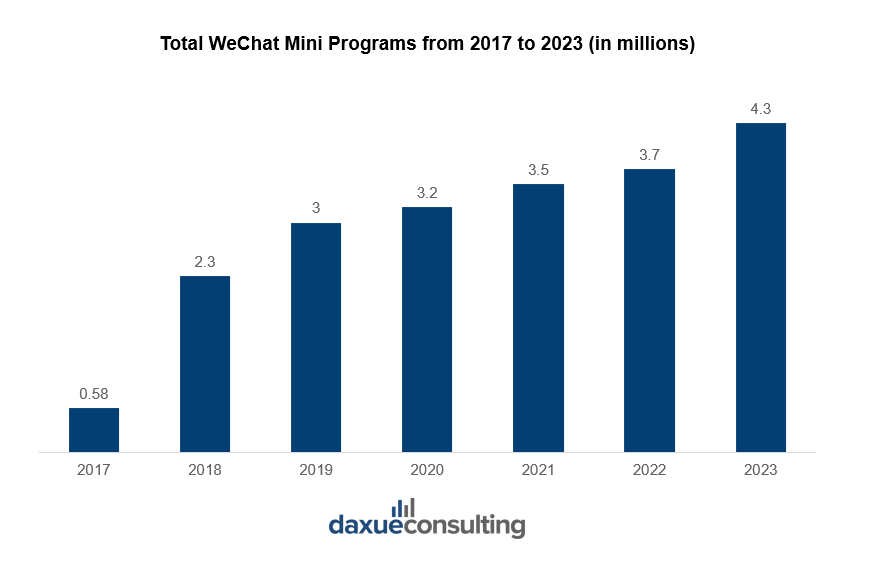
In 2023, there were over 4.3 million WeChat Mini Programs, making them a crucial platform for businesses, brands, and service providers. By 2025, the ecosystem had expanded to 100 countries and regions across 108 industry verticals, with cross-border transaction volume increasing by 70% annually, making Mini Programs an essential tool for international companies seeking to engage Chinese users.
From messaging to commercial convenience
Driven by globalization and increased international travel, Mini Programs have become a convenient and effective way for global brands and companies to establish and grow their presence in China. These efficient tools enable users to browse products, make payments, and access complete service systems without needing to download separate apps, making them a vital component of China’s digital commerce landscape.
Tencent’s financial data indicates that Mini Program marketing service revenue surged by roughly 50% year-on-year in Q2 2025, backed by closed-loop advertising systems that streamline the consumer journey from content discovery to final transactions. Meanwhile, revenue from WeChat Search marketing services grew by approximately 60% year-on-year. Fueled by strong adoption from both consumers and advertisers, WeChat’s Mini Program ecosystem delivers a fully controlled closed-loop marketing solution. It enables businesses to track the complete user journey from initial impressions to in-program transactions, allowing in-depth analysis of consumer behavioral patterns.
WeChat Mini Programs are assisting outbound Chinese travelers
WeChat’s Mini Program commercial influence extends far beyond domestic markets. In 2025, cross-border transaction volume on Mini Programs across 100 countries rose by over 70% year-on-year, empowering international brands to engage with domestic Chinese consumers and outbound WeChat travelers.
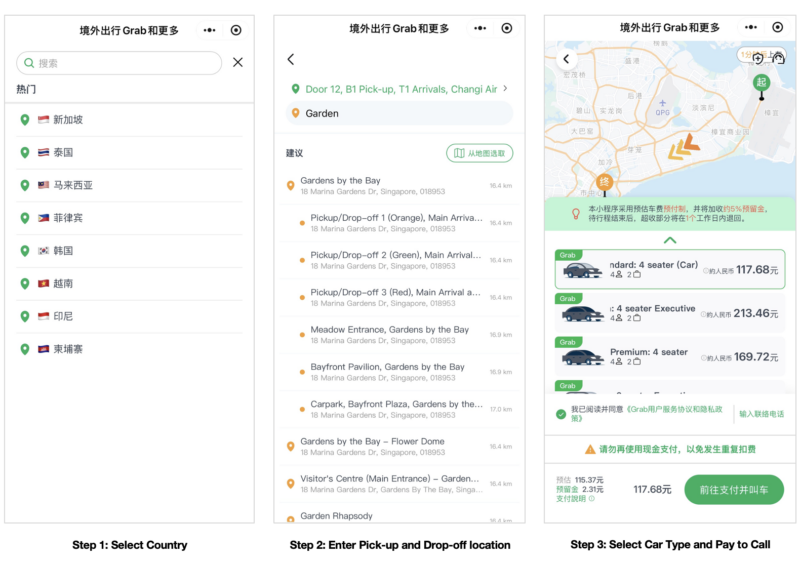
Cross-border Mini Programs facilitate direct overseas transactions without requiring users to download third-party applications or rebind payment cards. For instance, Grab, a leading Southeast Asian ride-hailing super app, has launched an official Mini Program. It enables Chinese travelers to book transportation services and complete payments seamlessly without additional app downloads. For WeChat users traveling in Southeast Asia, Grab’s Mini Program eliminates the hassle of new account registration, leveraging WeChat’s built-in identity verification and payment systems to deliver a frictionless user experience.
Integrated with WeChat Pay, in-program search functions, closed-loop advertising modules, cross-border transaction channels, merchant operation tools, and customer relationship management systems, Mini Programs create a highly streamlined and user-friendly digital experience.
For brands and enterprises, Mini Programs link all customer interactions to unified WeChat user identities, supporting the establishment of integrated and cohesive customer databases. Within a compliant framework that adheres to platform rules and regulatory requirements, businesses can comprehensively evaluate advertising performance, user engagement metrics, sales conversion results, and customer service efficiency all within a single unified ecosystem.
Mini Programs versus apps, marketplaces, Douyin, and RedNote
While standalone apps allow brands to have more control over design, features, and consistency, Chinese users are often hesitant to download an app unless they plan to use it frequently. Mini Programs, in contrast, are more accessible since they don’t require downloads and offer a smoother experience for accessing browsing, booking, payments, CRM, and loyalty systems. Nonetheless, because Mini Programs are integrated into the WeChat ecosystem, brands need to understand and follow the platform’s rules. That’s why many smart brands operate both standalone apps and Mini Programs to reach a wider audience and cater to casual users. Mini Programs are accessible and offer opportunities for conversion, but for long-term use, standalone apps are preferred.
How it works in conjunction with other apps
While WeChat Mini Programs can be viewed as lightweight applications, they cannot fully replace a brand’s standalone native app. Major e-commerce marketplaces such as Tmall and JD build inherent platform trust and deliver built-in shopping traffic, making them ideal for brands aiming for rapid scale. By contrast, Mini Programs function more like bespoke brand websites, relying far less on aggregated marketplace traffic and guiding the consumer journey directly to the brand’s own digital touchpoint.
Douyin (抖音) promotes content-driven user discovery through livestreams to boost brand traffic. While Mini Programs can utilize this traffic for final conversions, smooth handoff across platforms remains limited.
Xiaohongshu(小红书) functions similarly to Douyin in attracting traffic but also enhances social credibility through peer recommendations, genuine product reviews, lifestyle content, and organic search. Mini Programs act as the essential final step, converting this social trust into purchase intent and actual transactions.
Mini Programs provide opportunities to serve different business functions
Across millions of active Mini Programs, distinct vertical categories enable tailored business functions, allowing brands and institutions to deliver segmented, purpose-specific digital services beyond traditional e-commerce marketplaces.
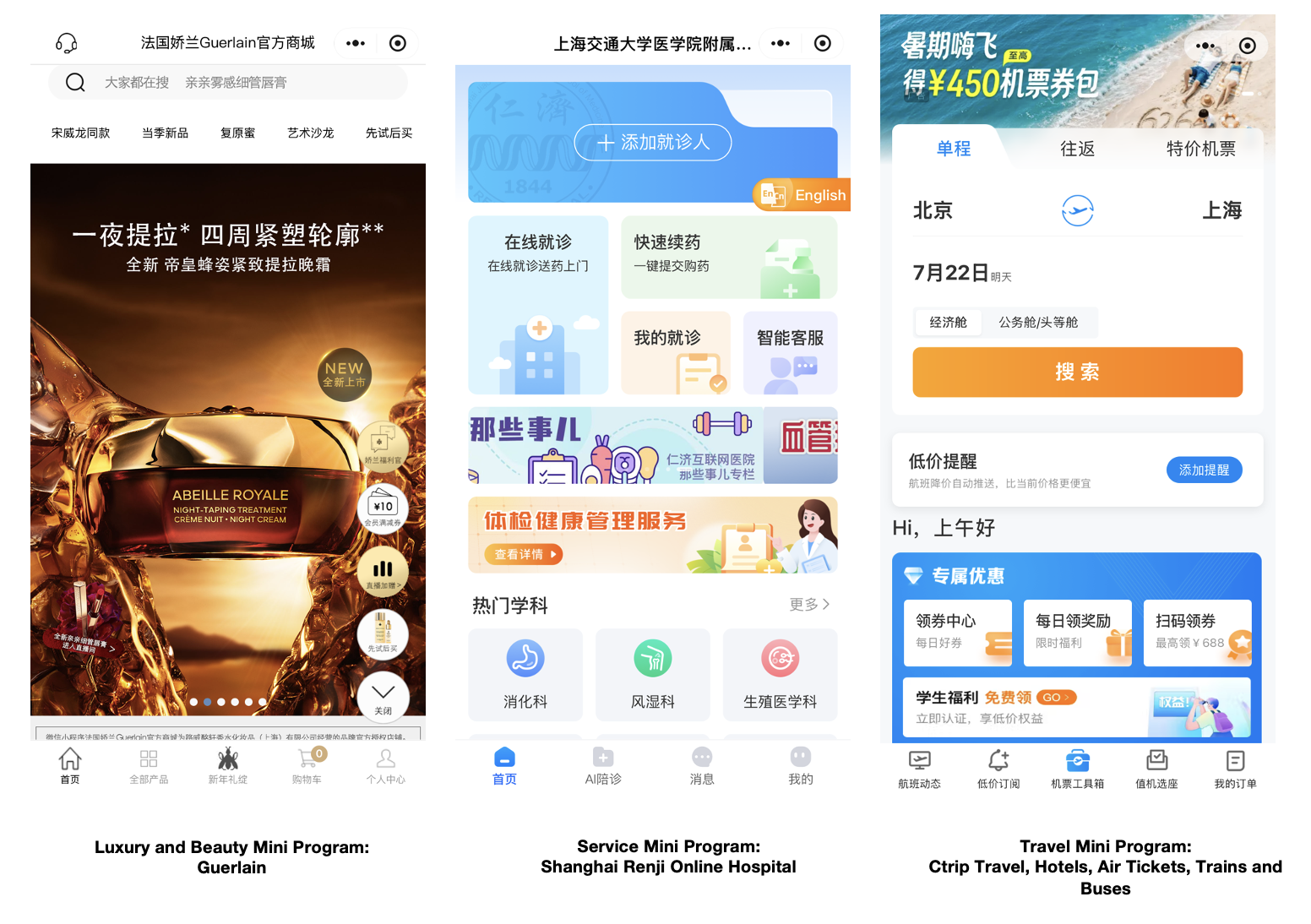
Retail Mini Programs grant brands full operational autonomy outside third-party platforms, supporting self-managed product catalogues, shopping cart functions, member coupon systems, independent checkout processes, refunds, after-sales services, and flexible delivery or in-store pickup arrangements.
Luxury and Beauty Mini Programs focus on immersive brand building and client relationship management, integrating brand storytelling, official promotional content, personalized product narratives, precision advertising, tiered loyalty programs, and exclusive one-on-one clienteling services.
Travel and tourism Mini Programs streamline user journeys by providing accessible, convenient booking systems for transportation tickets, hotel reservations, and travel-related services.
Education Mini Programs primarily support business conversion and user management through lead generation, course registration, secure payment processing, and real-time user communication channels.
B2B Mini Programs serve corporate and distributor ecosystems with comprehensive operational tools, including product catalogues, corporate event registration, dedicated distributor portals, professional sales kits, customer service submission forms, training resources, and centralized document access, simplifying collaborative and distribution-related workflows.
Lastly, Service Mini Programs cover public and professional sectors, offering streamlined digital access to transportation, healthcare, governmental affairs, financial services, logistics, and various specialized public utilities.
Adapting to Chinese mobile behavior
WeChat Mini Programs are specifically designed to align with local Chinese mobile consumption habits. They incorporate localized digital features like social gifting, a viral campaign format pioneered by WeChat, as well as private-domain operations, seamless user experiences, festival-themed marketing, integrated CRM functionalities, and full adherence to regulations.
Unlike Western digital ecosystems that rely heavily on public platform traffic, Chinese brands focus on cultivating private-domain traffic. They utilize Mini Programs, membership systems, dedicated customer service channels, WeChat group communities, coupon incentives, loyalty programs, and direct CRM communications to turn one-time visitors into long-term, engaged users. This forms a closed-loop user acquisition system: users discover brands through search results, ads, offline QR codes, social sharing, physical stores, or viral campaigns. Then, they browse products, book services, pay, redeem benefits, sign up, or request assistance within Mini Programs. These programs automatically log user profiles, membership statuses, coupons, purchase history, and service records. Brands reconnect with users through official notifications, loyalty rewards, seasonal campaigns, staff outreach, community updates, and personalized offers, encouraging repeat purchases, renewals, and referrals.
Pain points solved by WeChat Mini Programs
Mini Programs remove common obstacles found in Western digital platforms. Instead of lengthy email registrations, users can immediately access services using WeChat’s one-click login verification. Close integration with WeChat Pay simplifies transactions, eliminating the need to manually enter bank card details. The system supports smooth payments, refunds, coupon redemptions, and deposit settlements, while providing clear transaction records for both consumers and merchants.
Mini Programs naturally follow China’s seasonal consumption cycle. It allows brands to coordinate targeted marketing efforts around key shopping and cultural festivals such as 618, Double 11, Chinese New Year, Qixi Festival, 520 Valentine’s Day, National Day, and brand anniversaries. They support features like exclusive coupons, social gifting, limited-edition product releases, and member-only events. Brands can easily share direct Mini Program links for instant redirection, facilitating quick, targeted marketing and immediate conversions.
WeChat’s service message system functions as a simple CRM channel. It guides users to Mini Programs for instant order updates, event invites, after-sales support, and direct chats with brand sales consultants. This ongoing interaction enhances user retention and post-purchase engagement.
All Mini Program commercial activities are conducted and maintained in strict accordance with China’s Personal Information Protection Law (PIPL). The standardized Mini Program architecture guarantees secure transactions, consistent data handling, and strong consumer data protection, facilitating legally compliant and reliable brand operations in China’s digital market.
Saas ecosystems: Developing the mini program infrastructure
WeChat Mini Program development and commercial scaling is largely powered by professional developers and domestic SaaS ecosystem providers. While brands define strategic positioning and operational frameworks, third-party developers and SaaS vendors build, customize, and activate core Mini Program functionalities, including storefront layouts, booking systems, membership and loyalty mechanisms, and end-to-end CRM workflows.
The Mini Program infrastructure operates under a three-tier development structure tailored to business scale and operational complexity:
1. Custom-built Mini Programs for luxury brands and large enterprises provide bespoke, tailor-made architectures with exclusive UI design, private domain customization, advanced CRM integration, and brand-specific operational logic to support premium brand positioning and high-standard user experience.
2. Another approach involves using professional SaaS platform solutions tailored for SMEs. Providers like Youzan (有赞) and Weimob (微盟集团) supply standardized yet adaptable modules designed for retail, service, and e-commerce sectors. These platforms help small to medium merchants by offering pre-built store systems, payment integration, marketing tools, and membership management features, reducing technical hurdles.
3. Lastly, the free and lightweight Mini Program tools for small local shops provide simple, affordable templates with core features like transactions, display, and coupons. These tools enable grassroots merchants to quickly introduce online services without needing complex technical investments.
Mini-program as a B2B industry accelerator
Leading Chinese SaaS players including Youzan and Weimob dominate the Mini Program commercial infrastructure space, specializing in WeChat-native e-commerce and CRM ecosystems. These platforms significantly reduce entry barriers for SMEs, retailers, and local service merchants, enabling broader participation in the Mini Program economy. Youzan alone supports more than 300,000 Mini Programs, covering full-cycle services from official launch and interface configuration to payment docking and functional iteration.
Nevertheless, inadequate or low-quality SaaS implementation brings substantial operational risks beyond conventional security vulnerabilities. Poorly structured system design often creates data silos, ineffective user segmentation, and fragmented CRM integration. Disconnected user data across touchpoints weakens brands’ ability to analyze consumer behavior, execute precise marketing, and maintain consistent private-domain operations, ultimately limiting conversion efficiency and long-term user value cultivation.
Insights into the WeChat Mini Program ecosystem
- Mini Programs are tied to functional conversion, integrating advertising, search, browsing, transactions, payments, and after-sales into a single user journey.
- The Mini Program allows various industries to tailor their Mini Programs to suit their specific needs, whether for storytelling in retail and luxury, enhancing accessibility in F&B and travel, or providing convenient CRM solutions in B2B and service sectors.
- The practicality and convenience that the Mini Program offers for selection, purchase, and payment bolster its credibility compared to traditional apps and websites.
- The Mini Program relies on WeChat’s existing ecosystem, and its usage depends on traffic, services, operations, payment integration, CRM, compliance, and secure commerce execution.
- To ensure proper mini program execution, the infrastructure development phase is vital; the marketplace UX is intuitive; payment integration functions; the CRM is well maintained; and security and compliance are followed. All of this depends on the quality and credibility of the SaaS and the vendor.
Authors: Ming Yii Lai, with additional research by Kyle Gumangan