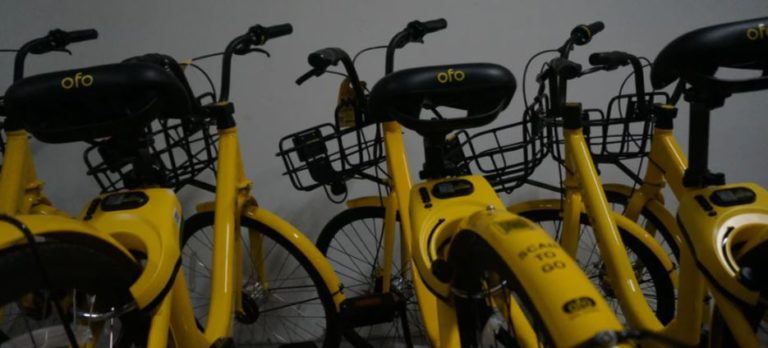


The bicycle market in China has moved beyond basic transportation to a mature and highly diversified market defined by premiumization, stricter safety regulation, and the emergence of lifestyle-oriented cycling communities. In 2025, China’s total two-wheeler sector reached approximately 580 million units, including more than 200 million traditional bicycles and 380 million electric two-wheelers, reflecting the enduring role of cycling in urban mobility.
Download our report on how young Chinese Consumers are Finding Themselves

This immense installed base signals a decisive shift toward stock-based replacement competition, where market momentum is increasingly driven by upgrades rather than first-time purchases. The industry’s domestic scale is also mirrored in its global reach, with Chinese e-bike exports rising 12% year-on-year to reach 4.67 million units in 2024.
Within this new operating logic, cycling is being reframed as both a lifestyle activity and a technology-integrated mobility solution. Urban congestion, rising health awareness, and outdoor recreation trends are reshaping consumer expectations. As a result, brands now compete in a far more complex landscape where success increasingly depends on aligning product innovation, regulatory compliance, and cultural positioning rather than simply expanding sales volume.
How Chinese bicycle exports continue to grow despite global trade barriers
China’s bicycle industry continues to demonstrate notable production and export resilience. In 2024, the national bicycle output reached 99.54 million units with YoY growth of 0.4%, maintaining steady expansion even as international markets grappled with excess inventories and rising trade barriers. Tariff pressures have intensified, most notably with the United States imposing duties of up to 100% on Chinese electric bicycles.
Rather than contracting, Chinese manufacturers have responded by recalibrating their export strategy. Shipments increasingly target alternative markets such as Southeast Asia and Canada, allowing producers to offset declining demand in traditional Western destinations. As a result, exports of traditional bicycles rose by 20.7% YoY in 2024, generating approximately USD 2.66 billion in revenue.
In Q1 2025, bicycle exports to Canada rose by a massive 117.5%. This was, however, not a random anomaly. Largely influenced by severe US Section 301 tariffs that drastically raised duties on Chinese two-wheelers, manufacturers executed a rapid strategic pivot. By actively diversifying their export dependencies away from the United States (which saw a 17.1% decline) and pushing into alternative markets like Canada and Indonesia, Chinese brands successfully maintained their overall export growth momentum despite a hostile global trade environment.

At the same time, the domestic market is undergoing a deeper transformation. Growth is no longer driven primarily by sales volume but by structural upgrading across the value chain. Chinese consumers are increasingly gravitating toward high-performance road and gravel bicycles, pushing average transaction values upward and shifting competition toward advanced engineering features such as carbon-fiber frames and electronic shifting systems.
How government policy is accelerating the upgrade cycle in China’s e-bike market
The electric bicycle market in China is increasingly defined by policy-driven restructuring. In recent years, regulators have sought to address safety concerns linked to aging lithium-ion batteries while simultaneously stimulating domestic consumption. A central instrument in this effort has been the nationwide consumer goods trade-in program (以旧换新), which encourages households to replace outdated vehicles with safer and more technologically advanced alternatives. The policy generated significant retail momentum, with 8.47 million new electric bicycles sold through the program during the first half of 2025.
Regulatory tightening has reinforced this upgrade cycle. The implementation of the GB 17761-2024 national safety specification introduced stricter requirements for battery safety, vehicle design, and production standards. The result has been a rapid consolidation of the industry. Smaller assemblers lacking compliance capabilities have gradually exited the market, while leading domestic manufacturers such as Yadea, Aima, and Tailg have expanded their dominance, collectively accounting for more than half of national sales.
Within this new regulatory environment, competition is shifting away from price and toward technological differentiation. Manufacturers are increasingly integrating connected features, including IoT monitoring, biometric unlocking, and AI-enabled voice interfaces to position electric bicycles as intelligent urban mobility devices rather than basic transportation tools.
Taken together, these policies are reshaping the operating logic of the e-bike market. Government intervention is not merely regulating the sector; it is accelerating a transition toward a safer, technologically integrated mobility ecosystem in which scale, compliance capability, and product innovation increasingly determine competitive advantage.
How Yadea leverages China’s manufacturing scale into global e-mobility leadership
As policy incentives and regulatory tightening consolidate China’s domestic e-bike market, leading manufacturers are increasingly channeling their scale advantages into global expansion. Yadea offers a clear illustration of this outward shift. Leveraging strong domestic profitability and vertically integrated manufacturing capabilities, the company has begun expanding into international markets while positioning itself as a mass-market electric mobility provider.
Central to Yadea’s overseas strategy is the ability to translate domestic production scale into global cost competitiveness. With multi-million-unit annual sales volumes, the company can distribute research, development, and manufacturing costs across a vast production base. At the same time, Yadea maintains in-house control over critical components, including motors and battery systems, allowing it to manage supply chains, safeguard quality standards, and maintain price flexibility.
Rather than competing in the niche, high-performance segment dominated by specialized mobility brands, Yadea focuses on solving everyday commuting challenges. Its product development strategy emphasizes practical attributes such as range stability, battery reliability, and durability under daily urban use. Layered on top of these fundamentals are increasingly sophisticated digital features, including integrated mobile connectivity and keyless access systems designed to streamline the riding experience.
The result is a mobility proposition built not on performance extremes but on operational efficiency and user convenience. By combining manufacturing scale with incremental technological upgrades, Yadea is positioning itself to redefine the global mass-market category for electric two-wheelers, exporting not only Chinese production capacity but also a new operating logic for affordable electric mobility.

How the new consumers are driving the “Cityride” trend
The demographic base of China’s cycling market is broadening beyond its traditional core of male millennial enthusiasts aged 27 to 39. According to the 2024 China Bicycle Industry Survey Report (jointly conducted by Biketo, Yueye Sports, and JD Sports), big data and consumer questionnaires reveal that 65% of female cyclists are under the age of 30, signaling a generational shift in how cycling is adopted and performed. At the same time, the silver economy in China is creating steady demand for electric tricycles and mobility-assisted e-bikes designed for aging consumers seeking practical, low-impact transportation.
Yet the most visible transformation is cultural rather than demographic. Among younger urban consumers, cycling is increasingly interpreted through the lens of identity and lifestyle positioning rather than pure athletic performance. This shift is captured by the rapid spread of the “Cityride” phenomenon on Chinese social media platforms.
Unlike traditional road cycling culture, which is often associated with competitive racing and technical performance, Cityride emphasizes aesthetic experience and urban exploration. Riders curate routes that incorporate architectural landmarks, boutique cafés, and fashionable retail districts, often pairing high-end bicycles with luxury streetwear and lifestyle accessories. The bicycle, in this context, functions as both mobility device and cultural artifact.

Why domestic brands are challenging legacy Western brands
For much of the past decade, premium Western bicycle brands held a symbolic advantage among affluent Chinese consumers. Labels such as Trek and Specialized were widely perceived as benchmarks of engineering credibility and cycling prestige. However, this perception has begun to shift as the domestic market matures and consumer expectations become increasingly evidence-driven.
A regulatory quality inspection conducted in late 2024 played a catalytic role in accelerating this recalibration. The survey revealed that several imported bicycle brands achieved only a 17% pass rate under China’s updated national safety testing framework, raising questions about product compliance and after-sales accountability. While the findings did not uniformly affect all foreign manufacturers, they nonetheless weakened the assumption that imported brands automatically represented superior quality.
Domestic manufacturers moved quickly to capitalize on this opening. Companies such as XDS and Pardus have expanded their presence in the premium performance segment by offering UCI-certified carbon fiber frames, advanced aerodynamic designs, and competitive pricing structures. This technological credibility has also intersected with the broader Guochao (国潮) trend, in which Chinese consumers increasingly express cultural confidence by supporting domestic brands that demonstrate comparable or superior engineering capabilities.
The result is a market environment where foreign branding alone no longer guarantees premium positioning. Instead, the bicycle market in China increasingly rewards demonstrable engineering value, regulatory compliance, and credible local service infrastructure. For international manufacturers, competing in this landscape requires more than heritage; it demands a clear and verifiable technological advantage.
What the modern Chinese cyclist reveals about the future of the bicycle market in China
- China’s bicycle market is being shaped by replacement and upgrade demand rather than first-time adoption.
- Lifestyle positioning is redefining the premium segment. The rise of the “Cityride” phenomenon illustrates how urban cyclists increasingly integrate bicycles into broader lifestyle identities tied to fashion, urban exploration, and cultural aesthetics rather than purely athletic performance.
- Government trade-in subsidies and stricter safety standards are accelerating replacement cycles, favoring brands capable of combining regulatory compliance with connected features such as IoT monitoring and smart mobility systems.
- Electric bicycles are turning into connected mobility devices, integrating tech such as IoT monitoring, biometric unlocking, and voice interfaces.
- Offline retail is evolving from transactional space to community infrastructure. Premium brands increasingly transform dealerships into experiential hubs that host riding clubs, social gatherings, and lifestyle amenities, reinforcing long-term loyalty within China’s rapidly growing urban cycling communities.