


As economic pressure and fast-paced urban lifestyles reshape daily routines, many people in China are experiencing growing levels of stress in both work and personal life. Sleep problems, particularly insomnia, have become an increasingly common concern. Long working hours, digital habits, and irregular schedules are contributing to shorter sleep duration and declining sleep quality for many individuals.
With these challenges becoming more widespread, a new consumer market has begun to emerge. The Chinese sleep economy has expanded steadily in recent years, as more consumers turn to products and services designed to improve sleep quality and manage stress. From bedding and nutritional supplements to wearable devices and digital health applications, companies across multiple industries are entering the market to address the rising demand for better sleep. This development reflects a broader shift in consumer behavior, where sleep is increasingly viewed not only as a health issue but also as part of a wider wellness and lifestyle market.
Rising sleep challenges and the expansion of the Chinese sleep economy
In China, there are more than 500 million people affected by sleep disorders in 2025, with 38.2% of adults reporting symptoms of insomnia. Data from Huawei’s wearable devices indicate that the average sleep duration among Chinese users is 6.75 hours per night. This is more than one hour below the commonly recommended 8 hours. The average bedtime is also after midnight. These figures suggest that both sleep duration and overall sleep quality remain concerns.
As sleep problems become more common, public discussion has increased across social media platforms. On Rednote, posts under the hashtag #How to fall asleep quickly with insomnia# exceed 50,000 entries. Meanwhile, on Weibo, topics such as #The harm of staying up late# and #How to sleep better# frequently trend. These topics often generate over 100 million views. Whereas sleep-aid content creators continue to emerge on Douyin, with the hashtag #Sleep aid# reaching more than 44.6 billion views.
At the same time, a commercial market has formed around these needs. Chinese sleep economy now covers environmental sleep aids, health supplements, and technology-based products. In 2025, major e-commerce platforms reported an overall growth rate of 16% for sleep-related products, with technology-driven solutions growing by 90%. Environmental sleep products and health-related sleep aids reached market sizes of RMB 47 billion and RMB 1.6 billion, respectively. The overall size of the Chinese sleep economy is projected to reach RMB 658.68 billion by 2027, indicating continued expansion as consumer demand evolves.
Sleep patterns vary across age and lifestyle
Sleep patterns in China show clear differences across work schedules, age groups, and socioeconomic backgrounds. On working days, sleep duration tends to be shorter. Around 40.0% of Chinese residents sleep between 7-8 hours on weekdays, while 35.3% report sleeping 8-9 hours on weekends. Bedtimes also tend to be later during weekends, suggesting that work schedules and daily pressure play a role in shaping sleep habits.

Younger generations appear particularly affected by delayed sleep patterns. As work intensity and social activities increase, younger people have become a major group experiencing difficulty falling asleep. In a 2024 survey (N=1605), only 29% of respondents go to bed before 11:00 pm, while 47% fall asleep after midnight. Among them, people born after 2000 report the latest average bedtime at around 12:33 am. As sleep issues become more common among younger people, their awareness of sleep health has also increased. As a result, many young consumers are turning to sleep-related products and services, making them a key driver of the growing sleep economy.

Sleep hygiene is a more prevalent issue than expected
However, sleep quality issues are not limited to younger people. According to the 2025 China Sleep Health Survey Report, sleep disturbances—such as waking during the night, early awakening, or difficulty maintaining sleep—become more common with age. While 24.6% of people born after 2000 report such problems, the share rises to 31.5% among those born in the 1990s and reaches 65.8% among people born in the 1960s. This suggests that while younger individuals often struggle with falling asleep, sleep quality tends to decline as people age.

How education, occupation, and income shape sleep quality
Education level also appears to be associated with differences in sleep conditions. The survey shows that individuals with primary school education or below report the highest rate of sleep disturbances at 66.0%. Furthermore, those with college or undergraduate education report a lower rate of around 38.0%. One possible explanation is that education level often influences the type of job individuals can access. This, in turn, shapes their daily schedules and working conditions. For example, sleep conditions vary significantly across employment types. Traditional flexible workers tend to report better sleep quality, fewer insomnia days, and longer average sleep duration because they have greater control over their working hours. In contrast, workers in new forms of employment, such as ride-hailing drivers or online streamers, often experience irregular schedules and disrupted day–night rhythms, resulting in a higher number of insomnia days and lower perceived sleep quality.
Income level may also play a role. Among workers in new forms of employment, those with a monthly household income between RMB 10,000 and RMB 15,000 report the most severe insomnia problems. Meanwhile, higher-income groups in more traditional employment positions tend to have later bedtimes, reflecting long working hours and demanding schedules. These patterns suggest that sleep quality is shaped by a combination of job type, income level, and work intensity, all of which are closely linked to educational background. Understanding these socioeconomic factors can help companies better identify target consumer groups when developing sleep-related products and services.
A diverse and cross-industry market
The Chinese sleep economy is characterized by a broad and increasingly diverse market structure. The industry includes a wide range of sectors, from traditional bedding and home products to healthcare, consumer goods, and technology. As for the year 2025, there are around 20,000 enterprises in China registered as operating in the sleep economy. This indicates strong participation from companies across different industries.
One reason for this diversity is that sleep problems can arise from multiple factors, including difficulty falling asleep, poor sleep quality, an unsuitable sleep environment, or the need for sleep monitoring. As a result, the market has developed multiple product categories targeting different aspects of sleep improvement. These include home textile products such as mattresses, pillows, and bedding; health-related products like melatonin supplements, sleep drinks, and herbal remedies. Environmental devices such as humidifiers, air purifiers, and aromatherapy products, as well as technology-based solutions, including wearable sleep trackers and mobile applications that monitor sleep data.
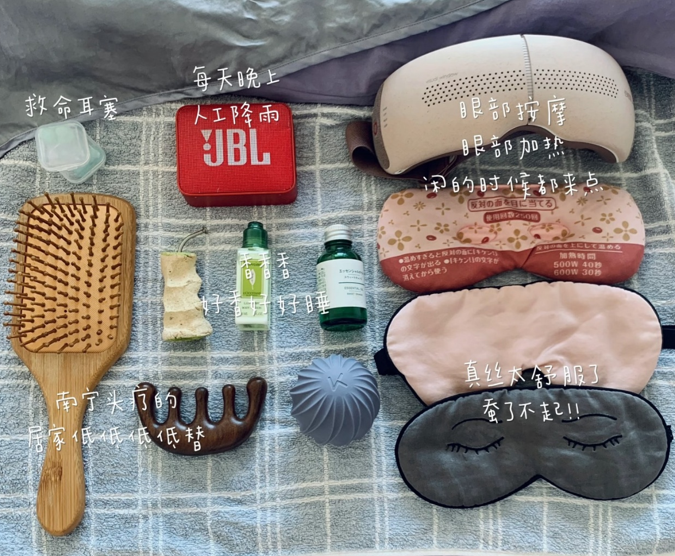
The industry has also attracted companies that traditionally operate outside the health or bedding sectors. Internet healthcare platforms such as Alibaba Health and JD Health have introduced online consultation services related to insomnia and sleep disorders. Technology companies are developing “smart sleep” solutions through wearable devices and AI-powered applications that track sleep patterns and provide personalized recommendations. At the same time, consumer brands Mengniu Dairy and lifestyle retailer Miniso are entering the market with sleep-related beverages and ambient products designed to create a more relaxing nighttime environment. These developments show that the sleep economy is not limited to a single industry. It is evolving as a cross-sector market shaped by different types of consumer demand.
Emerging trends in the Chinese sleep economy
Although the Chinese sleep economy includes a wide range of products and industries, several trends are becoming increasingly visible and may help companies better understand the direction of the market.
One trend is the continued importance of traditional sleep-related home goods. Despite the growing presence of technology and health-related products, many consumers still focus on improving sleep through physical products directly related to the sleeping environment. Survey data show that around half of consumers choose home textile products to improve sleep quality. Among them, mattresses (54.8%) and sleeping pillows or body pillows (50.0%) are the most frequently purchased items. Other commonly purchased products include pillow cores (46.4%), bedding sets (45.2%), and quilts or comforters (38.0%). This suggests that improving the basic sleep environment remains a key entry point for many consumers.
Another trend is the increasing integration of technology into sleep-related products. Advances in sensors, artificial intelligence, and connected devices have enabled companies to develop products that monitor sleep patterns and help adjust the sleep environment automatically. Some brands are building integrated “smart sleep” ecosystems that connect devices such as smart mattresses, air conditioners, and lighting systems, allowing factors such as temperature and humidity to be adjusted based on user data.
At the same time, wearable devices and sleep-monitoring technologies have become an important growth area. Smart devices have recorded rapid expansion, with some data showing growth rates of around 117%. This makes them one of the key drivers of the sleep economy. Functions such as sleep monitoring are increasingly combined with heart rate and blood oxygen tracking, forming part of a broader health management system. These developments show how technology is gradually reshaping product design while linking sleep management more closely with overall health monitoring.
What to know about the Chinese sleep economy
- Sleep challenges are becoming more common in China. Work pressure and fast-paced lifestyles are part of the factors that affect both sleep duration and overall sleep quality.
- Younger consumers are emerging as a key driver of the sleep economy. They are more likely to experience difficulty falling asleep and are more willing to purchase sleep-related products.
- The Chinese sleep economy has developed into a cross-industry market. The growth attracts companies from sectors such as healthcare, technology, consumer goods, and home products.
- Traditional sleep-related home goods remain the most widely adopted solutions, as many consumers prioritize improving the physical sleep environment.
- Technology integration is shaping the next stage of market development as companies explore new ways to address sleep-related needs.