
The F1 fandom in China is currently undergoing a massive demographic transformation. In 2025, the fan base reached 221 million individuals, with nearly 50% of them being female. Moreover, the 2026 Chinese Grand Prix held in Shanghai from March 13th to 15th, 2026, attracted 230,000 live spectators and sold out all tickets. This influx further generated massive local economic stimulation. Shanghai transformed into a massive F1 theme park, with the city hosting major promotional events like the “Grid Carnival” where F1 fans engaged in activities like trading DIY merchandise and showcasing paddock fashion.
The “Zhou” Effect: breaking the niche-sport barrier?
Local representation, entertainment media, and agile brand marketing drove rapid audience expansion.
In 2022, Zhou Guanyu (周冠宇) became the first full-time Chinese driver. He catalyzed massive local interest and generated widespread media coverage. Previously, the sport struggled globally with aging demographics and viewership stagnation. It was largely considered a niche technical interest. However, following his debut, the sport rapidly grew popular. Over half the new followers started following it between 2021 and 2025. His highly anticipated debut proved crucial for expanding the domestic audience.
Simultaneously, Liberty Media completely overhauled the sport’s digital accessibility. They relaxed strict social media restrictions and heavily emphasized narrative storytelling. Drivers transformed from distant athletes into relatable, multi-dimensional personalities. This strategic shift successfully attracted younger, digitally native demographics. George Russell even opened a Douyin account to engage fans directly. Lewis Hamilton actively visited Chinese cultural sites to build local goodwill. Furthermore, 74% of the spectators at the 2026 Chinese Grand Prix traveled from cities outside of Shanghai. This proves the sport’s appeal penetrates deep into emerging-tier cities.
The DIY circuit: how the She Economy and the Gen Z built a grassroots ecosystem
The F1 fandom in China features a surprisingly balanced gender distribution. Women currently comprise nearly 50% of the total audience. This fundamentally challenges the historically male-dominated image of global motorsport. Globally, women also account for three in four new F1 fans.
Baidu Index data highlights Formula One’s young audience base in China. Search interest around keywords such as Zhou Guanyu, the Chinese Grand Prix, Pegasus, and Leclerc is concentrated among consumers aged 20 to 39. Entertainment IPs like the racing movie Pegasus broadly expose general audiences to motorsports cultures. Specifically, it exposes young audiences to the culture, where young fans follow the sport as part of their identity and lifestyle.

Specialized driver keywords like “Lec the 4th” show high female search ratios. While this specifically reflects personality fandom, it demonstrates deep digital engagement. Fans successfully transition from casual event viewers to highly dedicated enthusiasts. Digital platforms continuously drive this intense, highly localized fandom culture.
Fans actively manufacture customized DIY merchandise locally for social trading. They frequently dress popular Labubu dolls in miniature F1 team gear. They also create and trade DIY “marriage certificates” featuring popular drivers. Regional fan clubs organize massive gatherings during major race weekends. They transform public squares into living mosaics sorted by official team colors. This behavior builds a highly self-sustaining ecosystem of creative identity expression. It operates entirely independently of official merchandise and retail distribution channels. Digital communities actively sustain the F1 fandom in China.

Beyond the logo: the new playbook for brand integration
International luxury houses and agile domestic brands creatively leverage this audience. They aggressively aim to convert racing enthusiasm into direct commercial growth. Retailers specifically target the rising female demographic through highly strategic partnerships. The sporting event functions as a powerful cultural and economic engine. The evolution of F1 in China from a technical sport to a lifestyle “status” symbol has opened diverse entry points for non-endemic brands. This transition allows retailers to move beyond traditional logo placement toward high-impact cultural integration. The following case studies highlight how diverse market players from e-commerce platforms to luxury beauty retailers are successfully translating high-velocity fan passion into measurable commercial impact.
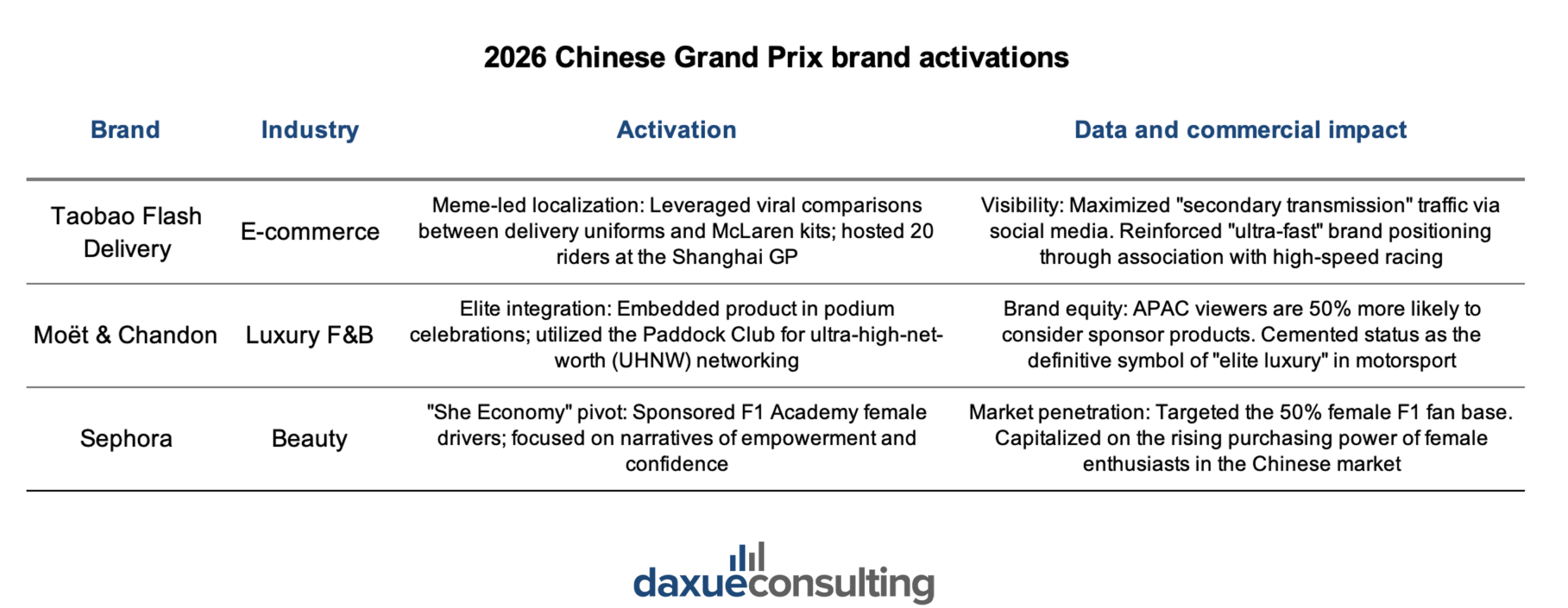
While International luxury brands dominate the “Paddock” tier of experiential marketing, a significant opportunity remains for domestic players to bridge the gap.
Currently, Lenovo remains the primary global representative of Chinese enterprise within the sport, serving as an Official Global Partner and the Technology Provider that underpins Formula 1’s worldwide broadcast operations and sim racing infrastructure. Domestic automotive giants actively prioritize sponsoring local domestic racing series. For example, Xiaomi Auto heavily sponsors premier domestic motorsport series. Xiaomi deployed its SU7 Ultra as an official safety car locally.
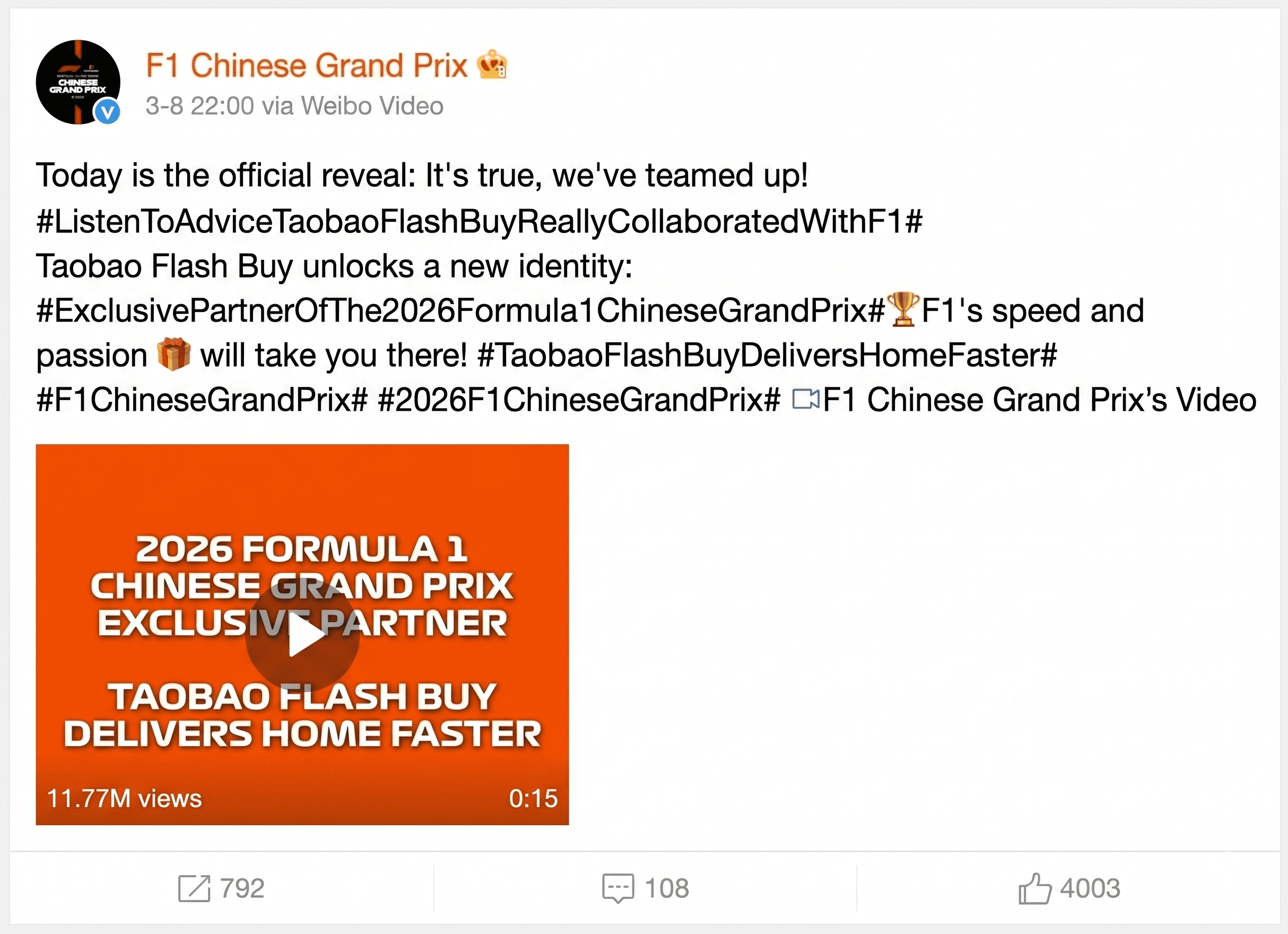
To sustain this commercial momentum between race weekends, brands are increasingly pivoting toward digital ecosystems. Virtual sim racing and types (viral social content) are transforming F1 from a once-a-year event into a year-round consumer touchpoint in the Chinese digital landscape.
The Shanghai shift: how Gen Z reclaimed Formula 1 for China
- China’s F1 fandom audience surged 221 million fans in 2025, marking a definitive shift from a niche technical interest to a mainstream lifestyle pillar for Gen Z and female enthusiasts. The 2026 Shanghai Grand Prix demonstrated the sport’s massive economic scale by setting a historic 20-year attendance record of 230,000 spectators and selling out all tickets within minutes.
- Chinese digital culture has successfully localized the sport by transforming international athletes into relatable figures through community-driven nicknames, viral memes, and creative social rituals. A self-sustaining grassroots ecosystem has emerged where fans maintain year-round engagement through independent merchandising, such as dressing Labubu dolls in team gear and organizing color-coded community gatherings.
- The commercial landscape has evolved into a dual-track opportunity, with LVMH’s decade-long partnership securing the luxury tier while domestic brands like Taobao leverage viral internet trends for mass-market visibility.
- Significant commercial white space remains for domestic automotive giants like Xiaomi to transition from local safety car sponsorships to global F1 partnerships as they pursue international expansion.