

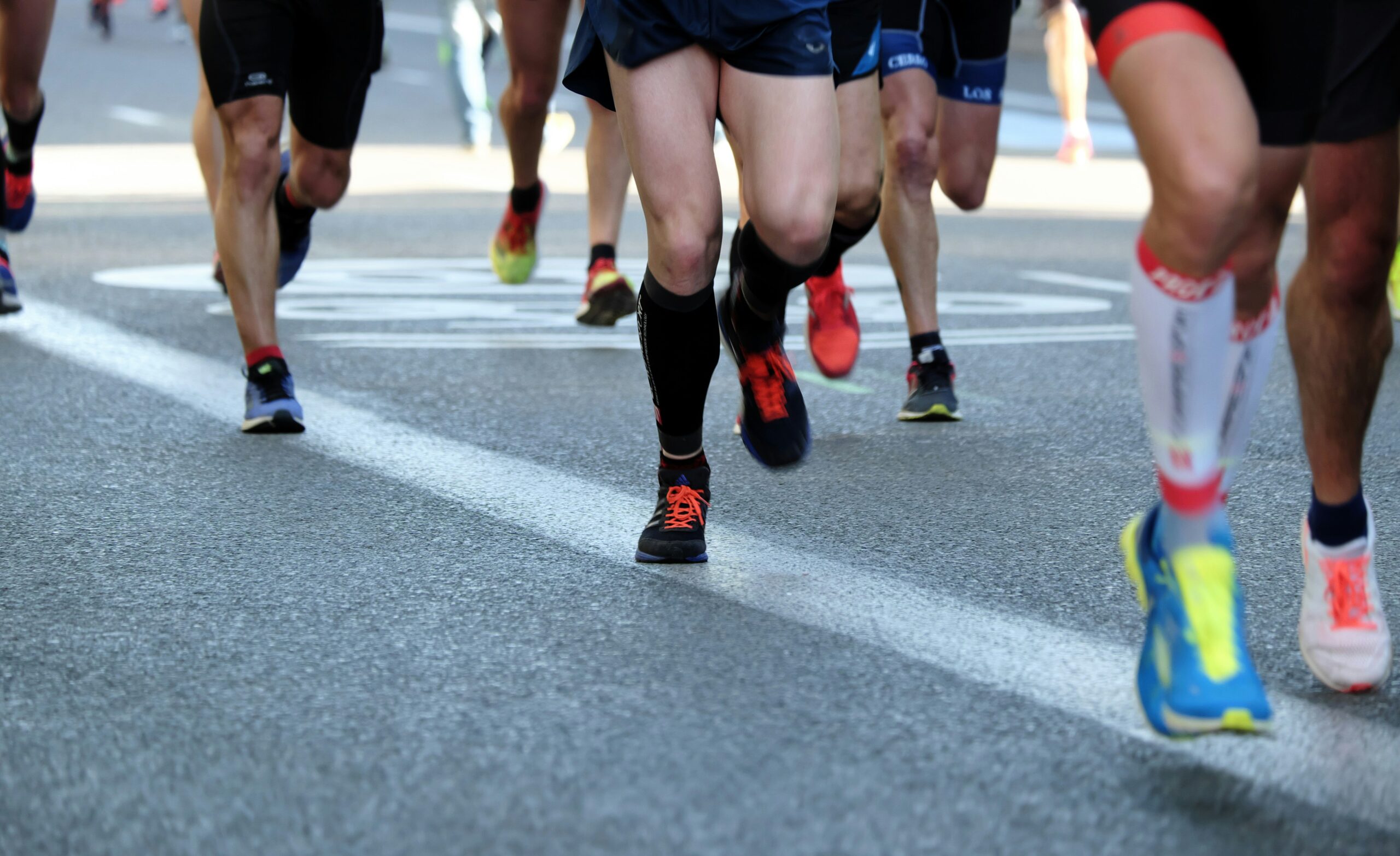
Korean consumers, especially those in the MZ Generation, are adopting sports as part of their healthier lifestyles — but with a different mindset than in the past. Previously, consumers associated health with pain and strict diets. Today, they perceive health as a fun experience, reflected in the healthy pleasure (헬시 플레저) trend. This is driving interest in a wider range of sports, from golf and Pilates to running and baseball, drawing attention from brands in the sports market in South Korea.
Read our Korea’s MZ Generation report
Korea’s sports industry’s record-high figure and strong government support
In 2024, South Korea’s sports industry reached KRW 84.7 trillion, according to the Ministry of Culture, Sports, and Tourism. This is a 4.5% year-on-year increase and the highest figure ever recorded. The government aims to grow the sports sector to KRW 100 trillion by 2028, through a range of supportive policies.
For example, it launched a gym and pool tax on July 1st, 2025. This allows workers earning under KRW 70 million to deduct 30% of the facility fees from their taxable income. In turn, the Ministry of Culture, Sports, and Tourism found that gym card revenue in the second half of 2025 was about 355% higher than in the first half of the year. Also, pool revenue grew about 251% over the same period.
Korea’s four major professional sports
In Korea, there are four major professional sports (한국 4대 프로스포츠): baseball, soccer, basketball, and volleyball. However, they’re not equally popular. Baseball is the most popular, with the KBO League drawing around 12.3 million spectators during the 2025 season, an all-time high. This is a 13% year-over-year increase and an average occupancy rate of 82.9% for the 720 games played.
Baseball as an example of Korea’s sports fandom culture
Baseball has been experiencing unprecedented growth, especially with growing interest from the younger demographics and female fans. Women made up roughly 71% of people visiting KBO stadiums in early 2026, according to mobile data firm IGAWorks. Women aged 20 to 40 alone accounted for 57% of all attendees.
While Koreans enjoy the sport itself, they also enjoy it for the cultural and social experience. According to a 2024 KBO League survey of 8,000 fans, 60.2% say that they come due to the baseball itself, but 52.1% of fans come because of the cheering culture and 36.1% come for the variety of food.
In Korea, team choice is often tied to geography. According to a 2026 Hankook Research survey among 659 respondents, 52% cited “connections with their hometown or place of residence” as the primary reason behind their team selection. This was followed by 13% who cited “liking a star player or manager”.
What distinguishes Korean sports fandom is how these fandoms are structured. A 2025 academic study published in Sport, Business and Management found that organized cheering activities such as synchronized chants, player-specific songs, and cheerleader-led routines led to a significant boost in fan immersion and fostered deeper emotional connection with teams.
Additionally, the types of food offered in these games are more communal, such as fried chicken and Korean BBQ, and standard single servings of food are less common, like hot dogs and pretzels. This shows that baseball is a social and entertainment experience as well as a sport.
Sports participation by age and exercise diversifying beyond walking
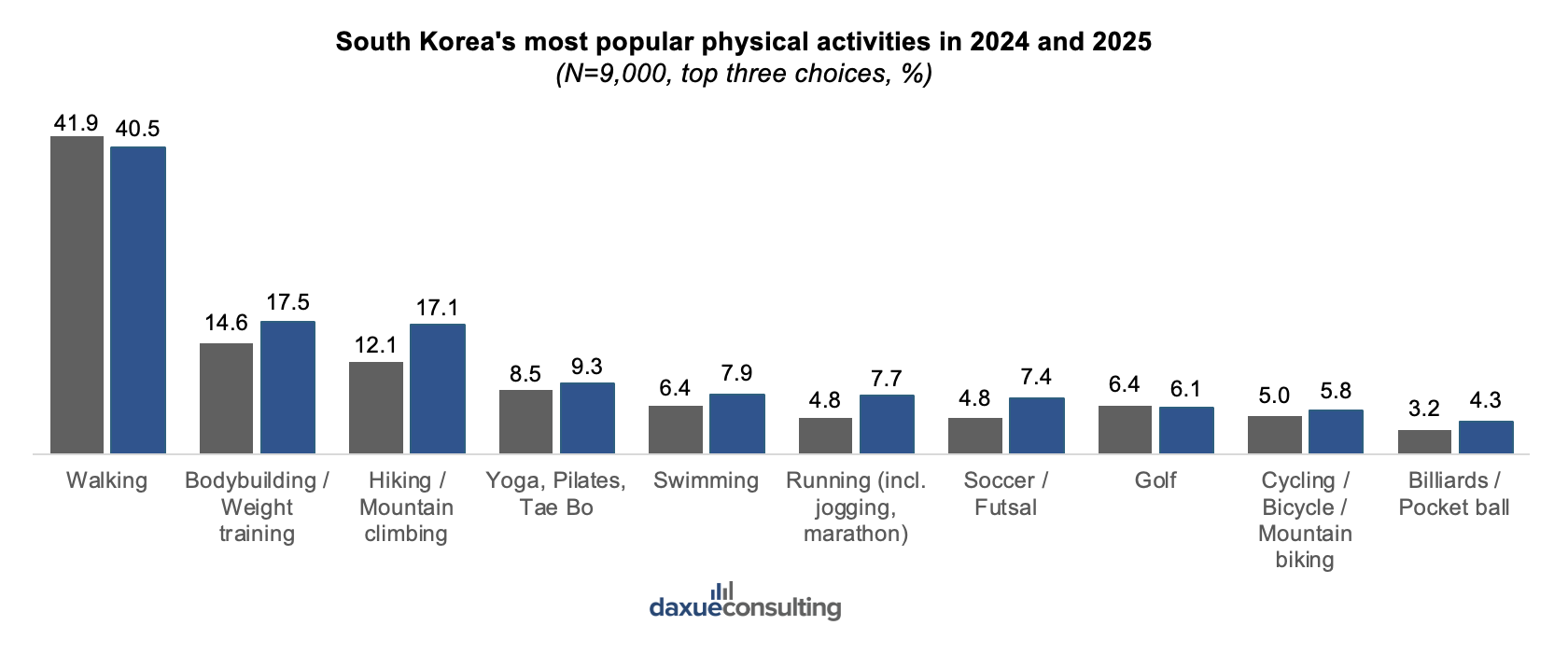
A 2025 National Sports Participation Survey, which included 9,000 Koreans aged 10 and older, showed that Koreans are gradually exercising more. In 2025, 62.9% of Koreans said they exercise at least once a week for at least 30 minutes per session, a 2.2% year-over-year growth. Those in their 20s through 60s all participate at around 65%, making the sports market in South Korea unusually age-diverse. Walking was the most common form of exercise at 40.5%, followed by bodybuilding/weight training (17.5%), hiking/mountain climbing (17.1%), and Yoga/Pilates/Tae Bo (9.3%).
While walking decreased to 40.5%, other physical activities except golf increased. Running, in particular, experienced a sharp rise. Participation jumped from 4.8% to 7.7% in a single year, which is the biggest increase of any sport. It is estimated that there are around 10 million runners, and Shinhan Card data shows running-related spending grew 232% among those in their 30s, 225% among those in their 40s, and 177% among those in their 20s.
Healthstagram (헬스타그램) as a form of self-expression in Korea’s sports market
Social media has also become a significant tool of importance for sports participation. The Healthstagram (헬스타그램, a portmanteau of “health” and “Instagram”) hashtag and culture show that the majority of people share exercise-related pictures and videos as a form of shared social ritual and self-expression. Also, the top two social platforms in South Korea in 2025 Instagram and YouTube, have helped spread these trends. Popular hashtags such as #오운완 (“today’s workout is done”), #런린이 (“running beginner”), and #헬린이 (“gym beginner”) have accumulated millions of posts.
How fun, health, and self-identity drive the sports market in South Korea
- Instagram and YouTube have made fitness a shared social identity. Koreans share regular pictures and videos engaging in physical exercise.
- Korea’s sports market size totaled KRW 84.7 trillion in 2024, up 4.5% year-on-year, an all-time record. The government is targeting KRW 100 trillion by 2028.
- The government is actively supporting the sports market. For example, one of its policies involved gym and pool tax deduction, raising gym revenue by about 355% and pool revenue by about 251% by year-end.
- The KBO League drew 12.3 million spectators in 2025, an all-time record at 82.9% occupancy. Fans come for baseball (60.2%) but the social and entertainment experience is a contributing factor too. Cheering culture (52.1%) and food (36.1%) were other main reasons why people visited baseball stadiums.
- The National Sports Participation Survey shows 62.9% of Koreans exercise weekly. Running jumped from 4.8% to 7.7%, the biggest single-year rise of any sport. Spending went up 232% among 30s and 225% among 40s.
Author: Sory Park, with additional research by Minki