


The MZ Generation (MZ세대), a term used only in South Korea, refers collectively to Millennials (born in the 1980s to early 1990s) and Generation Z (born in the late 1990s to mid 2000s). While this grouping doesn’t fully capture the complexities of each generation, they share key similarities that make the combined category useful. Making up 37% of the population in 2025, the MZ Generation holds significant social, economic, and cultural influence in Korea.
Read our Korea’s MZ Generation report

The MZ Generation, digital natives (디지털 원주민), uses media in different ways
Although digital adoption is nearly universal, the MZ Generation has a distinctive platform mix. According to KOBACO’s 2026 Media Usage Behavior Survey, conducted among 3,000 people aged 20 to 64 nationwide, YouTube and internet portals (e.g., Naver) reached over 96% among the MZ Generation, similar to other age groups. However, the MZ Generation particularly used more social media like Instagram and Over-the-Top (OTT) services compared to other age groups. Unlike the older generations (i.e., 50s and above), they consume traditional media less. Radio stands at only 19.4% for those in their 20s and 30.6% for those in their 30s, the lowest of any age group.
| Demographic | Base | TV | YouTube | Internet portals | Social media | Radio | Newspapers/magazines | OTT |
| Total | 3,000 | 80.0% | 96.4% | 97.9% | 84.6% | 42.1% | 31.0% | 79.0% |
| Men | 1,536 | 78.8% | 98.0% | 98.2% | 84.8% | 45.9% | 34.8% | 80.0% |
| Women | 1,464 | 81.3% | 94.7% | 97.7% | 84.4% | 38.2% | 27.0% | 77.9% |
| 20s | 516 | 61.8% | 99.6% | 96.9% | 94.2% | 19.4% | 25.8% | 83.3% |
| 30s | 618 | 71.2% | 97.7% | 98.4% | 87.9% | 30.6% | 29.6% | 89.5% |
| 40s | 696 | 85.2% | 94.8% | 99.0% | 82.0% | 48.7% | 32.6% | 83.6% |
| 50s | 795 | 89.6% | 95.5% | 97.9% | 80.3% | 54.3% | 33.0% | 71.1% |
| 60-64 | 375 | 89.9% | 94.9% | 96.8% | 80.0% | 54.4% | 33.6% | 64.0% |
Source: KOBACO’s 2026 Media Usage Behavior Survey (N=3,000), designed by Daxue Consulting, Media usage by gender and age groups
MZ Generation use social media during the entire consumer journey
The MZ Generation is very comfortable with using technologies not only for entertainment but also for research before making purchases. They largely first encounter advertisements through YouTube and social media and then do additional research through search engines for authentic product reviews, price comparisons, and recommendations to validate their purchase decisions. According to the same survey by KOBACO, 86.1% of respondents encountered ads on YouTube in the past month, compared to 83.5% on internet search and banners, 67.5% on TV, and 63.6% on social media.
Moreover, the MZ Generation is also starting to integrate AI into their purchase journey, especially during the early stages. According to a 2025 Criteo survey among 946 respondents, 49% of Korean consumers use AI for product research and comparison. While some platforms provide AI-powered features, such as recommended products based on search history, consumers also actively use AI tools like ChatGPT to search for product information.
The MZ Generation is more self-aware than other generations
The MZ Generation is more interested in learning about themselves and consuming what is best for them rather than what others believe is best. In other words, their purchasing is becoming more individualized.
Young people are becoming less trend-driven as “omnivore consumption” (옴니보어 소비) rises
While young consumers are often seen as trend-sensitive, this is becoming less the case. This shift is defined by “omnivore consumption” (“옴니보어 소비”). This trend describes consumers increasingly choosing products that reflect their personal tastes, values, and lifestyles without limiting themselves to specific products or categories. Although this applies to other age groups, it is particularly prominent among younger consumers.
Unlike personalization, which emphasizes “what suits me,” omnivore consumption focuses on “I choose from anywhere.” Consumers explore multiple brands and categories instead of restricting their purchases to a single brand or product type to ultimately build their own multi-layered identity.
In pursuit of a “meaning-out” (미닝아웃) lifestyle
The MZ Generation consumers are adopting a “meaning-out” (미닝아웃) lifestyle, where they express their values through consumption. They select brands and products that align with their values and express themselves on social media.
Environmentalism is one of the main values that has been expressed through the “meaning-out” lifestyle. In a 2022 survey conducted by the Korea Chamber of Commerce and Industry, almost two-thirds of 380 MZ Generation respondents said they purchase products from companies that practice ESG (Environmental, Social, and Governance) even if it is more expensive.
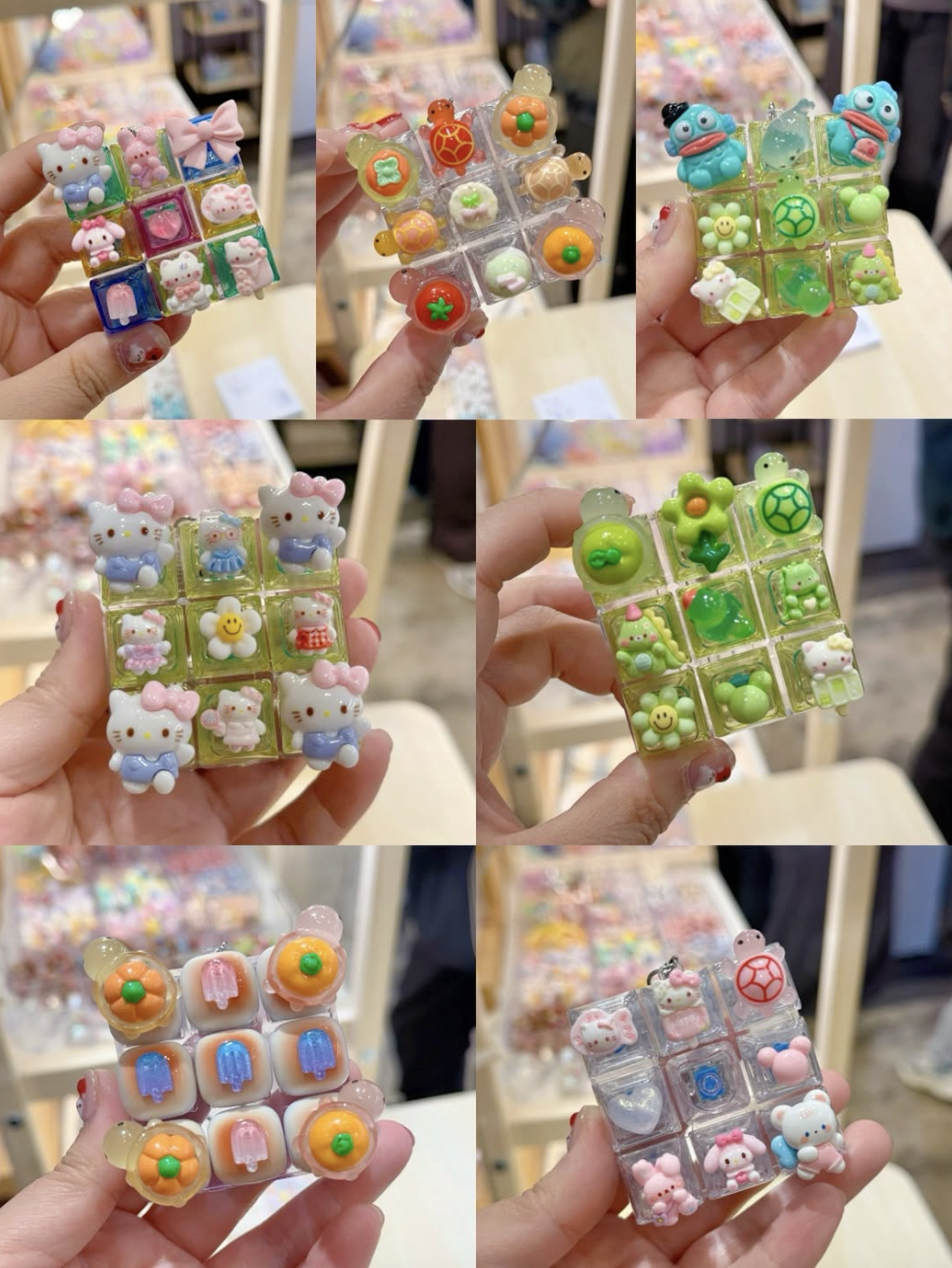
Wellness is another area receiving a lot of attention from the MZ Generation. As consumers pay more attention to holistic wellbeing, they are seeking different ways to achieve that. For example, they desire toys, character merchandise, and figurines, which have become a form of relaxation in their busy lifestyles. One of the popular rising products are keycap keychains, accessories made of mechanical keyboard caps. While elementary students may carry them because they’re cute and can be used to decorate their bags, adults use them as a sensory object. Once pressed, they make clicking sounds and provide a sense of relaxation.
The limitations of the term MZ Generation
The MZ Generation doesn’t perfectly depict the consumers in South Korea. Although it has been used by businesses to understand their consumers, there is a lot of criticism about categorizing people merely based on their year of birth. Critics consider it “not appropriate” to classify people based on their generation for several reasons, including the limited studies to prove its validity, the possibility of creating generational conflict, and the overlooking of individual differences. Therefore, some say that it would be more appropriate to define consumers based on various characteristics. When doing consumer research in South Korea, we consider many ways to find tribes and groupings of consumers other than their generation.

Source: Daxue Consulting’s MZ Generation report, Common misconceptions and the reality of young consumers in Korea
The MZ Generation in South Korea continues to reshape consumption
- They are known for being digital natives. They are familiar with new technologies compared to previous generations. Therefore, they are more likely to use them during the entire consumption journey, doing extensive research before purchase and sharing their purchased products on social media.
- They are more self-aware. They are willing to invest in developing themselves and expressing themselves through consumption. This is reflected through the “omnivore consumption” and “meaning-out” lifestyle.
- Although the term MZ Generation is useful in understanding consumers in South Korea, it should not be the only standard. The term still faces a lot of criticism.
Author: Sory Park