
South Korea has been one of the most sleep-deprived countries in the OECD. Long working hours, late-night study culture (and private academies hagwons), and a strong sense of responsibility toward school and work have normalized chronic sleep deprivation. As sleep loss becomes a persistent and widely recognized issue, demand for solutions has accelerated, driving rapid expansion in the sleep-related market. South Korea’s sleep market, covering both products and services, has grown sixfold from approximately KRW 480 billion in 2011 to around KRW 3 trillion by 2022. Some projections show continued growth toward KRW 4 to 6 trillion by 2026.
The Korean market lacks quality sleep time compared to other markets
According to a 2025 IKEA report on sleep, South Korea ranked 50th out of 57 surveyed markets. It recorded a sleep score of 59 out of 100, below the global average of 63. The report surveyed over 55,000 respondents worldwide, including 1,003 South Koreans, and evaluated sleep based on five dimensions: quality, duration, consistency, time to fall asleep, and wake-up condition.
Average sleep duration was just 6 hours and 27 minutes per night. This placed Korea among those with the shortest sleep times globally. Sleep dissatisfaction remained severe, with only 17% of respondents reporting that they slept well. Just 38% of parent also believed their children received sufficient quality sleep, which was far below the global average of 67%. These findings indicate that Korean consumers are highly aware of their sleep deficiencies and represent a market with strong unmet demand for solutions that improve sleep quality rather than merely extending sleep duration.
Sleep health is a serious healthcare issue, not just a temporary lifestyle concern
According to the Health Insurance Review and Assessment Service (HIRA), nearly 800,000 patients in South Korea sought medical treatment for insomnia in 2023, marking a 3.4% year-on-year increase and a rise of more than 70% over the past decade. This sustained growth shows that sleep disorders are increasingly recognized as a medical issue rather than a temporary lifestyle concern, reinforcing the emergence of “Sleeponomics” as a structurally expanding market spanning both consumer and healthcare sectors.
Sleep problems in Korea are mainly caused by stress and fatigue
According to the 2024 Korean Wellness Report by KB Research Institute, a survey of 2,000 adults in their 20s and 60s conducted nationwide via online and mobile questionnaires, psychological stress affected 62.5% of respondents, making it the biggest factor, especially among women in their 60s (67.4%). Physical fatigue followed at 49.8% and is particularly high among women in their 20s (59.6%), reflecting busy, screen-heavy lifestyles. Other factors were less common, including anxiety-related issues (29.7%), noise (19.4%), and physical pain (19.2%), though their impact varies by age group. Overall, this shows that improving sleep in Korea requires solutions that focus on stress relief and physical recovery, not just reducing noise or discomfort.
Tech devices vary from apps to AI motion pillows
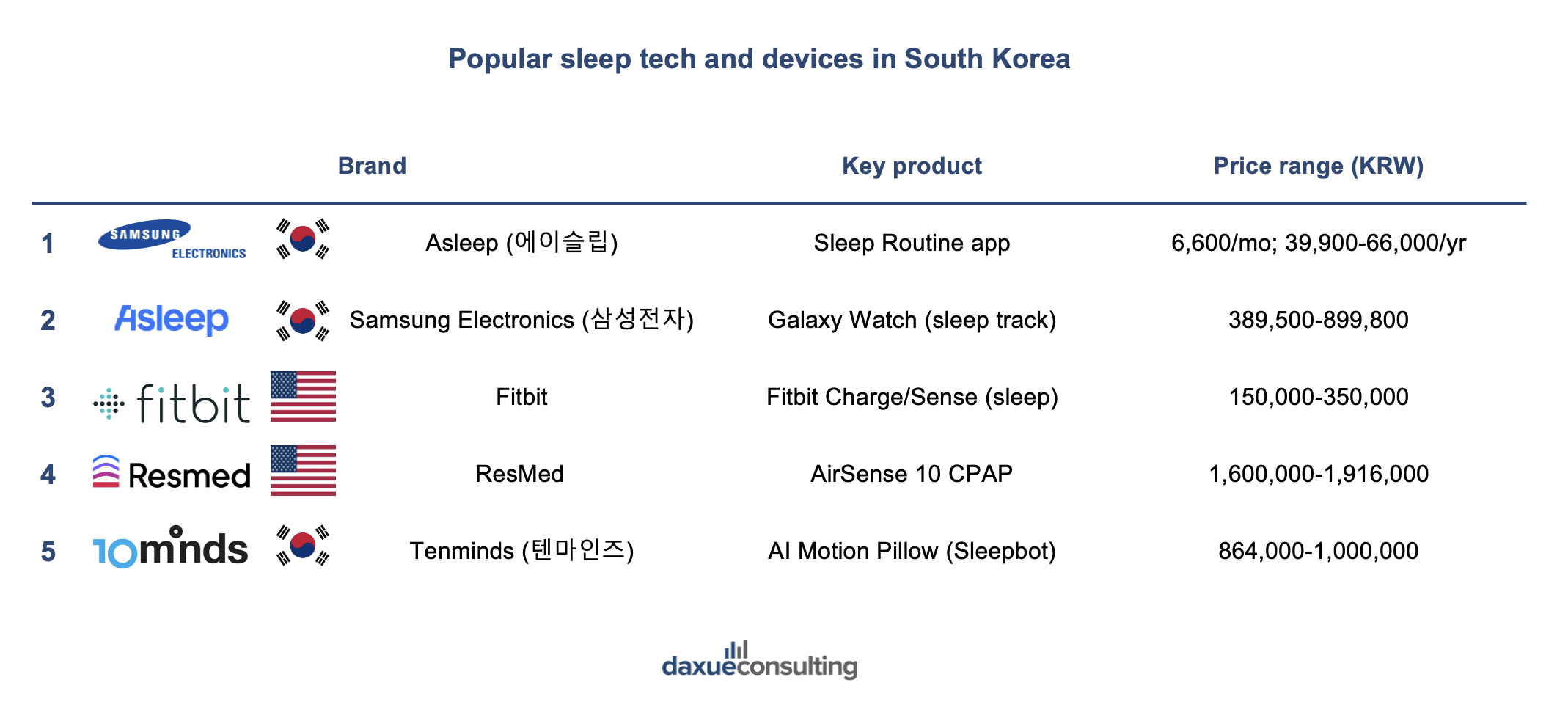
The sleep tech and device market is expanding, valued at approximately USD 605 million in 2024. The market is led by a mix of agile domestic startups and large conglomerates. Local players such as Asleep, Delightroom, Tenminds, and Eone Technologies focus on software-driven solutions, AI-based sleep analysis, and non-wearable convenience, while major electronics groups including Samsung and LG leverage wearables and smart home ecosystems to integrate sleep tracking into daily life.
At the same time, foreign brands such as Sleep Cycle, Philips, ResMed, and Fitbit remain active, competing through advanced algorithms, medical-grade credibility, and global brand recognition in a market where chronic sleep deprivation continues to drive demand for premium solutions.
Korean consumers strongly associate sleep health with mattress quality rather than bed frames
According to a survey conducted by Embrain Trend Monitor among 1,000 Korean adults aged 19 to 59 nationwide in 2023, mattresses were widely perceived as the most influential factor in sleep health. 86.2% of respondents said that bed mattresses have the greatest impact on sleep quality, with 85.2% agreeing that mattresses are more important than bed frames. In contrast, interest in bed frame type or design was relatively low, with only 46.6% indicating they pay attention to it. This mindset is clearly reflected in purchasing behavior, as 70.0% prioritize mattress quality over the frame, 30.0% when buying a bed.
Korean consumers also showed a strong willingness to invest in better sleep, with 88.1% expressing readiness to spend on a mattress. A large majority believed that mattresses are worth the investment (82.3%), and 59.7% agreed that higher-priced mattresses deliver value that justifies their cost, reinforcing the view of mattresses as a long-term investment in sleep health rather than a decorative home item.
Korean customers are highly practical, value-conscious, and health-focused when it comes to choosing a mattress
Koreans view mattresses as a long-term investment in sleep and back health, prioritizing firm support, airflow, and motion isolation over design or decorative elements. They usually carefully balance price and performance, choosing premium foreign brands for proven comfort or pain relief, while favoring local brands for climate suitability and everyday reliability. Overall, Korean customers make rational, research-driven decisions, strongly influenced by lifestyle factors such as ondol heating, humid summers, and shared sleeping environments.
Koreans are shifting towards herbal options for OTC sleep aids
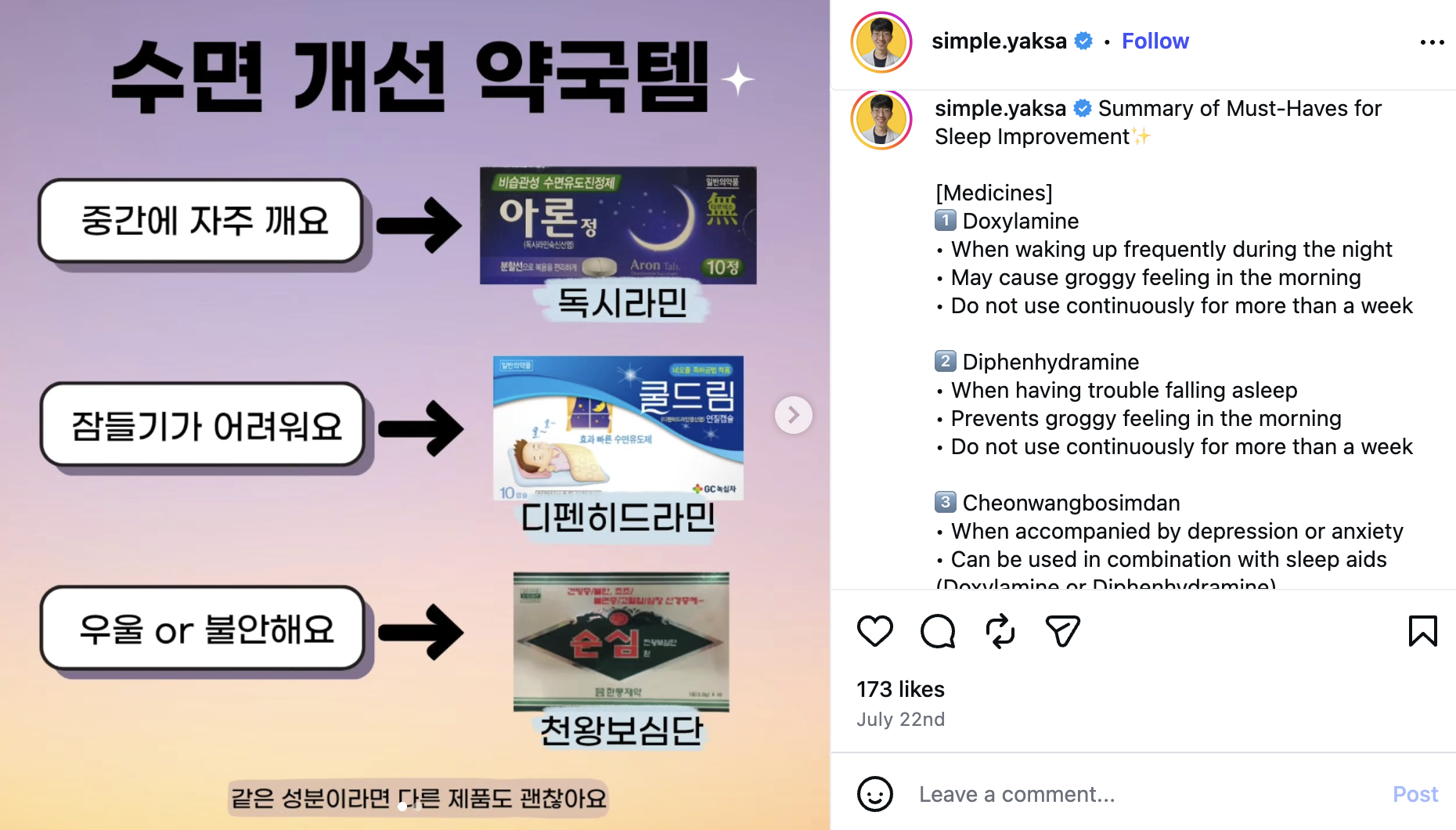
Over-the-counter (OTC) sleep aids are mainly used for mild, short-term insomnia, not chronic sleep problems. Consumers prefer them for convenience, lower dependency risk, and pharmacist guidance. Popular products use diphenhydramine or doxylamine, while demand is rising for herbal options like valerian as part of a broader wellness trend. Dosage matters as low-dose tablets appeal to cautious first-time users, and fast-absorbing capsules attract those seeking quick relief. Importantly, pharmacist influencers, such as 심플약사, play a key role in education and trust-building, showing that brands succeed when they emphasize safe use, gentle positioning, and expert-backed communication rather than strong medical claims.
Non-OTC sleep drinks are gaining traction as convenient, non-habit-forming alternatives to medication
Koreans choose non-OTC products to avoid prescription dependency, favoring natural, melatonin-free ingredients such as L-theanine, GABA, and sanjoin, which feel safer for daily use. Key purchase drivers include fast relaxation without next-day drowsiness, small portable formats (around 100ml), and clean labels (zero sugar, low calories), especially among MZ Generation who value “next-day energy.”
Taste, affordability (KRW 3,000-5,000), and easy access through convenience stores and pharmacies strongly influence choice, while influencer reviews and research-backed claims help build trust. This shows that sleep drinks succeed when positioned as a nighttime wellness ritual rather than a medical solution.
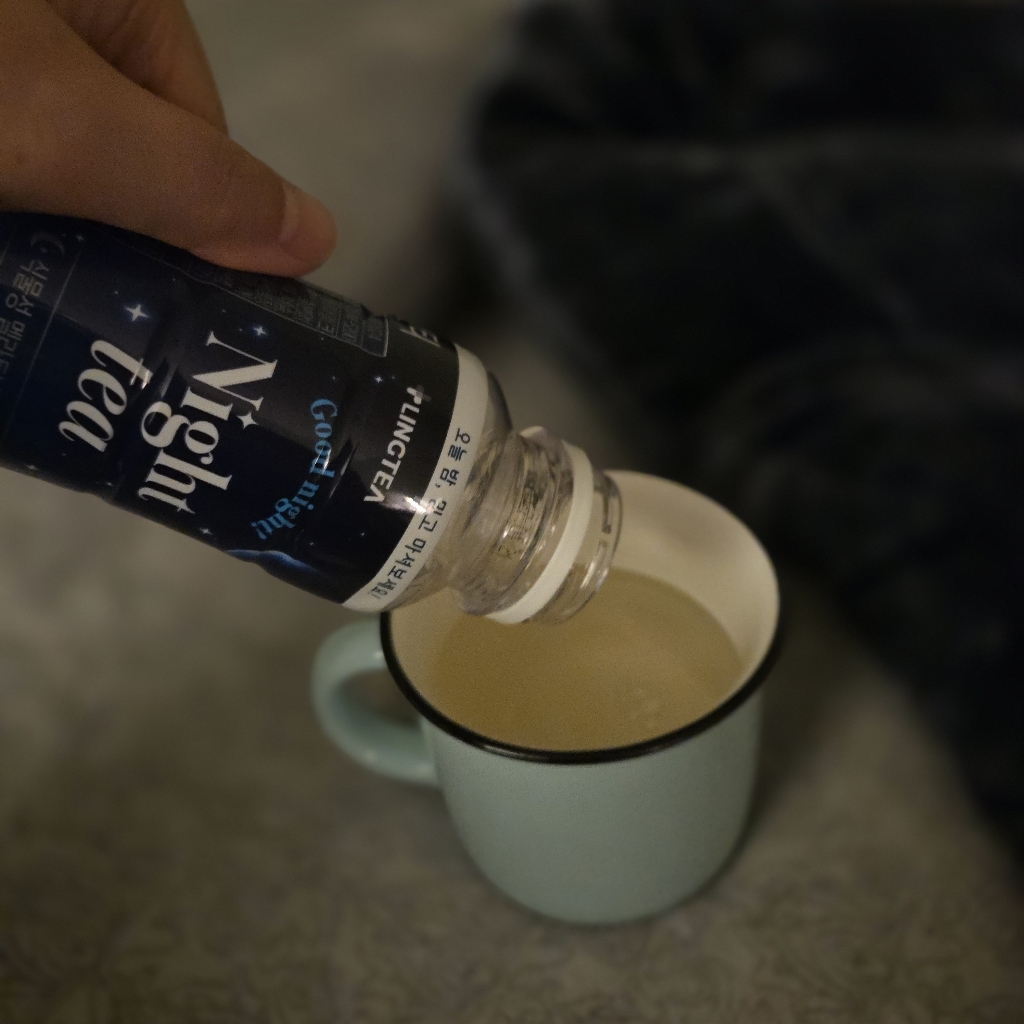
In Korea, reducing psychological barriers and fitting into daily routines matters as much as functional sleep benefits
- Chronic sleep deprivation has turned sleep into a fast-growing industry in Korea.
- Stress and fatigue are the biggest drivers of sleep issues.
- Mattresses are seen as the most critical investment for sleep health.
- Koreans choose mattresses based on health and practicality, not design.
- Consumers prefer gentle, short-term, and herbal sleep aids.
- Sleep drinks are rising as easy, non-habit-forming nightly wellness products.
Author: Sory Park, with additional research by Mukaddam