

Updated on June 10, 2026
Bel took The Laughing Cow from a few imports to local production in China. More and more European food brands follow the same path, to compete with Chinese leaders on price and on speed.
By Daxue Consulting
In June 2025, Bel Group laid the foundation stone of its second plant in China, in Yucheng, Shandong, which will be built in phases. “China is one of the most promising dairy markets in the world,” said Gorge Bai, general manager of Bel China (Bel Group, June 2025). Before that, in 2022, Bel had bought 70% of Shandong Junjun Cheese (君君乳酪), which gave it local production and research.
La Vache qui rit, or The Laughing Cow, was created in France in 1921 by Léon Bel. In the early 2010s, it sold in mainland China mostly in imported-food shops in Beijing and Shanghai. Today, with its Chinese name 乐芝牛, it competes in a cheese market where the leader is a Chinese company, Milkground. In this article, we will see Bel’s strategy in China and what it means for French and European food brands.
| Daxue Overview |
|---|
| Brand: La Vache qui rit (乐芝牛, The Laughing Cow), Bel Group, France, since 1921. |
| Local production: 70% of Shandong Junjun Cheese since 2022; second plant under construction in Yucheng, Shandong, since 2025. |
| Group results: sales €3.83 billion in 2025 (+4.7% organic); Asia +15.1% organic, the fastest-growing region. |
| Market: children’s and family cheese, led by Milkground (RMB 4.62 billion of cheese revenue in 2025). |
| Disclosure: Bel does not publish its China sales. |
Bel and La Vache qui rit in China: key figures
Exhibit 1: Bel’s China strategy is part of a broader Asian bet
| Indicator | Figure | Period | Source |
|---|---|---|---|
| Stake in Shandong Junjun Cheese | 70% | Since 2022 | Bel Group |
| Second Chinese plant | Foundation stone in Yucheng, Shandong | June 2025 | Same |
| Bel group sales | €3.83 billion, +4.7% organic | 2025 | Bel Group results, March 2026 |
| Bel Asia sales | +15.1% organic | 2025 | Same |
| Other Asian investments | €16.7 million to double capacity in Vietnam; 22.5% of Indonesia’s cheese leader | 2025 | Same |
| Milkground cheese revenue, for comparison | RMB 4.62 billion, +22.84% YoY | 2025 | National Business Daily (每日经济新闻) |
Sources: as listed in each row; table designed by Daxue Consulting.
Bel moved from export to local production
Buying a local company. With the 70% stake in Shandong Junjun Cheese, Bel got factories, a local team and research close to Chinese consumers, all at once.
Building its own plant. The second plant in Yucheng is a long-term commitment. Bel said its China business shows “remarkable growth”, but did not publish figures, and it put the start of construction among the highlights of 2025, together with investments in Vietnam and Indonesia (Bel Group, March 2026).
Producing locally solves three problems of imported cheese: cost, shelf life and how fast a brand can launch. With a plant in China, Bel can develop products for Chinese children faster, at prices closer to the ones of Chinese brands.
The market is large for children’s cheese and led by a Chinese brand
In China, the cheese market grew with snacks for children and with restaurants (see the cheese market in China). The leader, Milkground (妙可蓝多), controlled by Mengniu, made RMB 4.62 billion of cheese revenue in 2025, mostly with cheese sticks for children (National Business Daily). For La Vache qui rit, this is good news and bad news at the same time. Chinese parents now buy cheese, and the small portions of the brand are perfect for children; but the category is crowded and Chinese brands set the price. What is striking is the difference of scale. Worldwide, Bel’s sales of €3.83 billion are about six times the cheese revenue of Milkground, and still, in China, the Chinese company is the reference and Bel is the challenger. Local production is what lets a global group compete in a market where it is the smaller one.
Exhibit 2: La Vache qui rit against its main rivals
| La Vache qui rit (Bel) | Milkground (妙可蓝多) | Anchor (Fonterra) | |
|---|---|---|---|
| Origin | France | China, controlled by Mengniu | New Zealand |
| Strength | Global brand, French origin, playful image | Category leader, price, distribution | Foodservice leader |
| Production in China | Junjun and Yucheng plants | Chinese plants | Mostly imported |
| Main channel | Retail and e-commerce | Retail, e-commerce, foodservice | Restaurants and bakeries |
Source: Daxue Consulting analysis.
A recognizable character suits Chinese social content
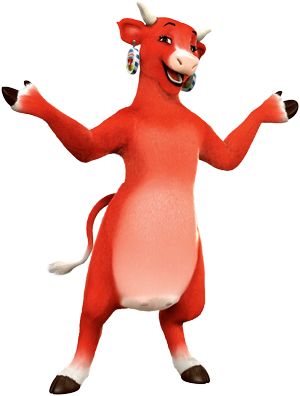
The Laughing Cow has something that many food brands do not have: a face. Its red cow, drawn by Benjamin Rabier in 1924, works very well for children’s content, games and limited packs on Douyin and Xiaohongshu. In China, the content that sells cheese for children mixes nutrition (milk content, calcium, no added sugar) and fun.
How La Vache qui rit’s China business has changed over the past decade
Exhibit 3: From imports to a local producer
| Early 2010s | Today | |
|---|---|---|
| Presence | A few imported-food shops | Chinese brand name 乐芝牛, retail and e-commerce |
| Production | Imported from Europe | Local production through Junjun and a second plant in Shandong |
| Target | Expatriates, curious urban adults | Chinese families and children |
| Competition | Other imported cheeses | Milkground, Chinese dairy groups, Anchor |
| Strategy | Export | Local company, local plants, local R&D |
Daxue Take: implications for European food brands
Bel did more than adapt its recipes: it became a Chinese cheese producer. Many European food groups follow a similar path in China, from cheese to chocolate and baked goods. They keep the European brand and origin, but compete on Chinese terms. The difficulty is that Chinese competitors are not learners anymore: Milkground built the category before most foreign brands grew.
- Everyday food brands that export, Bel’s growth came after local production. When price matters, exports will probably be a way to test the market rather than a model for the long term.
- A buyer weighing an acquisition, with the Junjun deal Bel got factories, a team and knowledge of consumers all at once. This route fits brands that are ready to integrate a Chinese company.
- A European product looking for a shelf, the first step is to find the Chinese use: in China, cheese is bought for children before adults. A “French” origin still means quality for Chinese parents, even if the product is made locally.
- A brand with a strong character, like the laughing cow, a recognizable mascot adapts well to Chinese social content, provided it is localized with Chinese creators.
What to watch next
- Progress and opening of Bel’s Yucheng plant.
- Bel’s Asia growth in 2026 results.
- Milkground’s growth in children’s cheese under Mengniu’s management.
- Other European food groups acquiring or building plants in China.
FAQ about La Vache qui rit in China
Under what name is La Vache qui rit sold in China? The Laughing Cow is sold in China under the name 乐芝牛 by the French Bel Group.
Where does Bel produce cheese in China? In Shandong. Bel bought 70% of Shandong Junjun Cheese in 2022 and started building a second plant in Yucheng, Shandong, in June 2025.
How fast is Bel growing in Asia? Bel’s sales in Asia grew 15.1% organically in 2025, its fastest-growing region.
Who are La Vache qui rit’s competitors in China? Mainly Milkground, the leader in children’s cheese, controlled by Mengniu, other Chinese dairy groups, and imported cheese brands.
What does “La Vache qui rit” mean? It means “the laughing cow” in French. In China, the brand is called 乐芝牛.
About Daxue Consulting
Daxue Consulting is a market research and strategy consulting firm focused on China. For European food brands, Daxue Consulting tests products and packaging with Chinese parents and children through focus groups and surveys, assesses local partners and acquisition targets, and benchmarks Chinese competitors on price, channels and social media. Related analysis: infant formula market in China and Fonterra in China. Learn more about our consumer research and business strategy services, or contact our team.
Author: Daxue Consulting