

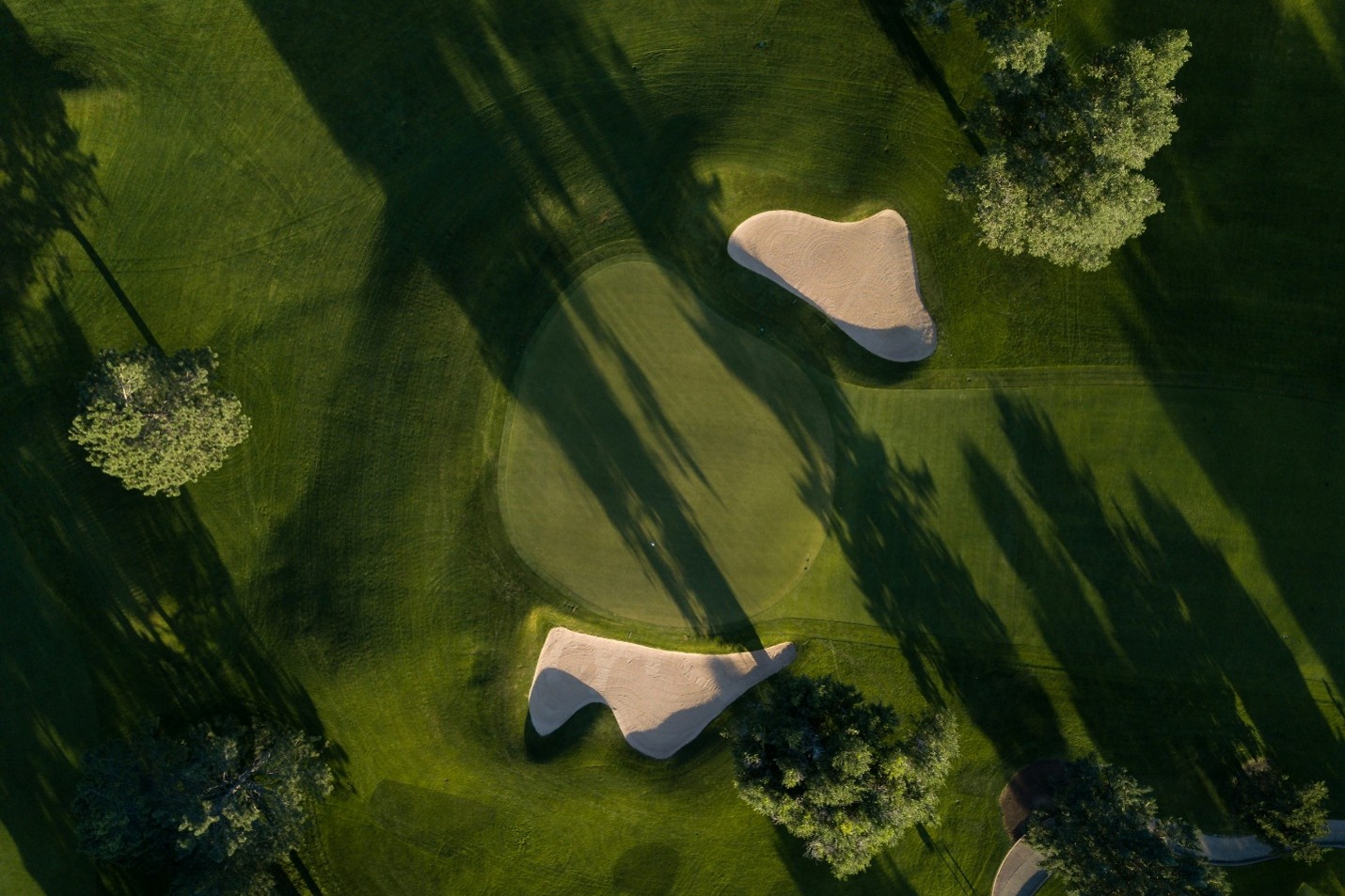
Golf is a sport traditionally characterized by vast, manicured nature with a high barrier to entry. For a country like China where the wealthy are clustered in tightly organized cities, often away from areas where hundreds of acres could be transformed into a golf course, it might not be a surprise that penetration is under half a percent at the most. Yet, with a shrinking number of golf courses, China keeps producing world-class golfers. That contradiction is the key to understanding golf in China, a market shaped more by government policy and public perception than by consumer demand. The country is now entering a stricter phase of such governance, and the real momentum of China’s golf market has moved off the traditional course and into indoor simulators, youth programs, and the global professional circuit.
The state controls the course supply
In 2025, China only had 326 operating golf courses, down 52.4% from a peak of 689 courses. The government stopped publishing closure figures after 2017, but the downward direction is not in doubt.
History explains the squeeze. Mao banned golf as bourgeois, and the sport was essentially nonexistent in China until Deng Xiaoping brought it back in the 1980s to attract foreign investment. By 2017, the government had reviewed all 683 courses then operating, abolishing 111, forcing others to close or restructure, and ordering hundreds more to fix land and water violations.
In 2025, in the era of “common prosperity”, a broad national goal that includes measures to regulate high-income industries and promote social responsibility, enforcement grew firmer still. Legal and industry analyses describe a move from periodic crackdowns to permanent, rules-based oversight. Two rules carry most of the weight: golf courses must sit on land zoned for construction, and the old workarounds of relabeling a course as a “sports park” or “eco-estate” are no longer viable.
China’s golf market is still developing
The shortage of courses keeps the player base small. Official figures estimate there are 5.4 million people who play golf in China, accounting for around 0.4% of the nation’s population, and about 1.33 million of which play at indoor venues. More significantly, the regular core, people who play eight or more rounds a year, is only about 720,000, representing roughly 0.05% of the population. For scale, 28.1 million Americans played a round in 2024, close to 8% of the country, and nearly 17% of South Korean adults played in 2023. Therefore, the 720,000 figure, not the 5.4 million headline, is the real measure of the market.
The rise of elite Chinese golfers
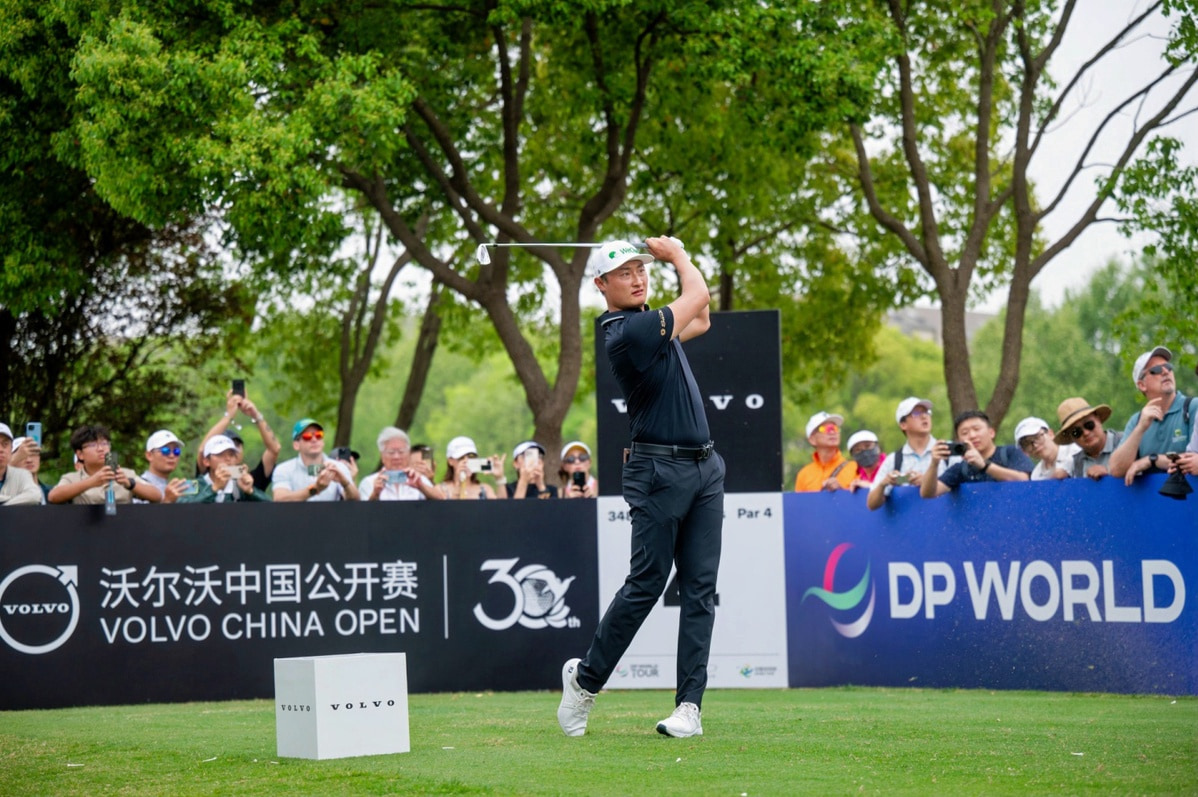
Despite the tiny base of golfers, China punches above its weight at the elite level. The flagship Volvo China Open, co-sanctioned by the DP World Tour, paid a USD 2.55 million prize purse in 2025, standard money for that tour. For comparison, regular PGA Tour events now approach USD 10 million and the majors run past USD 20 million.
Li Haotong, one of China’s most successful male professionals, played in the final pairing at the 2025 Open Championship alongside world number one Scottie Scheffler. The women have gone further. Yin Ruoning won a major and reached world number one in 2023, following Shanshan Feng, who in 2012 became China’s first major champion and later its first golfer to top the world rankings. China’s top players keep validating the sport even as its home market stays small.

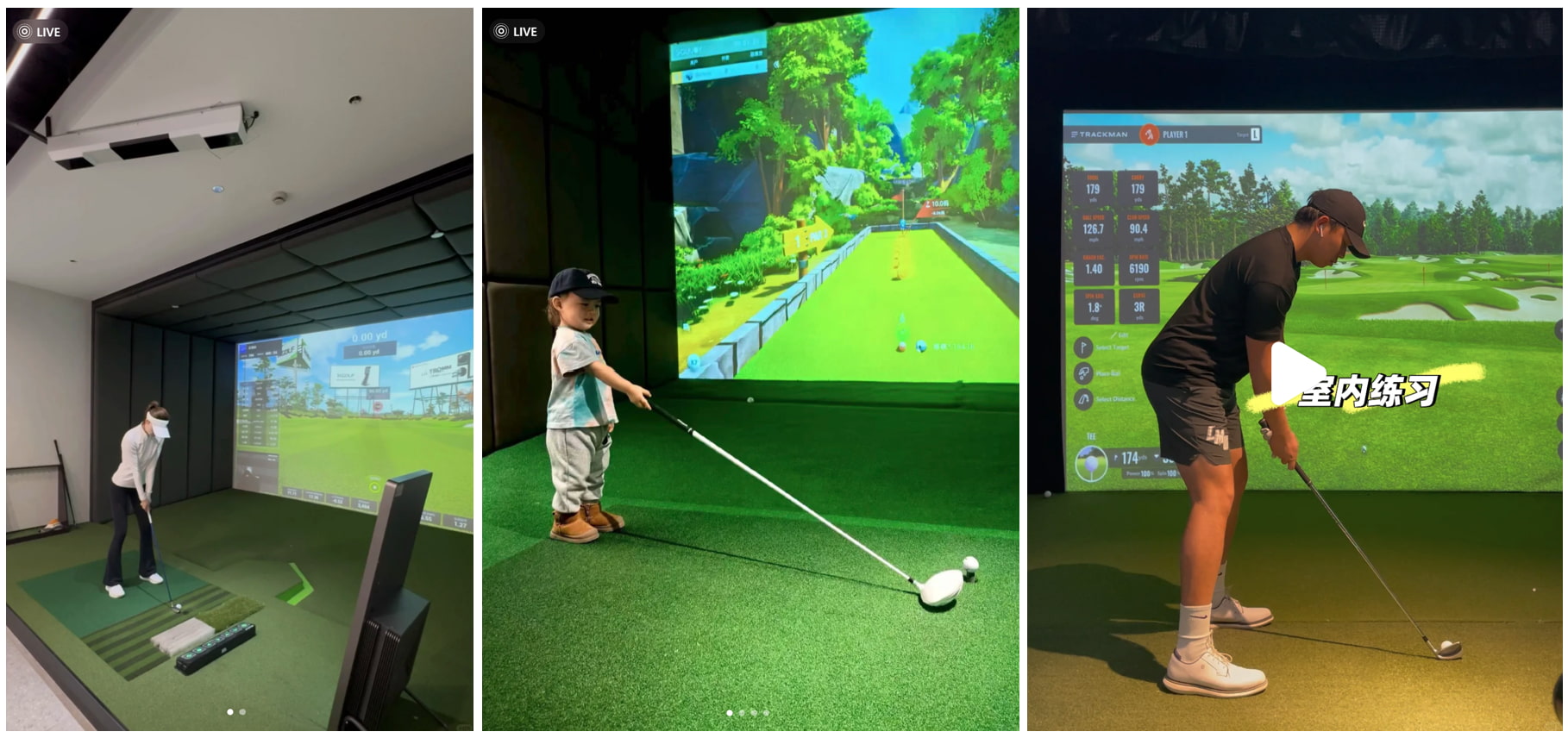
Like a lot of outdoor sports in China, the golf market’s future is indoors and in simulators
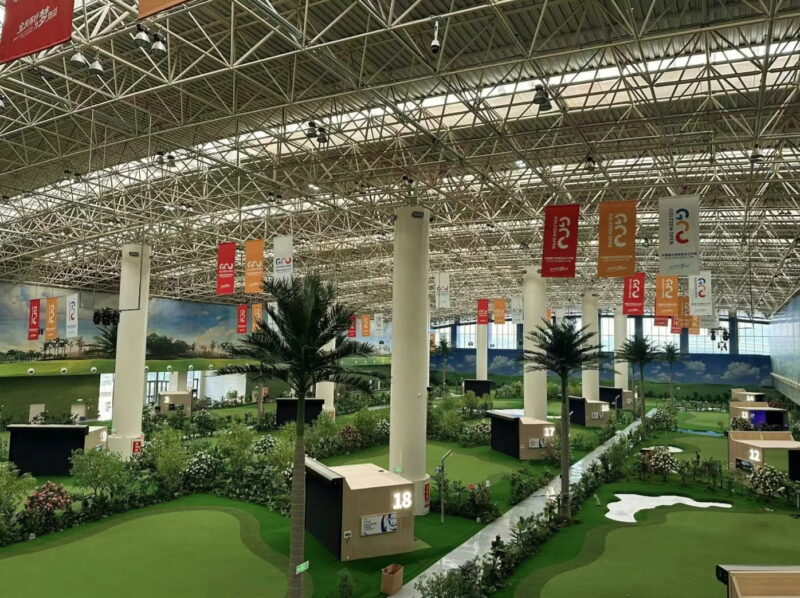
Even as courses close, the industry’s overall value has risen, from RMB 8.85 billion in 2022 to RMB 12.5 billion in 2023. The golf simulator market in China was worth about USD 61 million in 2025 and is projected to more than double by 2033. Indoor golf avoids the land, water, and approval problems that block new courses, and they cost far less to use. The China Golf Association’s own industry report actively promotes simulators, venues built inside repurposed commercial buildings, campus golf in schools and universities, and other digital formats.
Moreover, the players are getting younger
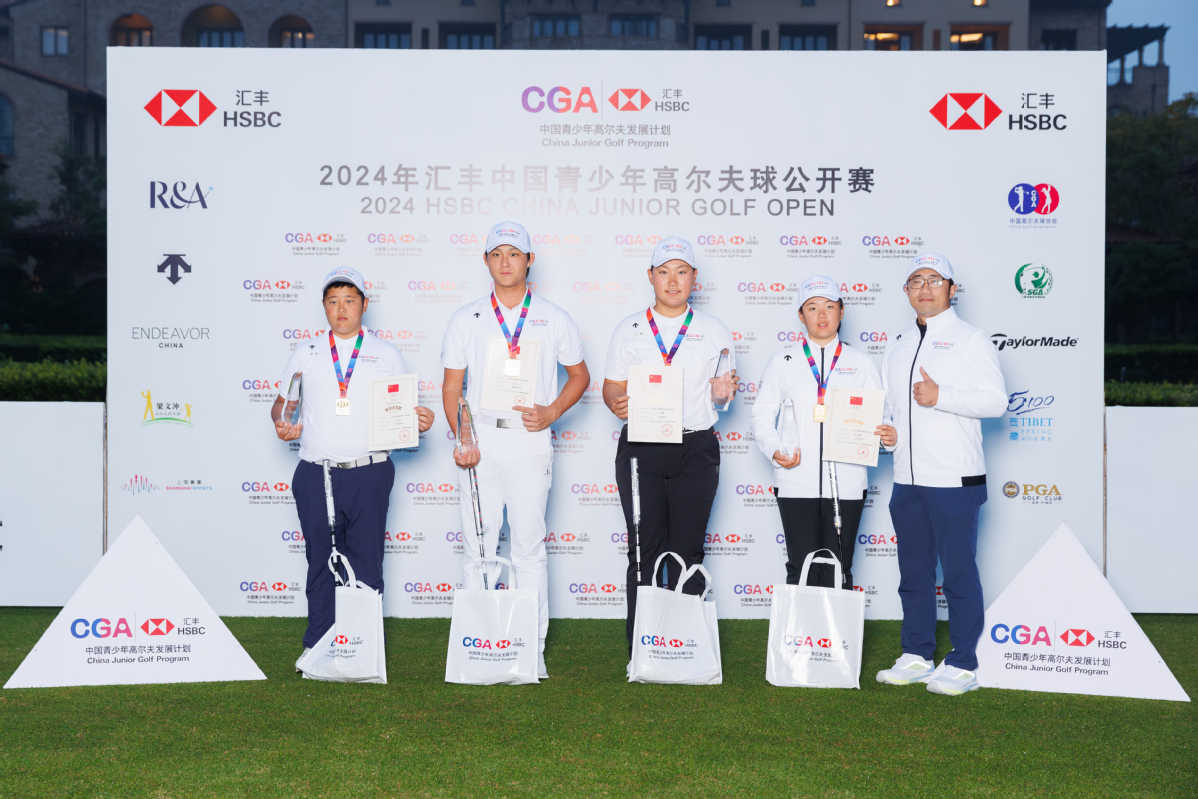
The second growth channel is youth. Registered junior golfers rose from about 400 in 2014 to nearly 126,000 in 2023. Two forces drive that surge at once. On the supply side, the association expanded its junior competition system to 693 ranking events in 2024 and created national U19, U16, and U13 teams, creating more competitive events for more players to participate in. On the demand side, affluent families increasingly treat golf as an education strategy. American universities recruit golfers and hand out athletic scholarships, and a strong junior record can improve a child’s odds at a selective school, so parents invest early in coaching and tournament travel. Growth among youth is promising for the longevity of golf in China.
Golf is concentrated in tier-1 cities, becoming a symbol of wealth
Participation looks different from most golf nations. Golf in China clusters in wealthy commercial hubs such as Guangdong, Beijing, Shanghai, Jiangsu, and Zhejiang, while thins to almost nothing in rural areas. Playing is expensive, partly by policy, as a weekday round at a Beijing course charged about RMB 880 (USD 120) in 2024. Courses are also costly to run. Water fees jumped from RMB 4 to RMB 160 per ton, and officials reclassified golf from a sport, taxed at 3% to 5%, to entertainment, taxed at 20%, treating it as a luxury rather than exercise.
Golf was introduced to China as a business tool
Beyond cost, golf has carried a particular social meaning in China. It arrived in 1984 mainly as a setting for foreign investors to do business, and this aspect of foreign culture has caught on. The game is still played for networking, and many loss-making courses survived during the boom because they helped developers manage relationships with officials and clients.
Overtime, golf in China became a marker of success rather than a game people grew up with, played on courses that were overwhelmingly private and membership-based. The association’s own report concedes the trap, framing golf as a sport built for high-end business clients while leaving ordinary consumers out. More affordable, space-efficient indoor venues are changing this. Younger players and middle-class families are coming in through cheaper indoor venues, drawn by exercise and lifestyle interests rather than business, even as the membership-and-networking model still defines the traditional course.
Golf fashion in China spreads golf culture where the sport can’t reach
The fact that #GolfCore (#高尔夫穿搭) has reached 530 million views on Rednote as of June 2026 (compared to #TennisCore at 803 million views) indicates that the fashion of golf outweighs the practice of golf. Top mentioned brands on Chinese social media in the first half of 2026 are Malbon, Kolf Galaxy/科耳吉, Descente, and Majesty. Descente, an outdoor brand backed by Chinese company Anta, has also tapped into the golf niche in China and has become a prominent symbol in China’s middle-class fashion.
Another honorable mention is China’s home-grown golf-fashion brand Biemlfdlkk, which can be seen in Chinese airports, train stations, and five-star hotels and targets China’s middle-aged men. This appeal to men, combined with the pricing of polo shirts priced in the thousands of Chinese yuan, has earned the name “Moutai of clothing.” Most of the brands’ consumers don’t golf, but the brand leverages the golf niche and the status associated with it.
What it all adds up to for China’s golf market
- Small base, elite ceiling. China performs far above its market size at the top of the global game, led by its women.
- The state is the decisive variable. Course supply is shrinking, and 2025 brought tighter, more institutionalized rules rather than a loosening.
- Growth has moved indoors by design. Simulators, campus programs, and public formats are both the market reality and the officially favored channels.
- Youth is the long game. Junior participation is institutionalizing quickly and feeding the professional pipeline.
- Expect a premium, channel-shifted market, not a mass one. Land, cost, and cultural perception set the ceiling.
- Golf fashion is another pathway to tap into consumer’s desire for #OldMoneyStyle.
Author: Allison Malmsten, edited by Ming Yii Lai, with additional research by Hansel Guo