

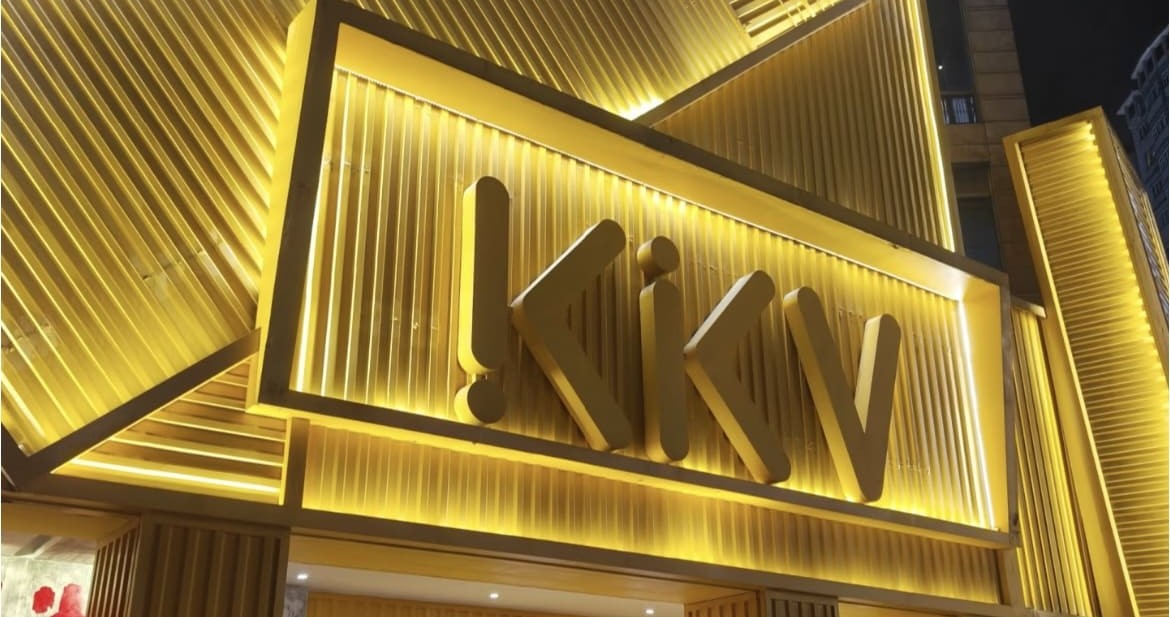
What is KKV?
KKV in China, founded in 2019 by the KK Group, is a comprehensive lifestyle platform that merges a wide variety of products. It stands out for the unique identity of its stores, which are designed as lifestyle experience centers rather than traditional retail stores.
Since 2019, the number of stores has grown to more than 680 by the end of 2025. The company benefits from the dynamism of its sister companies (X11 and The Colorist). Between 2019 and 2021, KK Group ranked as one of the top three trend retailers in China and was the fastest-growing trend retailer. KKV’s earlier success illustrates the evolution of the Chinese retail market and the need to adapt to new consumer trends.
Download our report on the She Economy in China

How KKV builds community through visual experience
Store experience: Selling the “Trendy Life”
The aesthetics of KKV stores are a key feature of its model. KKV aesthetic is characterized by the omnipresence of yellow. Added to this is the use of shipping containers, which create a chic industrial atmosphere. The idea is to create an aesthetic with eye-catching visual effects. KKV also attracts customers with its bold interior design. The aesthetic appeal of stores is enhanced, inside the shops, by products being arranged by color.
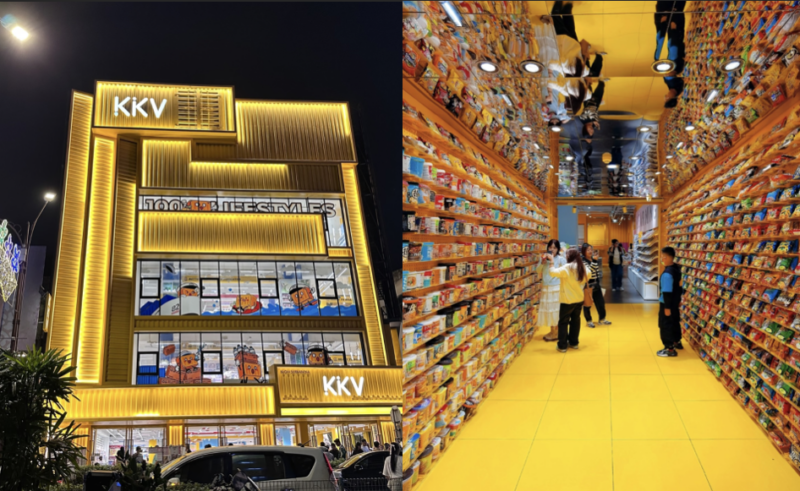
The goal is to make these stores aesthetically pleasing places where people can take photos. The flood of user-generated content has been beneficial for the company. It has brought traffic to the stores and increased customer dwell time through visual satisfaction. A study shows that visual merchandising and the atmosphere of the store account for 58.1% of purchasing decisions in a KKV store. Their stores have also functioned as free marketing tools for the brand.
A massive and diverse selection of products
KKV stores are characterized by two elements. The diversity of the products sold (fashion, beauty, home decor and goods, trendy toys, food and beverage, stationery, and skincare products) and their quality. KKV advocates a sales philosophy based on product quality and the use of technology, i.e., data to optimize product selection.
KKV’s product diversification strategy not only allows it to appeal to an audience with varied interests but also to compete with players in a wide range of markets. This strategy will enable it to continue to grow by taking market share from companies specializing in various areas of retail. This will also make it more difficult for other companies to enter the market because there will be less room for them.
According to KKV’s IPO prospectus, China’s trend retail market expanded at a compound annual growth rate (CAGR) of 13.8% from 2017 to 2021, growing from RMB 151.0 billion to RMB 253.4 billion. This growth trajectory is projected to continue, with the market expected to grow at a forecasted CAGR of 16.3% from 2021 to 2026, ultimately reaching RMB 540.3 billion by 2026.
A group that relies on synergy between its various companies to grow
By tapping into the KK Group ecosystem, KKV in China strengthens its market position through the shared knowledge and experience of all group companies.
The various companies within the KKV Group
| Retail brand | Launch Year | Market Positioning | Number of Stores (2025) |
| KKV | 2019 | Integrated lifestyle specialty retail stores within a wide range of merchandise, targeting Gen Z consumers | 680 |
| The Colorist | 2019 | Beauty speciality retail stores offering a wide range of domestic and imported masstige and entry-level luxury cosmetics brands | 340 |
| X11 | 2020 | Pop culture specialty retail stores where one can buy pop toys and pop art products of characters | 170 |
Data source: KK Group website, designed by Daxue Group Consulting, the various companies and specializations of the KK Group in 2025
Driven by a virtuous cycle of growth, KK Group’s brand matrix has become a magnet for partnerships. As early as 2022, this synergy was already a powerful magnet, attracting 1,472 brand partnerships.
The partnerships, in turn, are deployed through X11 and The Colorist products sold at KKV or through the opening of different stores in the same space. The stores’ closeness drives customer traffic from one brand to another. KK Group’s strategic presence through KKV creates an ecosystem whose efficiency constitutes a major barrier to entry for new competitors.
Balancing aesthetics with the risk of trend volatility
KKV’s store design and product range are aimed at attracting Gen Z consumers seeking a trendy life. The demographic and economic weight of this generation in China is particularly significant. This focus is clear within the company. For the group, this generation is characterized by the following values: “looks are justice, social connections are currency, and personality is power”. This observation led the group to adopt an approach emphasizing product quality, reduced social interaction in stores, and a constantly renewed shopping experience.
Based on the observation that Gen Z prioritizes appearance, the group is also focusing on creating an optimal aesthetic experience in its stores by enhancing their layout. By selling a trendy and playful lifestyle, KKV attracts both Gen Z and older consumers drawn to its youthful energy.
This heavy reliance on Gen Z aesthetics introduces a significant trend risk that could challenge the brand’s long-term stability. Because this demographic is hyper-sensitive to social media cycles, what is considered trendy today can become obsolete within months. If the brand fails to evolve quickly, it may struggle with declining foot traffic and high inventory turnover costs, transforming its greatest strength into a structural vulnerability.
KKV’s competitive outlook and expansion
Catering to the introverts: The silent sales strategy
Another important point is the silent sales strategy implemented in KKV stores. KKV is moving away from the aggressive sales tactics common in traditional Chinese retail to a self-service environment that appeals to Gen Z. This strategy is highlighted on their website: “ban on ‘welcoming greetings’”. This self-service model specifically resonates with Gen Z’s desire for autonomy. These digital-native consumers often view assistance with suspicion. And therefore prefer a physical browsing experience that mirrors the independence of online shopping.
However, this strategy implemented by KKV can only work effectively if the selected products can sell themselves. In other words, the absence of sales staff and in-store assistance must be compensated for by the quality of the products sold. To ensure products effectively sell themselves without staff intervention, KKV relies not only on a meticulous visual and curation strategy but also on a selection of products based on customer purchase databases. By constantly monitoring sales performance and consumer trends, the brand ensures its selection is aligned with evolving customer demands. It is this combination of aesthetics and technology that explains the success of this company.
Challenge direct competitors in China with new branding
KKV’s strategies have led the company to occupy a unique position in the retail market. The brand stands out thanks to its premium experience and expressive visual identity, deliberately breaking with the rigorous minimalism of players such as Muji and Miniso. By occupying this territory of expressiveness, it fills a strategic void in the Chinese market, responding to a previously unmet need for differentiation. This strategy allows KKV to stand out from its closest competitors.
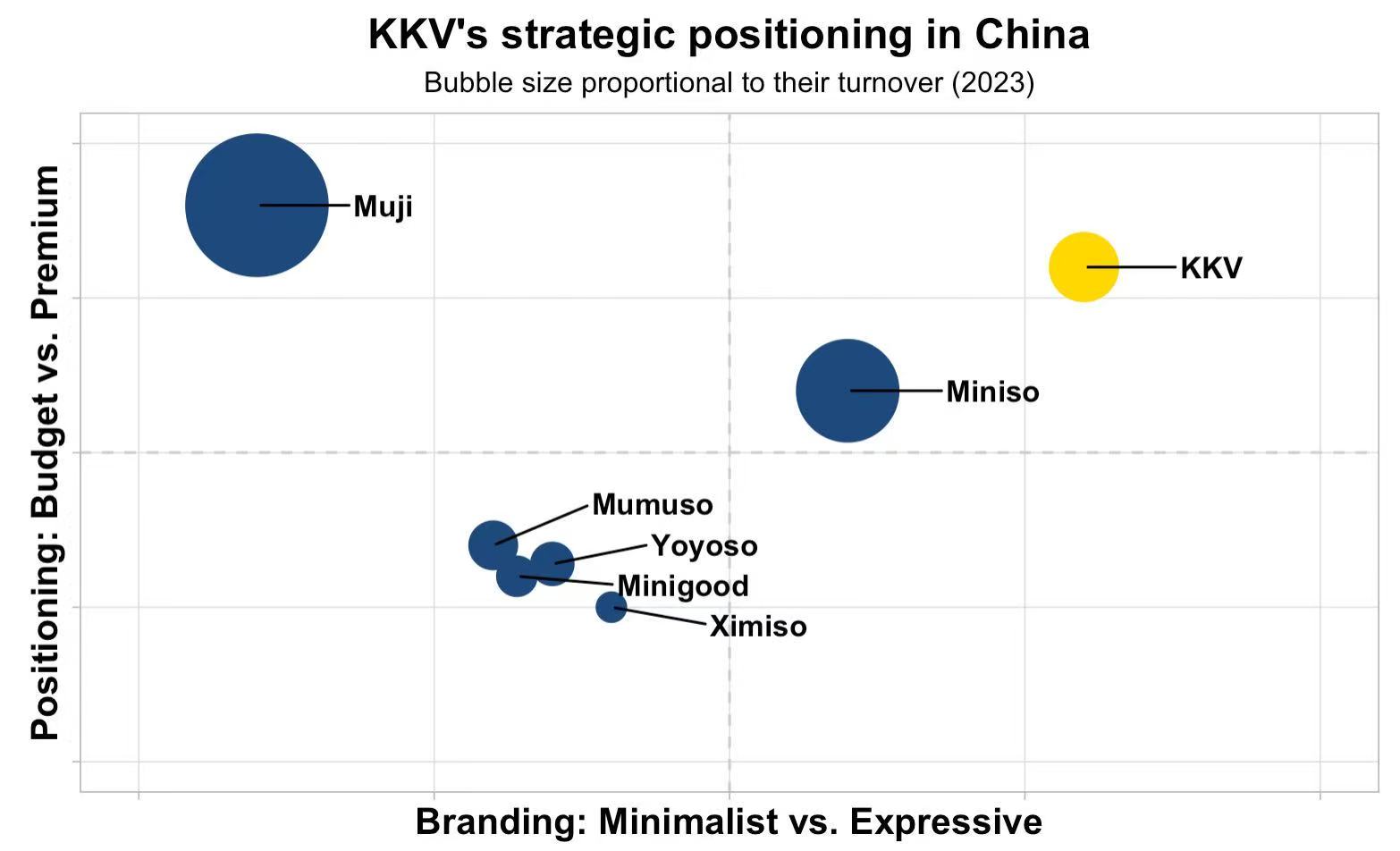
Despite this differentiation, KKV’s trajectory faces headwinds from a saturated lifestyle retail ecosystem. In its domestic market, Miniso remains an important adversary, leveraging a much larger global footprint and aggressive pricing power that pressures KKV’s margins.
As the brand expands into Southeast Asia, the challenge intensifies. It must compete for share of wallet against deeply entrenched giants like Daiso (dominating the budget-conscious segment). KKV will have to constantly innovate its product mix to maintain its unique value proposition and preserve its loyal consumer bases. Otherwise, KKV could be sidelined as a passing aesthetic trend.
The agile expansion of KKV across China and overseas
KKV’s strategic location expansion in China
KKV in China has adopted an aggressive real estate approach by positioning itself as an “anchor store.” The company relies on a strategy of having a presence in shopping malls. Unlike traditional small-format retailers, KKV focuses on occupying large spaces, typically ranging from 800 to 2,000 square meters. This scale allows the brand to become a magnet for foot traffic, capable of capturing and retaining consumer attention. Currently, most of KKV’s 580 stores are located in mid- to high-end shopping malls in first- and second-tier cities in China. By occupying prime real estate of up to 2,000 square meters, KKV incurs massive fixed overhead costs and high capital expenditure, making the model highly sensitive to fluctuations in consumer spending. “Anchor store” status can become a double-edged sword. If foot traffic targets are not met, the high cost-to-revenue ratio risks eroding margins.
By the end of 2025, KKV had a presence in more than 200 key cities across 31 Chinese provinces.
KKV’s new challenge
KKV’s expansion strategy also targets the South Asian market (Singapore, Malaysia, the Philippines, Thailand, and Vietnam). The company is building on its recipe for success in international markets. By 2025, around 100 stores had been opened abroad.
At present, the brand is only expanding within Southeast Asia. This choice is justified for obvious reasons. The tastes, habits, and preferences of consumers in this market are not very different from those of Chinese consumers. There is a logistical advantage for KKV, which can rely on the geographical proximity of Southeast Asia. Finally, this market is also a way for KKV to validate the profitability of their stores outside China before risking much heavier investments in the West.
However, this expansion entails some significant operational risks and structural hurdles. KKV must navigate through a fragmented regulatory landscape, where import duties and local compliance standards vary sharply between markets like Singapore and Vietnam. Strategically, the brand faces entrenched local competition and also the challenge of maintaining its trend-setter status in an environment where consumer loyalty is fickle.
The model’s profitability is sensitive to currency volatility and the complexities of cross-border supply chains. Any inefficiency in scaling could see high overhead costs outpace revenue. This is particularly true in markets with lower purchasing power where price sensitivity is strong.
The pillars of KKV’s retail strategy
- KKV transcends traditional retail by designing lifestyle experience centers. Its signature aesthetic creates high-visual appeal.
- As part of the KK Group, KKV benefits from the expertise of sister brands like X11 and The Colorist. This synergy creates a significant barrier to entry for new market players.
- The stores offer a massive selection across different categories and use data technology to optimize this variety. KKV is in a good position to capture market share from other competitors.
- KKV is tailored to Gen Z values. Its strategy is based on this group of consumers’ values (silent sales strategy, importance of appearance, etc.).
- KKV anchor stores reached over 680 locations in China and Southeast Asia. The brand’s development seems to have a promising future.