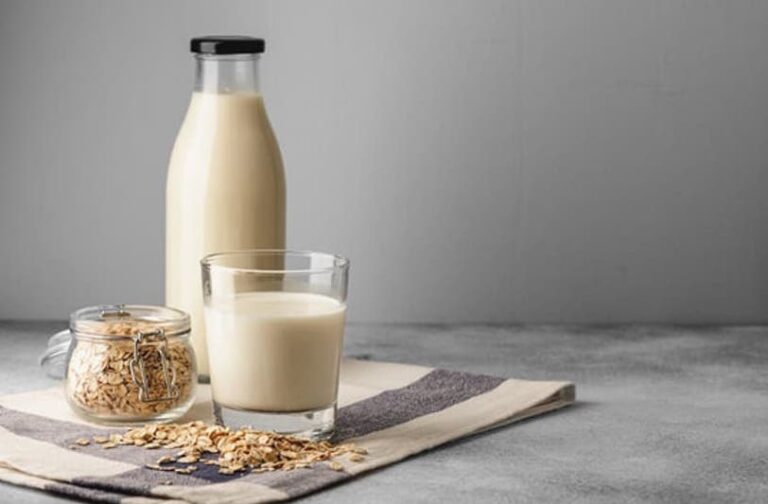

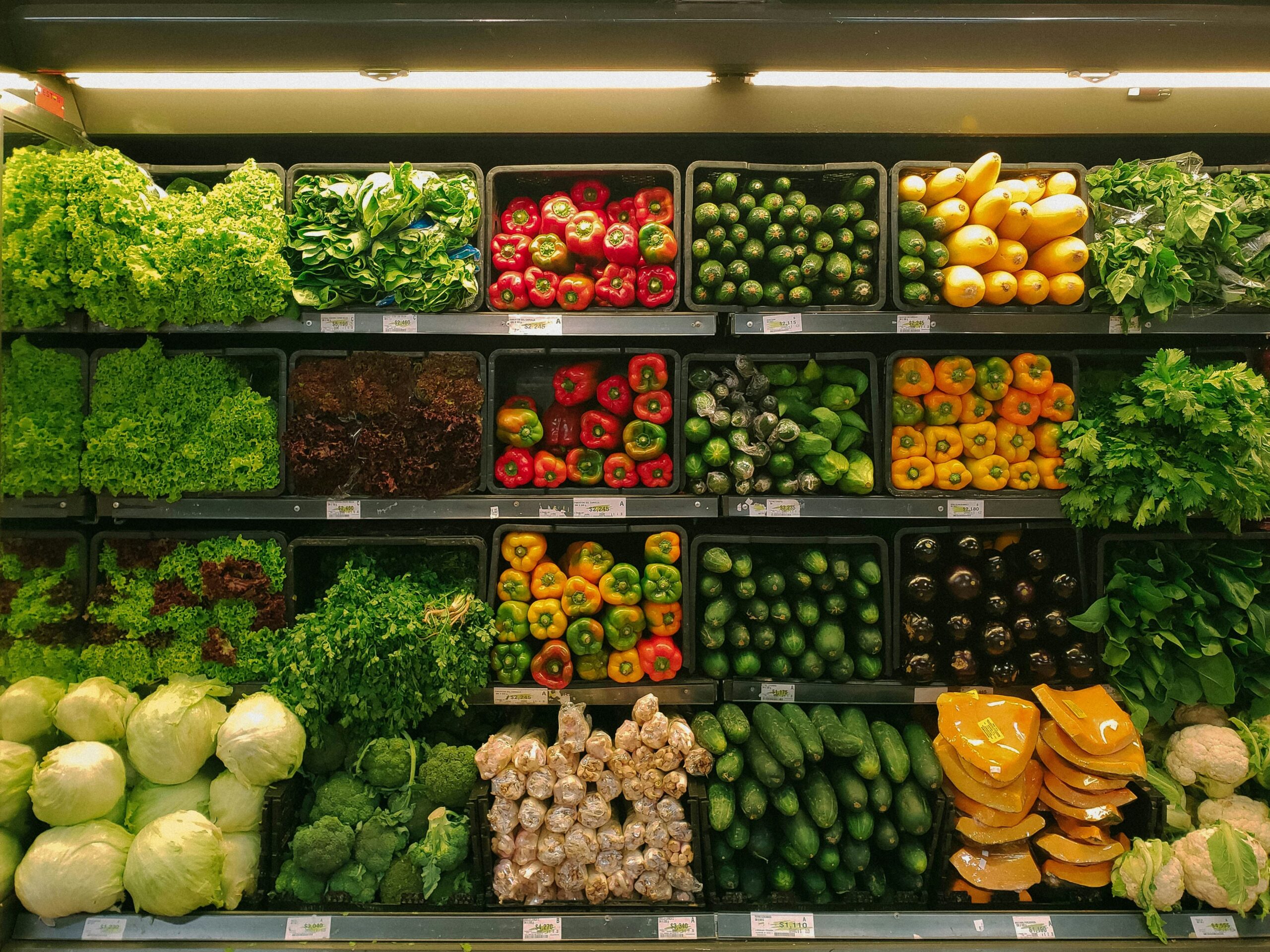
Organic food refers to agricultural products produced under a strict regulatory system. This system strictly prohibits the usage of synthetic pesticides, chemical fertilizers, and genetic engineering. In China, organic food is entering a more established, commercially viable phase. Stricter regulations have strengthened the credibility of China’s organic food market. Meanwhile, rising demand for safer, higher-quality groceries continues to broaden its consumer appeal.
Download our China F&B White Paper
This growing maturity is reflected in the massive scale of the market. China currently ranks as the world’s third-largest organic food market by value. In 2025, organic food output reached 37.23 million tons, with domestic demand close behind at 36.71 million tons. Nonetheless, the market remains firmly premium. The next challenge involves defending this price tag within an increasingly crowded wellness landscape.
The main categories of organic food in China
Driven by the nature of organic agricultural production, China’s organic market comprises three categories. Specifically, fresh produce remains the most intuitive and visible part of the market. Vegetables and fruits directly address consumer anxieties over freshness and pesticide residues. Grains and staple foods form the second pillar of the market. Products like rice, cereals, and beans embed organic consumption into routine household diets. The final category consists of processed organic products. This segment includes packaged foods, snacks, and dairy items. Collectively, these categories demonstrate how organic choices are penetrating everyday household consumption.

Institutionalizing trust and label control
Accompanying this market expansion is a rise in official state regulations to prove product authenticity. The 2005 Measures for the Administration of Organic Product Certification provided a formal legal definition. This crucial regulation established “organic” as a strictly regulated certification category. A major policy revision in 2013 further tightened industry supervision. The updated rules required rigorous assessments across production, processing, and sales. This shifted policy focus from simple category creation toward label control and consumer trust.
From 2019 onward, regulatory oversight became highly detailed. Expanded certification catalogues, organic marks, and strict traceability requirements made products entirely verifiable. In 2021, organic food joined China’s national “Three Products and One Standard” strategy. This initiative linked the sector to quality upgrading, brand building, and green agricultural development. In 2026, the new Implementation Rules for Organic Product Certification came into effect, raising compliance requirements for certification bodies, producers, and processors, while strengthening post-certification supervision and traceability. Ultimately, China’s policy shapes the market by filtering players and securing high-value credibility.
China’s organic certification pipeline
| Stage | Certification step | Domestic products | Foreign/imported products |
| 1 | Eligibility check | Product must be in China’s organic certification catalogue | Must be in China’s catalogue; overseas organic label alone is not enough |
| 2 | Certification route | Apply to a China-approved certification body | Apply under China rules, unless an equivalence agreement applies |
| 3 | System & documents | Follow GB/T 19630; system runs at least 3 months; submit site, scale, inputs, history, maps, plans | Meet GB/T 19630; submit equivalent legal, production, and import-related documents |
| 4 | Document review | Certification body reviews materials within 10 working days | Same process; documents may need translation or extra verification |
| 5 | Inspection & testing | Inspect sites, records, inputs, labels, traceability; test residues and prohibited substances | Overseas sites may be inspected; imported products may be sampled before or after entry |
| 6 | Approval & certificate | Approved only if documents, inspection, testing, and corrections pass; certificate valid up to 12 months | Same China approval standard; certificate also valid up to 12 months |
| 7 | Organic mark & sales certificate | Use China Organic Mark, unique organic code, and sales certificate for transactions | Use China Organic Mark only after China certification; sales certificate required for certified imports |
| 8 | Supervision & renewal | At least 1 annual follow-up inspection; 5% unannounced checks; 10% market sampling; renew 3 months before expiry | Same supervision and renewal rules apply to certified imported products |
Consumer demand for organic
Meanwhile, China’s organic food market is anchored in a highly practical form of lifestyle health consumption. On the one hand, consumers view these premium purchases as a direct way to protect household health. Core buyers consist of urban middle- and high-income families, with parents and caregivers heavily dominating this demographic. For them, organic options directly reduce deep-seated anxieties around food safety and production methods. On the other hand, this health-centric motivation is increasingly reinforced by rising consumer expectations around flavour. To illustrate, PwC’s Global Consumer Insights Survey highlights 36% of mainland Chinese consumers rank taste as a primary determinant in food choices.
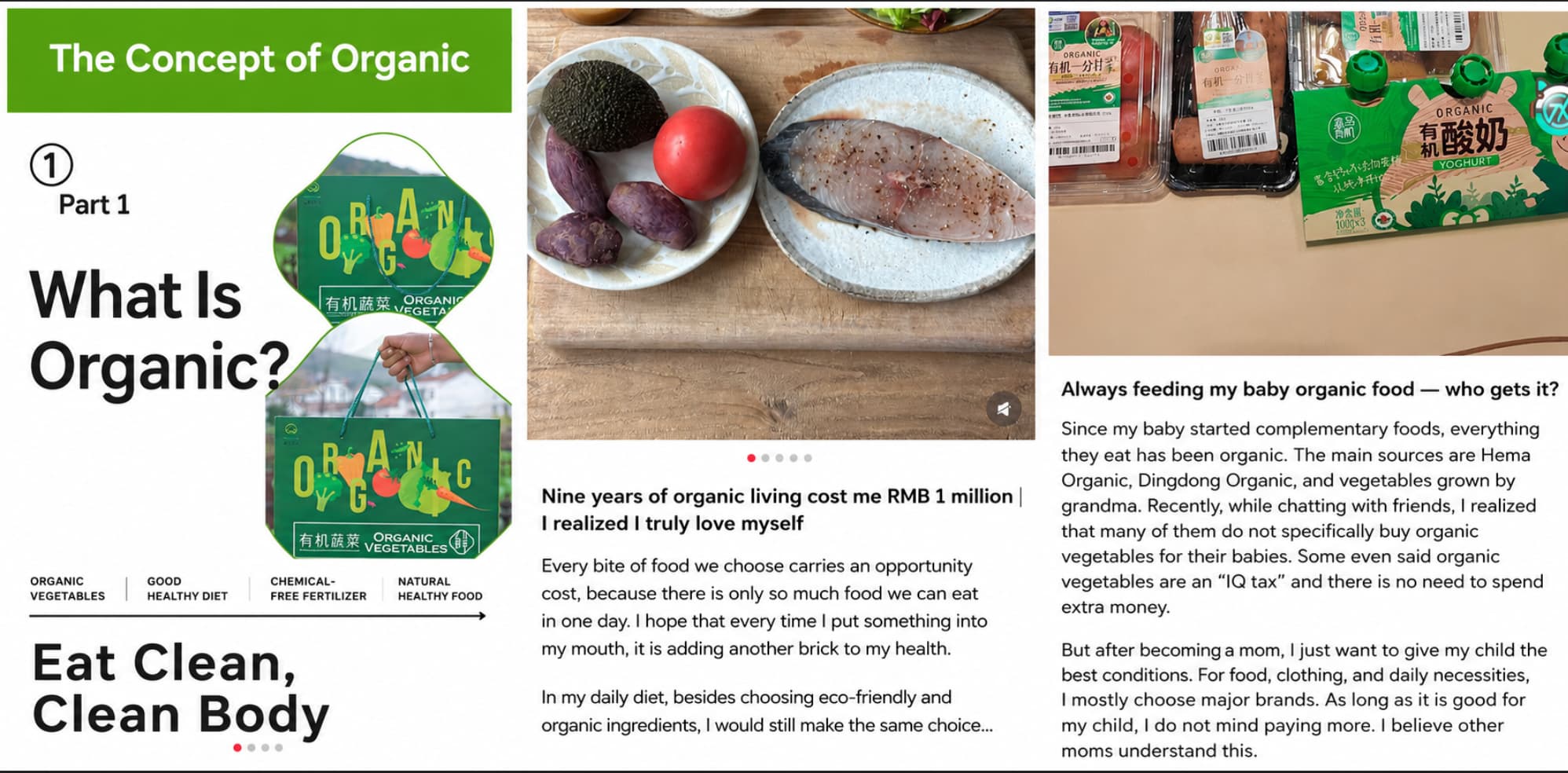
Beyond health and taste, this premium demand is directly driven by sustainability concerns regarding food production. Consumers increasingly recognize that organic farming practices actively protect local ecosystems by eliminating toxic chemical runoff. They believe supporting this ecological balance directly ensures a cleaner, more sustainable national food supply. To illustrate, 36% of Chinese shoppers seek verified certifications to guarantee eco-friendly farming compliance. Furthermore, 63% of the customers express a distinct willingness to pay a premium for sustainably produced organic items. Ultimately, the combination of safety, taste, and ecological awareness fuels industry growth.
Core challenges faced by the industry
Bridging costs and consumer checkout friction
Justifying premium pricing remains a major challenge for China’s organic food market, with markups varying significantly by category. Organic vegetables often cost three to five times more than conventional alternatives. In staple foods, however, the gap can be more moderate. A small JD.com sample shows organic rice averaging RMB 46.23 per 5kg, compared with RMB 39.47 for standard rice, indicating a price premium of around 17%.
These steep markups reflect lower agricultural yields, strict input controls, certification costs, and intensive supply chain auditing, but their effects differ across categories. Processed snacks may carry even higher premiums, though these comparisons are less straightforward because prices are also shaped by brand positioning, ingredients, packaging, and retail channel strategy. Nonetheless, many of these resource-heavy costs remain largely invisible to consumers at checkout. Consequently, the sector’s sustained expansion depends on whether brands can convert these hidden quality metrics into a clear and compelling consumer value proposition.
Overcoming competitive clutter and label overlap
Another hurdle is the overlap between certified organic food and similar “healthy” food labels. Consumers often encounter terms such as “Green Food,” “pollution-free,” and “zero-additive.” However, these terms do not carry the same meaning. For example, China’s official “Green Food” standard allows a regulated, limited amount of chemical pesticides. In contrast, “organic” certification prohibits synthetic chemical inputs and requires total process traceability. Without clear differentiation between these, consumers could demonstrate a lower willingness to pay the organic premium.
Key characteristics of China’s organic food market
- Organic food is transitioning from a niche segment into a major premium food category.
- Strict regulations, official certifications, and robust traceability set genuine organic products apart from ambiguous marketing claims.
- Consumer purchasing decisions are heavily anchored in family well-being, premium quality, and sustainability.
- While higher price points accurately reflect stringent production and certification costs, these behind-the-scenes value drivers are not always visible to the end consumer.
- The critical hurdle for the segment moving forward is establishing clear differentiation in a crowded, competitive market.
Author and editor: Ming Yii Lai, with additional research by Maeve Fang