


In Korea, so many struggle with weight loss that there’s a saying that “going on a diet is lifelong homework”. People constantly pursue slim body types, trying all sorts of weight loss methods. These methods were often unsustainable, like the extreme IU diet, named after a celebrity, which involves an apple, 1-2 sweet potatoes, and a protein drink a day. However, people today are turning to more sustainable methods and are open to trying different ones, including the Switch On diet and GLP-1 drugs. Solutions are also very accessible, available at Olive Young, pharmacies, and clinics. In a country with strict beauty standards, obesity is also a public health concern. While the rate is lower than the OECD average, one in three adults is obese, driving demand. In 2024, South Korea’s weight loss market was estimated at USD 5.5 billion and is projected to reach USD 11.3 billion by 2035.
Read our Korea’s MZ Generation report

Men and boys are experiencing higher obesity rates than women and girls
According to the Korean Society for the Study of Obesity (KSSO), obesity trends showed clear differences by gender and age from 2014 to 2023. Among men, obesity has steadily increased each year, reaching 49.8% in 2023, the highest among all groups. Women’s rates rose more gradually and have remained stable since 2021 at around 27.5%. Among children, boys saw a sharp increase in obesity during 2020-2021, followed by a decline through 2023. Girls’ rates decreased after 2020 but slightly rebounded to 12.7% in 2023. Overall, obesity remains more prevalent and persistent among males across both adult and youth populations.

Men show higher early obesity, women are rising gradually
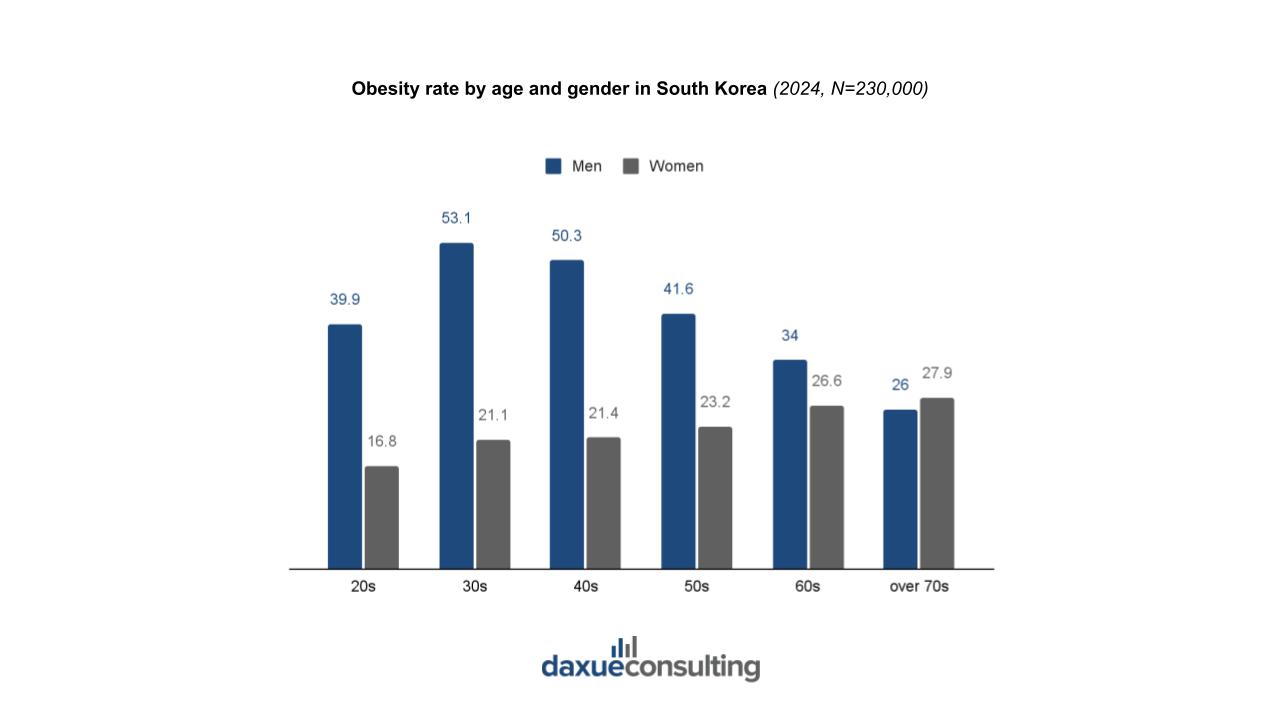
According to the Korea Disease Control and Prevention Agency (KDCA), based on a 2024 survey of 230,000 people, obesity rates showed very different age patterns between men and women. Men tended to have significantly higher obesity rates at younger and middle ages, peaking in their 30s (53.1%) and remaining high in their 40s (50.3%), before gradually declining after their 50s. In contrast, women started with much lower obesity rates in their 20s (16.8%), but their rates steadily increased with age, reaching 27.9% in their 70s. This indicates that men are more affected by obesity earlier in adulthood, while women experience a gradual increase as they age, narrowing the gender gap in older age groups.
Wealthier regions show significantly lower obesity rates
According to the Korea Disease Control and Prevention Agency from 2022 to 2024, regional obesity rates in South Korea showed a clear link to income level, age structure, and infrastructure. The lowest obesity rates were recorded in affluent urban districts such as Gwacheon (22.1%), followed by Seo-gu, Suseong-gu, Bundang-gu, and Suji-gu, all areas characterized by higher household incomes and relatively younger populations. For example, Gwacheon’s average health insurance premium is significantly above the national average, while its elderly population share is lower.
In contrast, rural counties such as Danyang County (44.6%), Cheorwon County, and Boeun County show much higher obesity rates, alongside lower incomes, a higher proportion of residents aged 65 and over, and less-developed public transportation.This shows that higher-income, younger populations tend to be more health-conscious and have better access to healthy food and walkable infrastructure, whereas older, lower-income regions with limited transport options rely more on cars, contributing to reduced physical activity and higher obesity rates.
Westernized diets and MZ lifestyles accelerate Korea’s obesity rise
Obesity in Korea is rising due to structural lifestyle and dietary changes. A shift toward Westernized diets such as processed foods, delivery meals, and sugary drinks, combined with sedentary work, long screen time, and reduced physical activity has significantly increased weight gain. Irregular eating habits, late-night meals, and South Korea’s drinking culture, particularly among men, further contribute to the trend. Stress, poor sleep, and emotional eating also play a role. The MZ Generation is especially affected, as career pressure, lifestyle transitions, and urban living environments encourage unhealthy routines and rapid weight gain.

K-pop and media shape body image expectations
For women, the ideal body emphasizes extreme thinness, a small frame, and very low body fat, often below what is medically considered healthy, shaped by K-pop, media, and social platforms. As a result, many normal-weight or even underweight women perceive themselves as overweight and aim to become thinner. While these pressures are softening as people seek healthier lifestyles and sustainable weight management, Korean women still generally seek body types that are considered thinner than Western body types.
For men, the ideal focuses on a lean yet muscular physique with defined abs and broad shoulders rather than simple thinness. While social pressure on men is growing through idol fitness trends, it remains stronger and more intense for women.

The demand for pill and powder supplements is steadily increasing
South Korea’s weight loss market for supplements reached approximately USD 692.6 million in 2024 and is projected to expand to USD 1.62 billion by 2030, reflecting strong consumer demand for functional and convenient weight-management solutions. Products are available in diverse formats, including powders, pills/tablets, liquids, softgels, and gummies, with powders accounting for the largest revenue share (37.7% in 2024), while pills and capsules represent the fastest-growing and most commercially attractive segment due to ease of intake and portability.
Key functional ingredients include green tea catechin, Garcinia cambogia, konjac (glucomannan), caffeine blends, L-carnitine, and chromium. These products are positioned around specific use cases such as appetite suppression (konjac fiber jellies), fat metabolism support (catechin and caffeine-based teas), carbohydrate or fat blocking (“post-meal slim” concepts), and night-time detox or “inner beauty” drinks. For example, a vegan catechin tablet marketed as the “No.1 slimming supplement” on Olive Young in South Korea online in 2024 emphasizes post-meal fat reduction and recorded cumulative sales of 16 million units, highlighting the strong retail influence and consumer trust in clinically framed functional claims.

Meal replacement products are a convenient meal for busy office workers
Meal replacement products are positioned as practical, calorie-controlled alternatives to traditional meals, particularly targeting busy office workers and consumers managing irregular eating patterns. Formats include ready-to-drink shakes, powdered protein shakes, diet jellies (including drinkable konjac jellies), low-calorie snack bars, and light meal bars. Most products are designed to stay under 200-300 kcal per serving while providing high protein and added fiber to enhance satiety.
For instance, the Meal4You series by Kookmin Bio includes soy-based meal replacements offering over 12 g of protein and substantial fiber per serving, with certain variants incorporating Garcinia to emphasize body-fat reduction. Drinkable konjac jellies such as Jelly.B Diet Konjac Jelly contain only 6-7 kcal per 150 ml tube and are marketed as portable appetite-control snacks. Additionally, products like grapefruit “fat-burning” teas from Teazen are promoted to support fat metabolism during low-carb or intermittent fasting regimens. Overall, meal replacements in Korea are less about extreme dieting and more about structured portion control framed as balanced “light meals” that enable weight management without fully skipping food.
GLP-1 drugs are transforming South Korea’s weight loss market from niche to mainstream
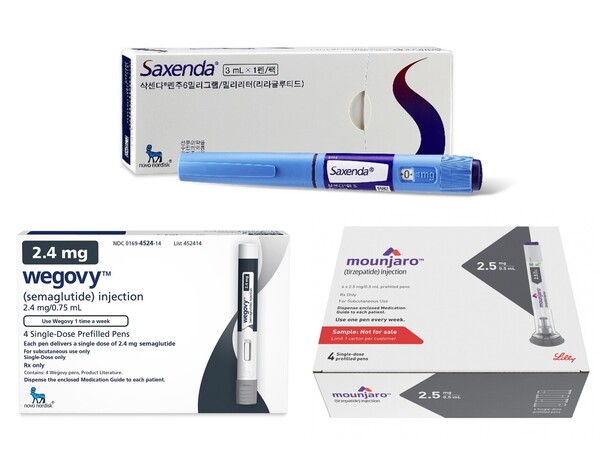
GLP-1 agonists such as Wegovy, Mounjaro, and Zepbound are also expanding as a weight loss option. The market reached USD 122.8 million in 2024 and is projected to grow to USD 386.1 million by 2030. Semaglutide products dominated with 87.6% market share in 2024, with Wegovy alone holding over 70% and generating more than KRW 100 billion (USD 68 million) in the third quarter of 2025. Mounjaro, launched in 2025, recorded rapid early sales of KRW 28 billion (USD 19 million) within two months. Korean pharmaceutical companies such as Hanmi and Ildong are also developing more affordable, oral, and long-acting GLP-1 alternatives to increase accessibility. These medications are widely used in obesity clinics and can result in 15-25% weight loss, often combined with liposuction or lifestyle coaching.
However, high costs and concerns about excessive thinness culture have raised debates over potential insurance coverage. This shows that Korean consumers are rapidly embracing GLP-1 treatments as a mainstream, clinic-based weight management solution, viewing them not merely as medication but as a high-efficiency, medically validated shortcut to controlled and predictable fat loss.
Boutique gyms and short-term body transformation programs are gaining popularity prior to job interviews and weddings
South Korea’s weight loss market is strongly supported by fitness and lifestyle services. Many consumers attend fitness clubs, PT studios, Pilates, and CrossFit centers, often setting short-term, goal-specific targets for important life events such as weddings or job interviews. Recently, boutique studios and home-based personal training have seen growing demand, as consumers prefer convenience, privacy, and personalized programs. The trend reflects a shift toward structured, professional guidance rather than independent dieting.
Koreans prefer non-surgical solutions through obesity clinics
Obesity clinics are also widespread across South Korea, offering injections, dietary coaching, and medical monitoring. Bariatric surgery remains a relatively small niche segment, valued at USD 44.6 million in 2024 and projected to grow modestly to USD 49.4 million by 2033. Common procedures include gastric bypass and sleeve gastrectomy, typically recommended for severe obesity cases rather than cosmetic weight loss. This shows that Korean consumers generally favor structured, clinic-based and minimally invasive weight-management solutions, while reserving surgical intervention for medically severe cases rather than aesthetic body optimization.
South Korea’s weight loss market: A highly integrated and professionalized ecosystem
- South Korea’s weight loss market, worth USD 5.5 billion in 2024, is projected to grow at a CAGR of 6.8% to USD 11.3 billion by 2035, reflecting strong long-term expansion. While beauty ideals are diversifying and softening, Koreans still seek slimmer body types compared to Western ideals. Moreover, they are seeking healthier weight loss methods – moving away from extreme dieting toward more balanced nutrition and exercise.
- Obesity rates are significantly higher among men, especially in their 30s-40s, while women’s rates rise gradually with age. Wealthier urban regions show lower obesity rates compared to older, lower-income rural areas.
- Westernized diets, sedentary lifestyles, and MZ Generation consumer habits are accelerating weight gain.
- Koreans often combine solutions rather than relying on social method. Supplements and meal replacements are rapidly growing, driven by convenience and functional positioning. GLP-1 drugs are also expanding, shifting from niche treatments to mainstream medical weight-loss solutions.
- Consumers prefer clinic-based, minimally invasive options over surgical interventions.