
The rapid expansion of Chinese beverage chains in Southeast Asia represents more than a retail boom. With over 6,100 outlets across Southeast Asia, this trend is reshaping consumer habits, challenging incumbents, and offering a new lens on China’s commercial influence. These chains are leveraging operational strategies perfected in China’s hyper-competitive market to set new benchmarks for efficiency and scale. Their growth is propelled by Southeast Asia’s booming foodservices market. It was valued at around USD 224 billion for 2025, driven by urbanization, digital platforms, and rising incomes.
Download the ASEAN x China business relations report

Success stems from divergent market approaches
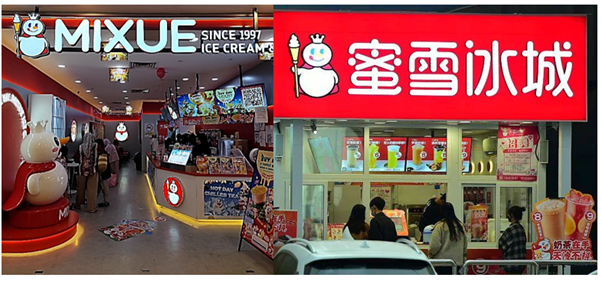
Mixue: Cost-efficient leader in both home and foreign markets
Chinese beverage chains in Southeast Asia leverage distinct approaches to capture diverse consumer segments. Mixue Bingcheng (known as Mixue in Southeast Asia) dominates with an ultra-value pricing model. It is achievable through vertical integration so extreme that it controls everything from dairy farms to distribution networks in both the home country and foreign markets. The result is a franchise empire serving the masses with relentless efficiency. Besides, Mixue lowered the barrier of entry for franchisees by providing training and a low initial capital requirement of USD 40,000 per store.
Chagee: Premium tea offerings and strong branding
Chagee has chosen the opposite path, positioning itself as the Starbucks of tea culture. The brand has found a market gap in premium, healthy tea lattes that was previously covered by locals such as Tealive and pricier independent tea houses. With premium ingredients, stores designed for lingering rather than leaving, and careful cultivation of heritage narratives. For instance, in Indonesia, Chagee joint-ventured with Erajaya Group’s PT Era Boga Nusantara (EBN), one of Indonesia’s largest lifestyle smart retailers, for localized promotional activities. This branding strategy attracts the aspirational middle class who are willing to pay triple Mixue’s prices for an experience, not just refreshment.
Luckin Coffee: Tech-driven coffee experience
Luckin Coffee, China’s answer to the question “what if a coffee chain thought like a tech startup?”, has carved out the middle ground. Its app-driven model treats physical stores as fulfillment centers for a digital platform. Urban professionals and people who value speed and consistency over atmosphere are its main customer group.
| Brand | Core Value Proposition | Target Consumer & Pricing | Key Southeast Asia Strategy |
| Mixue | Ultimate affordability & fun | Mass market, youth. Ultra-low price (e.g., USD 0.50 ice cream) | Rapid franchise rollout, local flavor adaptation, for instance, coconut-flavored drinks in Thailand |
| Chagee | Premium tea culture & healthy lifestyle | Aspirational, urban millennials/Gen Z. Premium pricing | Cultural storytelling, exclusive collabs, health/halal certifications. |
| Luckin Coffee | Digital-first convenience & value | Urban professionals & students. Mid-range, promotion-driven | Tech-driven grab-and-go model |
Source: Public information, compiled by Daxue Consulting
How Chinese beverage chains in Southeast Asia stood out
These chains operate like technology firms, not traditional restaurants. Franchise models provide capital-light expansion, but centralized digital systems maintain iron control over operations. Data flows from every transaction inform decisions about everything from staffing to procurement. Chagee’s inventory turns over every 5.3 days on average. Furthermore, supply chain control creates economic moats that are hard to replicate. The deep vertical integration ensures consistent quality and defends their market position.
Challenges on the horizon
Value leaders like Mixue face persistent margin pressure, where razor-thin profits leave little room for error. Besides, these brands’ Chinese origin raised questions on halal certification among Muslim communities in Southeast Asia, which creates an initial barrier.
The rapid saturation of markets through franchising risks also cannibalizing sales and straining relationships with franchisees who bear operational risks. For premium brands, maintaining authentic cultural resonance while adapting to local tastes is a complex, ongoing balancing act.
Local contenders fight back
Furthermore, their success has ignited fierce local competition, as Southeast Asian entrepreneurs rapidly learn from and adapt these very business models. Zus Coffee in Malaysia matches rivals on digital convenience through its app but maintains a relatable, local brand identity. The brand also heavily localizes its menu with flavors like Gula Melaka to resonate with Malaysian tastes, while marketing itself as an “affordable necessity.” The combination of scale, cultural relevance, and competitive pricing built strong brand loyalty that poses a challenge to foreign rivals.
In Indonesia, Luckin Coffee faced fierce competition from local brands and operators that offer more localized coffee experience in varied price points. Tomoro Coffee, which was founded by ex-Oppo executives in 2022, introduced a tech-enabled model with automated machines and a mobile app, three years before Luckin Coffee enter Indonesian market. Tomoro Coffee blends classic espresso with local flavors, adapting to regional tastes, and powerful branding and expansion (approaching 1,000 stores), which supports its success in diverse markets. The brand also invested in its own roastery to ensure a sustainable supply of fresh, quality beans, which helps in quality and cost control.
Meanwhile, Indonesia’s Kopi Kenangan targets the mass premium consumer market with more than 1,200 stores. There are thousands of warung kopi (independent cafés) in Indonesia that offer a relaxed coffee experience and a place for gathering, which is enjoyed by locals. As such, the market poses a significant challenge for foreign brands.
Future outlook for Chinese beverage chains in Southeast Asia
The ultimate prize is not market share but mindshare. Mixue has already recognized this, investing heavily in its mascot, a rotund snowman that appears in viral videos and commands genuine affection. Chagee curates cultural moments through store design and product storytelling. These efforts aim to transform these chains from convenient novelties into embedded parts of daily life. As such, the long-term trajectory of these chains will be defined by their ability to evolve from competing on price or novelty to building genuine emotional equity and brand loyalty.
Key insights on Chinese beverage chains in Southeast Asia
- These chains precisely target different consumer segments. For instance, Mixue with ultra-low prices, Chagee with premium tea culture, and Luckin Coffee with digital convenience.
- They expand rapidly through franchising but maintain central control via data-driven digital systems that optimize operations, inventory, and supply chains with high efficiency.
- Through extreme vertical integration (controlling ingredients, production, and distribution), they achieve massive economies of scale. This ensures consistent quality and creates significant barriers for local competitors.
- Their success has sparked fierce competition from adaptable local chains (like Zus Coffee, Tomoro) that combine similar tech and franchise models with superior local brand resonance and hyper-localized products.
- The next challenge is moving beyond price and convenience to build genuine brand loyalty and emotional connection, transforming from foreign novelties into embedded parts of daily life in Southeast Asia.