

In South Korea, it is no surprise that there are higher expectations for how celebrities should look and behave. South Korea’s cancel culture reinforces these expectations as celebrities are not only expected to be visually appealing but also to uphold the highest moral standards. They are expected to act humbly, be polite, and avoid unethical or illegal behavior off screen. When celebrities become involved in illegal acts such as DUI and gambling, or in immoral behaviors such as school or workplace bullying and affairs, netizens react quickly, often leading to cancellation. While some celebrities return—depending on the severity of their actions—others are ousted from the entertainment industry. Moreover, brands are also expected to take accountability. While brands may not be directly subject to celebrity standards, they are expected to distance themselves, often by canceling contracts or suspending partnerships.
Read our Korea’s MZ Generation report
South Korea’s cancel culture extends beyond public criticism
In practice, South Korea’s cancel culture refers to collective online actions by netizens calling for accountability from celebrities accused of social or moral misconduct. Netizens often expect and even demand their exclusion from television programs, advertising campaigns, or professional roles, as well as boycotts of related content. Entertainers and idols are most frequently affected, as their careers are closely tied to public perception and public trust. Consequently, being “canceled” in Korea often results in an extended hiatus or long-term exclusion from the industry, rather than a brief period of criticism.
Korean netizens are quick to react to scandals, even demanding quick explanations from brands
Korean online communities such as Nate Pann, DC Inside, and TheQoo, along with social media platforms, often accelerate the spread of allegations and public commentary within a short period of time. This rapid circulation creates immediate and intense pressure on companies to respond quickly. As a result, agencies, broadcasters, and brands may choose to suspend activities, sever ties, or edit individuals out of programs before investigations are fully completed, prioritizing the protection of reputational risk over the potential consequences of acting prematurely.
South Korea’s cancel is particularly harsh on celebrities
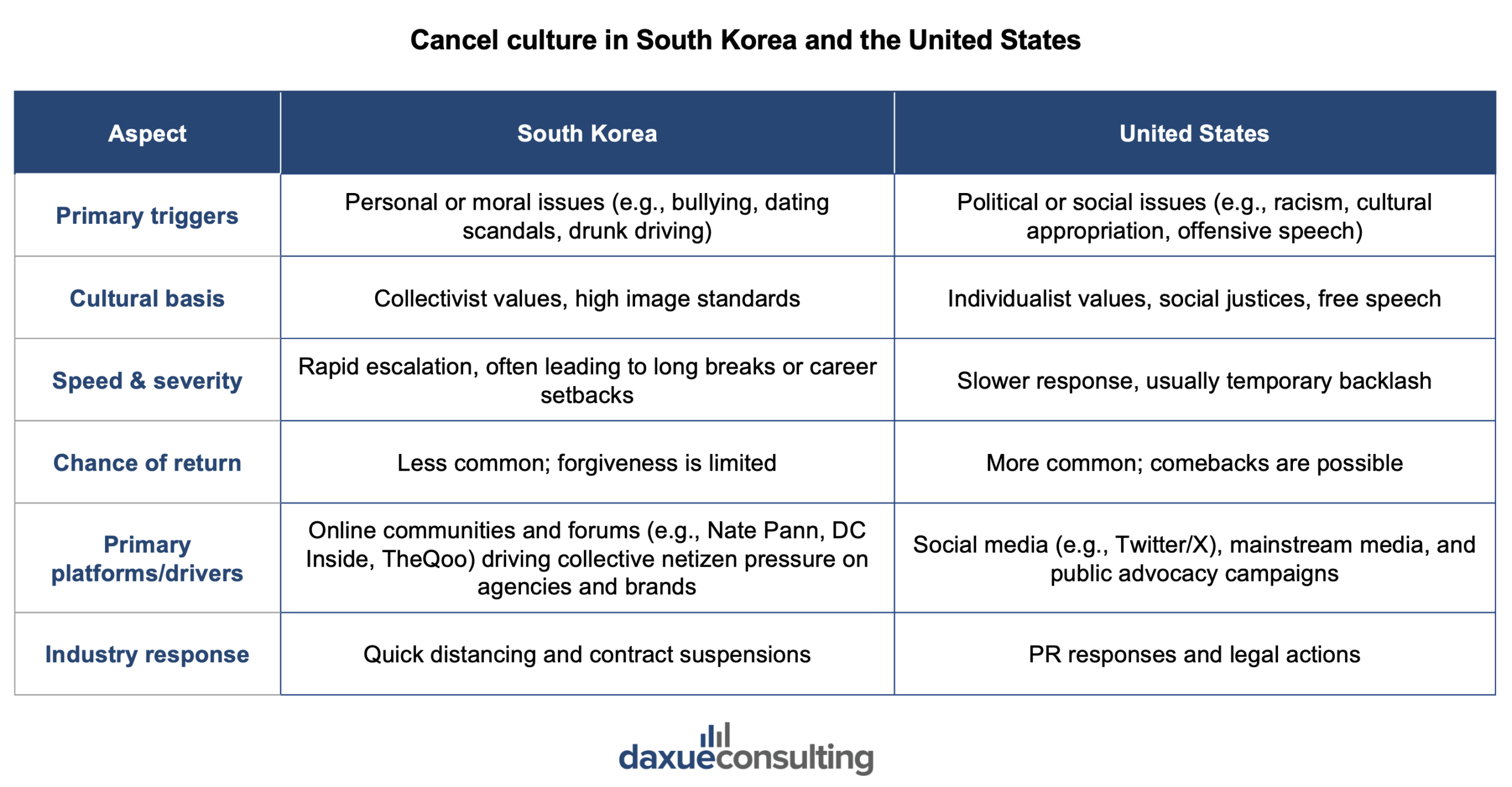
South Korea’s version is often described as more intense and unforgiving than that of Western countries such as the United States, due to differences in culture, society, and industry. In Korea, public responses tend to emphasize collective ethics, fast online responses, and long-term or permanent career damage. In contrast, the U.S. approach is more likely to center on public debates and allows greater opportunity for explanation, recovery, or redemption. These differences largely reflect Korea’s collectivist social values versus the more individualistic orientation of Western societies.
In Korea, public reactions are shaped by high moral expectations and sensitivity to harm
Influenced by Confucian values, Korean society places strong importance on moral conduct, social harmony, and responsibility that extends beyond the individual. Public figures and organizations are often expected to act as role models, and when expectations are not met, public reactions tend to reflect a desire to restore balance rather than to punish for its own sake. This perspective encourages empathy toward those perceived as harmed and reinforces a collective sense of fairness. For brands, this environment favors companies that approach the market with cultural awareness, consistency, and respect, creating opportunities to earn trust through long-term, values-aligned engagement.
Brands in Korea respond to scandals with immediate risk avoidance
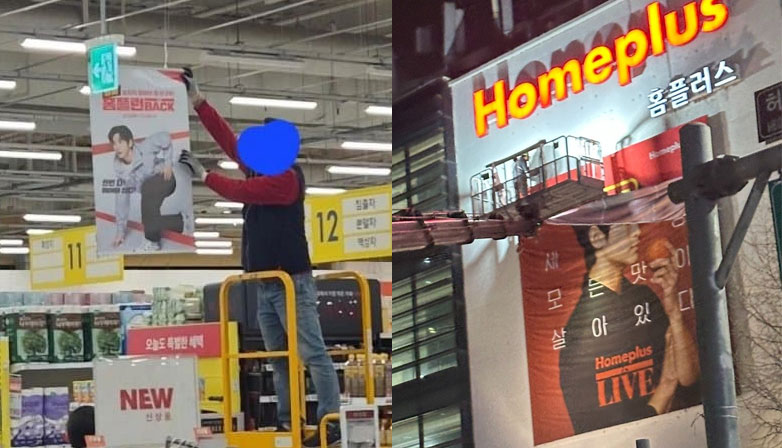
In South Korea, brands tend to react to cancel culture by swiftly distancing themselves from individuals facing public backlash, often before facts are fully verified. Advertisers commonly suspend contracts, remove campaigns, and halt collaborations to minimize reputational exposure amid rapidly escalating online criticism. These responses are driven less by legal outcomes and more by public sentiment, as prolonged association with controversy can trigger consumer boycotts, media scrutiny, and financial losses. As a result, brand behavior reinforces a zero-tolerance environment in which speed and separation take priority over due process.
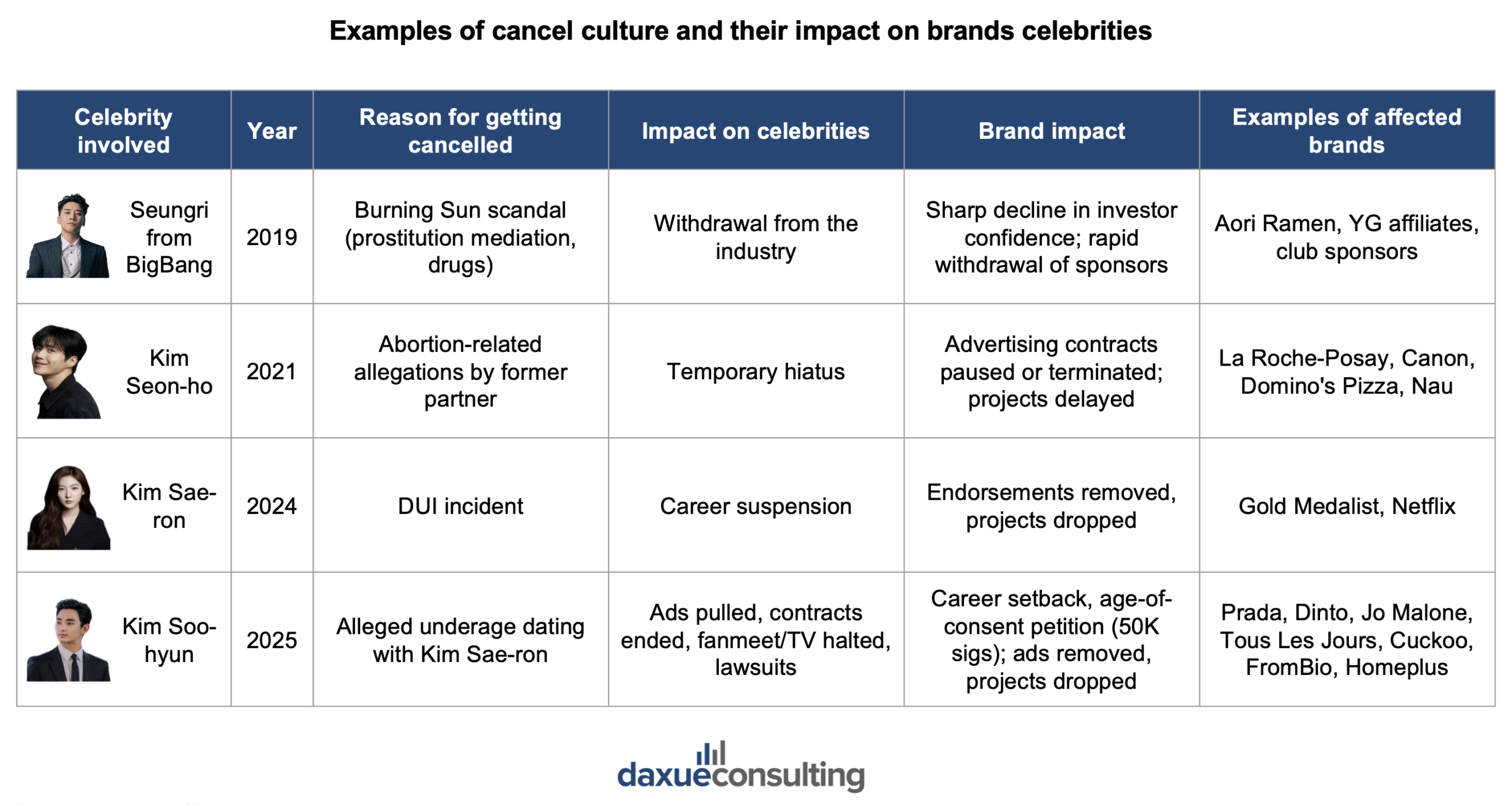
Comeback is possible depending on public sentiment, severity of allegations, and response strategy
Comebacks after South Korea’s cancel culture are possible but difficult, with only about 20–30% of celebrities successfully rebuilding their careers. Those who return usually issue sincere apologies, take long breaks from the public eye (around six to 24 months), and reappear with strong projects or solid agency support. For example, G-Dragon, investigated for drug use in late 2023 but cleared after negative tests, endured a roughly one-year hiatus filled with frustration and near-retirement thoughts before staging a triumphant 2024 return via his satirical album “Power,” Galaxy Corp backing, world tour “Ubermensch,” the Ok-gwan Medal honor, APEC performance, and anti-drug donations that shifted public narrative. This shows that criminal convictions or repeated scandals often prevent full recovery, while minor/misreported issues allow rebounds if public opinion shifts, underscoring the binary yet navigable nature of Korean netizen dynamics.
South Korea’s cancel culture hits celebrities harder than brands
- Koreans hold high expectations of celebrities, expecting them to maintain high moral standards even off screen.
- South Korea’s cancel culture spreads quickly through online communities, often forcing brands to respond quickly. Brands sometimes even cancel contracts before allegations are verified.
- While celebrities are more negatively impacted by cancel culture, brands are typically better positioned to limit long-term damage by distancing themselves. This environment also pushes brands to hold stricter morality clauses, shorter contracts, and more diversified ambassador portfolios.