
In 2024, Dubai chocolate became popular in South Korea. Specifically, a single imported chocolate bar from Fix Dessert Chocolatier turned into a nationwide, cross-category phenomenon within months. Introduced as a premium department-store dessert, it rapidly scaled into mainstream convenience retail, cafe chains, and even alcohol, demonstrating how a food fad sweeping in Korea develops and spreads across various industries.
Read our Korea F&B industry report
South Korea’s Dubai craze starts with an imported chocolate bar
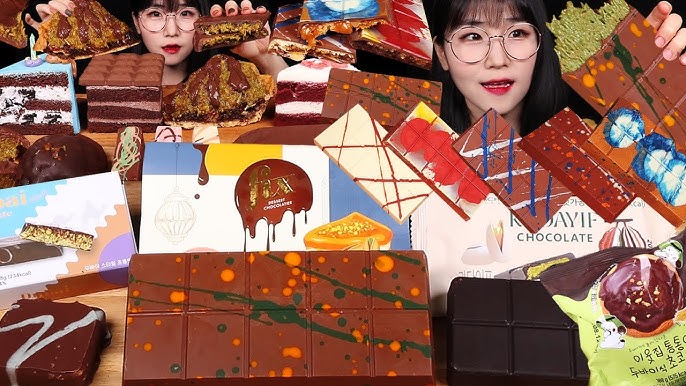
South Korea’s Dubai craze began with the Dubai chocolate. Filled with pistachio cream, tahini, and kadayif, the bar offered a crunchy yet gooey texture and a visually dramatic cross-section that made it highly shareable online.
When it entered Korea in 2024, demand surged almost immediately. According to Google Trends, searches for “Dubai chocolate” (두바이 초콜릿) jumped from near zero to peak levels within a month. Major department stores such as Shinsegae and Lotte World Mall reported daily queues, selling 400 to 600 bars per store and setting a limit of two per person. Priced at approximately KRW 17,000 (equivalent to about USD 11), the bars sold out within 30 minutes, even on weekdays, and quickly entered the resale market at premium prices.
Convenience stores launch Dubai chocolate-inspired snacks
The Dubai chocolate hype quickly spread to convenience stores in South Korea. In 2024, CU launched its own Dubai‑style chocolate bar at KRW 4,000 (about USD 2.7). Its first batch of 200,000 units sold out in a single day, leading to continuous restocking. CU later expanded into Dubai‑style cookies and other Dubai‑themed confectionery, while GS25 and 7‑Eleven also rolled out their own Dubai‑chocolate lines.
By late 2025, Dubai‑related desserts at GS25 alone saw sales rise by 144.9% year‑on‑year in some months, showing how a single imported bar had become a full flavor platform across mass‑market snacks.

Following Dubai chocolate, dujjonku went viral in 2026
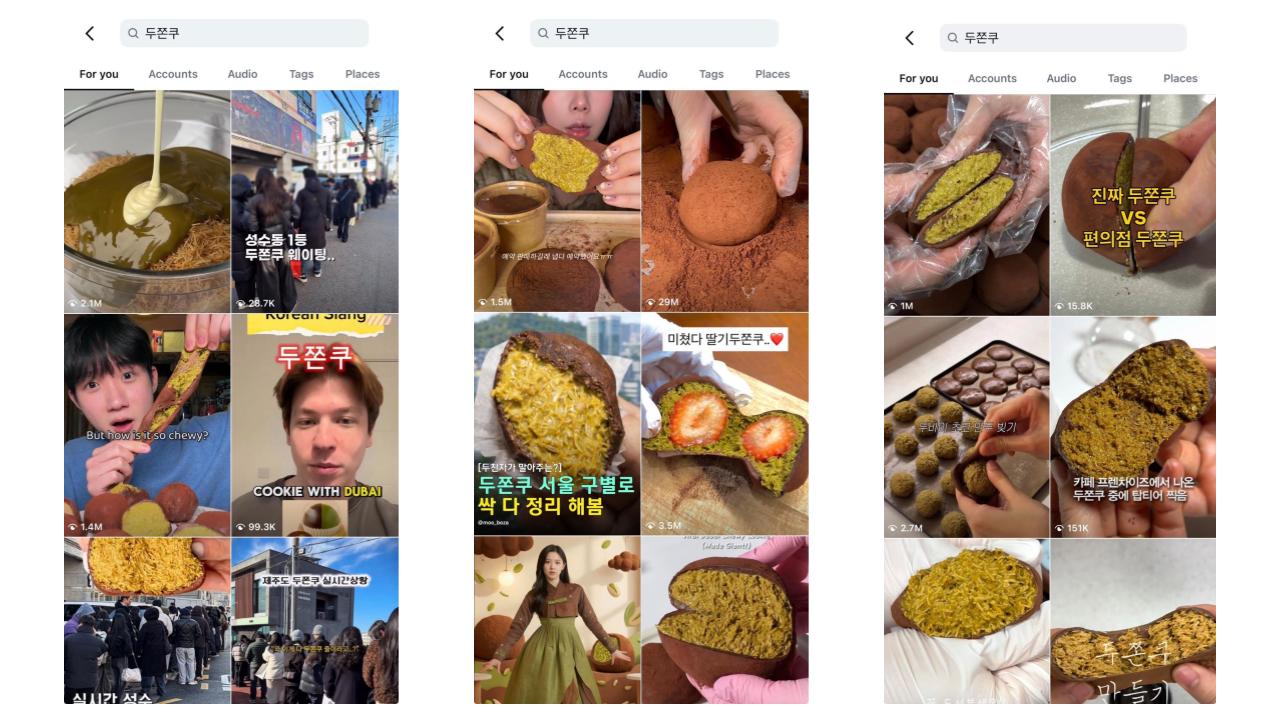
In 2025, Korean bakers reimagined the Dubai chocolate as the Dubai chewy cookie (두바이 쫀득 쿠키 or dujjonku): a pull‑apart dessert with kadayif and pistachio cream wrapped in a marshmallow‑like chewy layer and coated in cocoa.
Demand exploded in early 2026 when K-pop idol Jang Won‑young from IVE, who was already known for her love of Dubai chocolate, posted the chewy cookie on social media. Cafes rushed to add their own versions, often with limited‑time or “one‑person‑one‑piece” rules, and queues formed within hours of each new batch. Some shops even ran out of stock and started rationing portions, while food communities shared real‑time “Dubai cookie maps” to track availability. Even financial platform Toss participated in the phenomenon, integrating the Dubai chewy cookie hunt into its marketing activities.
Local restaurants, such as Korean BBQ, create food pairings
Beyond dessert cafes, even local restaurants got involved. Noodle houses, Korean BBQ spots, and casual dining chains began adding Dubai chewy cookies as a “highlight” dessert, seamlessly integrating it into existing Korean favorites.
Restaurants that previously offered only basic desserts or none now treat the Dubai chewy cookie as a traffic‑driving item. Customers get a photo‑worthy dessert after their meal and are encouraged to post on social media, which in turn brings more foot traffic. For many neighborhood eateries, short‑term trends like this are a low‑risk opportunity to ride the wave of popularity that has already swept through premium cafes and convenience stores.
Coffee chains enter the battle with their Dubai‑themed cakes and drinks
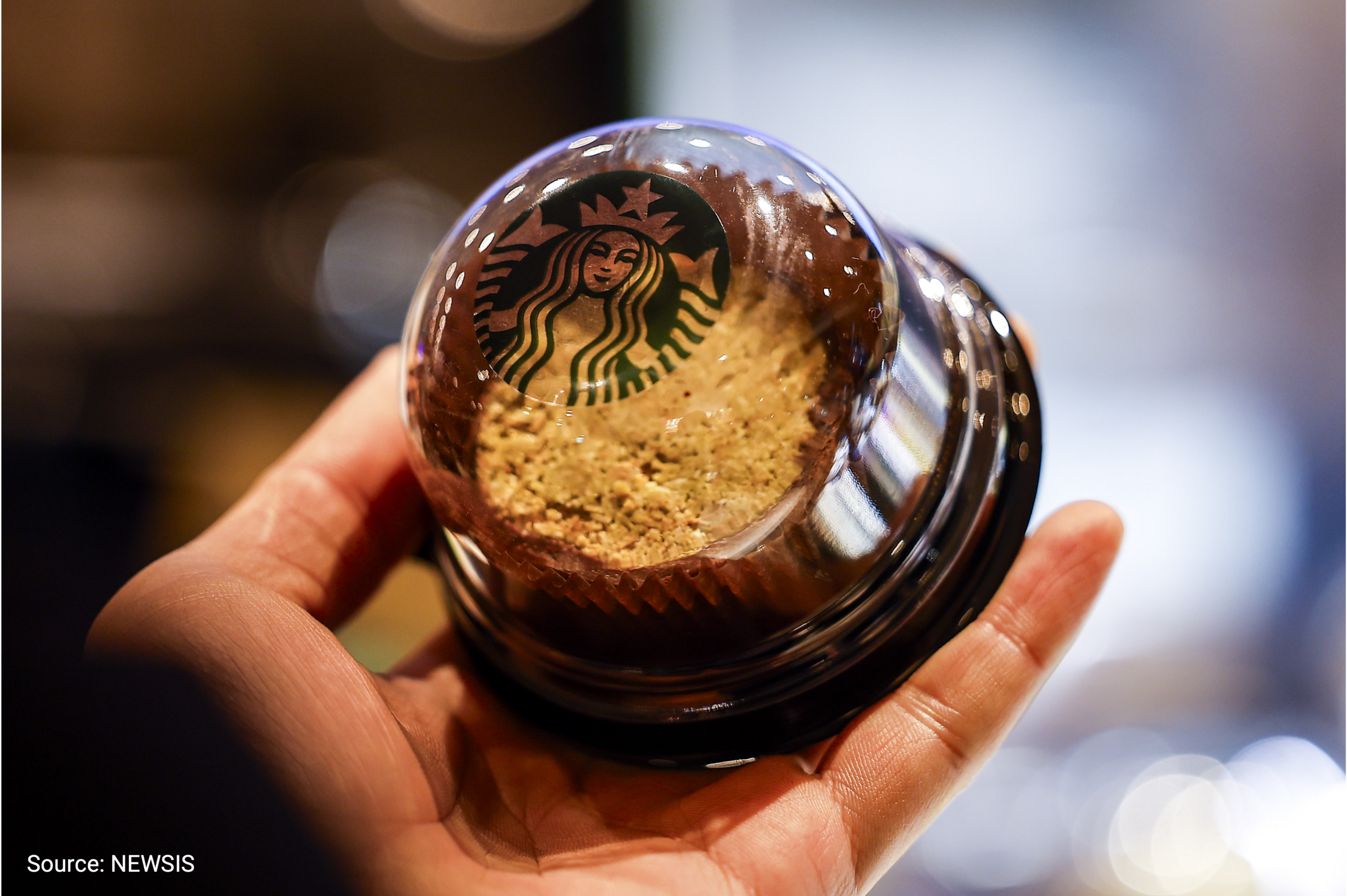
Coffee chains in South Korea also capitalized on the trend. Starbucks Korea rolled out several Dubai‑inspired products, starting with a limited‑edition “Dubai Chewy Roll,” a roll‑style dessert made with ground kadayif, pistachios, and marshmallow, sold only at select Reserve and flagship stores. The launch drew lines from dawn, with most units selling out within hours.
It later also introduced two Dubai‑concept beverages: the Iced Dubai Chocolate Mocha and the Iced Dubai Chocolate Matcha. Both feature a chocolate‑pistachio base topped with salted brown butter and pistachio foam, priced between KRW 7,300 and 8,900 (USD 4.9 to 5.9) depending on size, positioning the line as a premium, Instagram‑first dessert drink.
Following Starbucks, Twosome Place also jumped into the craze, launching Dubai‑style pistachio chocolate drinks such as the Pistachio Chocolate Mocha and Pistachio Chocolate Gelato Shake, both topped with katayif to mimic the Dubai chewy cookie texture. In addition, it followed with a Dubai‑style chocolate cake based on its popular strawberry chocolate whipped cream cake, layered with kadaif pistachios and fresh strawberries.
Dubai-flavored soju is introduced
The trend has moved beyond desserts and coffee into alcoholic beverages. In March 2026, HiteJinro launched a limited-edition Dubai chewy cookie-flavored soju. Accessible in restaurants in university districts, major commercial areas, and supermarkets, it targeted curious young consumers who are trend-sensitive, open to trying new products, and want to enhance their social moments.
While the Dubai-flavored soju doesn’t necessarily drive sales, it has raised a positive response from consumers. On social media like Instagram, one user said, “Now they’re going as far as creating Dubai chewy cookie-flavored soju. Not going to lie, but I’m curious,” while many others asked, “Where can I get this?” or “What is the alcohol percentage?”
The Dubai craze fits the pattern of food fads sweeping in Korea
Even before the Dubai chewy‑cookie craze, other foods like tanghulu, honey‑butter chips, and macarons followed a similar pattern of food fad sweeping in Korea. These foods became rapidly popular but quickly faded after a few months. Trend-sensitive Korean consumers, who seek visual impact, social proof, and FOMO (fear of missing out) on the “must‑try” item of the moment, flock to them.
The cycle usually starts with an imported, niche, or new product (Dubai chocolate, tanghulu, honey‑butter chips) catching on among influencers and K‑pop stars. Once it goes viral on Instagram, YouTube Shorts, and TikTok, cafés and restaurants rush to copy it, localizing the recipe to be thicker, richer, and more photogenic. Convenience stores then amplify the trend by launching affordable, mass‑market versions, so the same flavor is available everywhere from premium cafés to everyday 24‑hour stores.
This trend‑domino pattern explains why the Dubai chewy cookie spread so fast: it hit all the right triggers, such as K‑pop‑led buzz, visual appeal, thick‑dessert culture, and an easy‑to‑copy formula, allowing everyone from high‑end bakeries to local restaurants to join the wave before the next big trend takes over.
After South Korea’s Dubai craze, the next trend is emerging
As the timeline of Korean dessert trends shows, most food crazes follow a similar arc: a short, intense wave of queues, limited stock, and social‑media frenzy, followed by a gradual fade. While Dubai chewy cookie has already become a menu staple in many cafes and even local restaurants, the “pure‑hype” phase cooled down within a few months, leaving behind a smaller, more stable group of loyal fans rather than permanent nationwide mania. In Korea’s fast‑moving F&B market, the real question is not whether the Dubai chewy cookie will disappear, but how quickly the next “it” dessert will replace it in the spotlight.

Understanding food fad sweeping in Korea through the Dubai craze
- In South Korea’s F&B market, trends emerge and fade quickly, with new, imported, or niche products gaining rapid popularity. Brands, convenience stores, and other businesses rapidly ride on the wave before it fades out.
- In 2024, Dubai chocolate went viral, and soon after, the Dubai chewy cookie became popular. This trend quickly spread across categories. Starting as a chocolate style/product, it expanded into coffee chain beverages, convenience store products, and even alcoholic drinks.
- The craze highlights that young consumers, including the MZ Generation in South Korea, are trend-sensitive, curious, highly visually driven, and seek new experiences and products.
- While food fads in Korea are short-lived, businesses join the trend because it helps them gain visibility, connect with consumers, and even experience a boost in sales.
Author: Sory Park, with additional research by Mukaddam