


Margin pressure in China is not a temporary shock anymore for most Western companies. It’s become a normal part of running a subsidiary here. Daxue Consulting works with the China operations of Western groups to rebuild EBIT (earnings before interest and tax), by pairing a rigorous EBIT diagnostic with two core operational levers: procurement optimization and an asset-light operating model. As such, EBIT recovery is achievable in China.
Why EBIT is under pressure in China
Most Western subsidiaries built their China business during a decade of double-digit growth, when a widening top line could cover for an inefficient cost base. That growth-funded model no longer holds. Local competitors have closed the quality gap in a lot of categories while still undercutting on price, price wars have spread well beyond EVs into food and beverage and beauty, and several industrial sectors are sitting on real overcapacity. Labor costs in tier-1 and tier-2 cities keep rising too.
A growing share of China-based procurement could not be justified on labor cost alone once you add in logistics, inventory, and quality risk. For a subsidiary reporting into a Western headquarters, this usually shows up as a gap between the P&L the group expects and the P&L the China entity can actually deliver, and a head office asking for a rebuilt cost base rather than just a better forecast.
Our methodology for EBIT recovery in China
We structure an EBIT recovery project roughly the way you’d expect a performance-improvement engagement to run in any market, but adapted to how a P&L is actually built and defended inside a China subsidiary.
EBIT diagnostic and value bridge
We start by breaking the subsidiary’s P&L down line by line. This was carried out against its own history, budget, and peer benchmarks. This is to separate the margin erosion coming from price and mix from the part coming from cost. That gives us an EBIT bridge: a quantified map of each driver of margin change such as, volume, price, input costs, SG&A, FX, that we use to prioritize initiatives. Each lever we propose after that gets sized, sequenced, and given an owner and a timeline.
Procurement optimization
Procurement is usually the fastest and biggest source of recoverable margin in a China operation. That covers direct materials. It also covers indirect spend such as logistics, marketing services, facilities, and professional services.
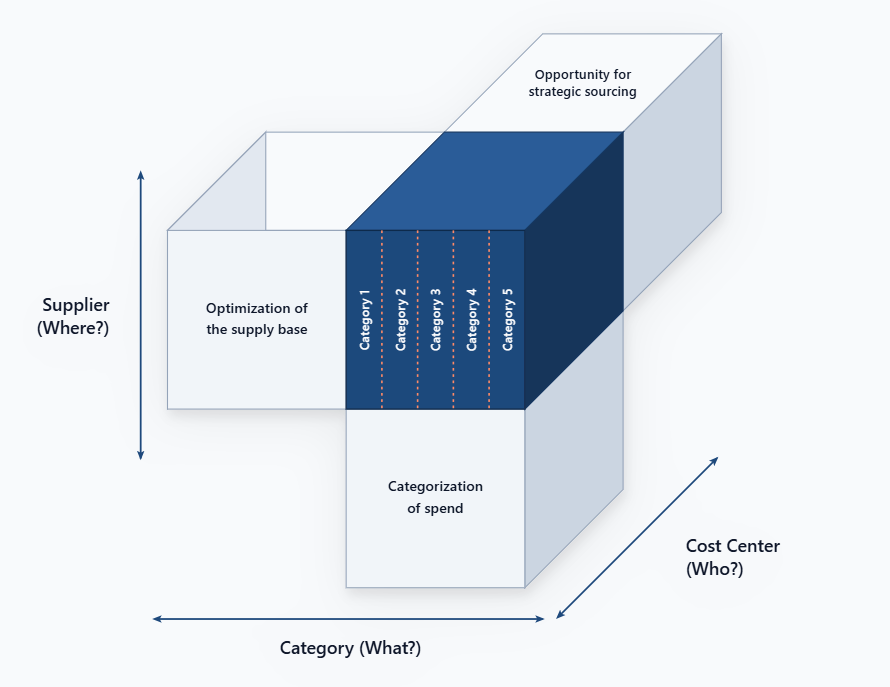
We run a full spend-cube analysis by category, supplier, and business unit. This shows what’s actually being bought and from whom. Then we work through category strategies. We consolidate or re-tender the supplier base. We use should-cost and clean-sheet modeling so negotiations start from a cost basis instead of a quoted price. And we check whether specifications are over-engineered for what the China market actually needs. When local sourcing already looks cheaper on paper. We check it against total landed cost, not just unit price but also duties, logistics, inventory carrying cost, cost of quality. That is often where the sourcing decision turns out to be wrong.
Asset-light transformation
For subsidiaries that still carry their own factories, warehouses, or fleets, we look at which of those assets are actually a source of advantage. Which are just capital tied up in something a partner could do as well? In practice that can mean moving part of production to contract manufacturers or OEM partners. It can mean switching from owned to leased facilities, outsourcing logistics and last-mile distribution, or divesting underused lines through a sale-and-leaseback. The goal isn’t asset-light as an end in itself. It frees up capital and management time. That lets the business focus on what it actually needs to own in China. Usually that’s the brand, the customer relationships, and a handful of core technical capabilities.
Adapting the methodology to the Chinese context
A cost program designed for a plant in Europe or North America doesn’t transfer to China as-is. Three adaptations matter most for the Western companies we work with:
- Reading the real numbers. China subsidiary accounts are often kept more to satisfy local tax and reporting requirements than to show true unit economics. So a diagnostic usually has to reconstruct the real cost base. Only then can you set a savings target.
- Working the local supplier and partner ecosystem. To find and qualify the right contract manufacturers, category suppliers, or logistics partners in China, you need a field network. You also need fluency in Mandarin-language sourcing channels. And you need a feel for supplier relationships (guanxi) that doesn’t show up in an RFQ. A remote procurement team rarely has any of these.
- Bridging the subsidiary and the head office. Savings only count once three parties agree on how they’re measured and repatriated into the consolidated P&L: the China finance team, regional leadership, and the group CFO. We build the business case and the governance cadence. That way, the program survives the handover from the local team running it to the Western leadership approving it.
Our steps for an EBIT recovery project in China
In practice, a project starts with the diagnostic of EBIT bridge and the procurement spend cube to see where margin is actually being lost and where it can realistically come back. From there we prioritize: initiatives get sized and sequenced on a rough value-versus-effort basis. So the program leads with whatever pays back fastest rather than whatever is easiest to announce.
Implementation is where our team is on the ground supporting negotiations, supplier transitions, and changes to the operating model alongside the subsidiary’s own finance and operations people, not handing over a report and leaving.
After that, we set up the KPIs and a quarterly follow-up, because savings tend to erode once the project team moves on if nobody’s tracking them.
What EBIT recovery in China brings you
What you get out of this, concretely: a quantified EBIT bridge and savings case that your China team and your head office can actually agree on, instead of a generic cost target handed down from outside. The procurement and asset-light work also lowers the absolute cost base and cuts its exposure to the next wage increase, raw material spike, or demand shock.
Longer term, this isn’t meant to be a one-off cost exercise. Done right, it gives the subsidiary the supplier relationships, the operating model, and the reporting discipline to keep margin under control. That matters as the market keeps shifting, which, in China, it usually does.
Author: Matthieu David