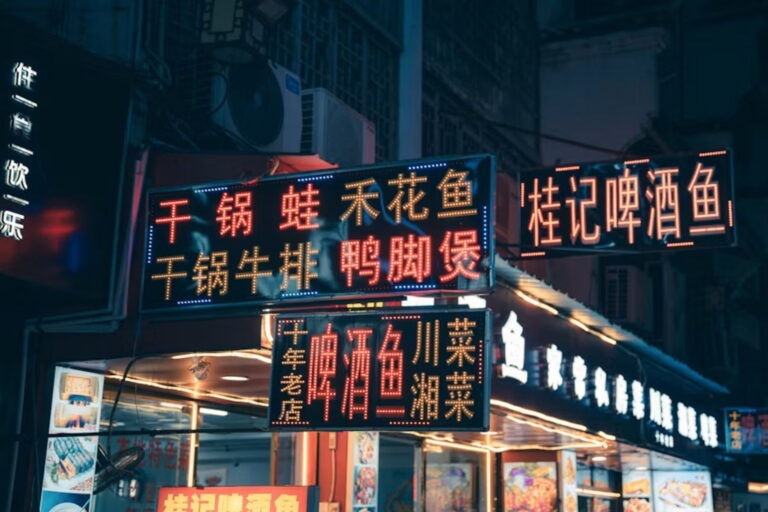

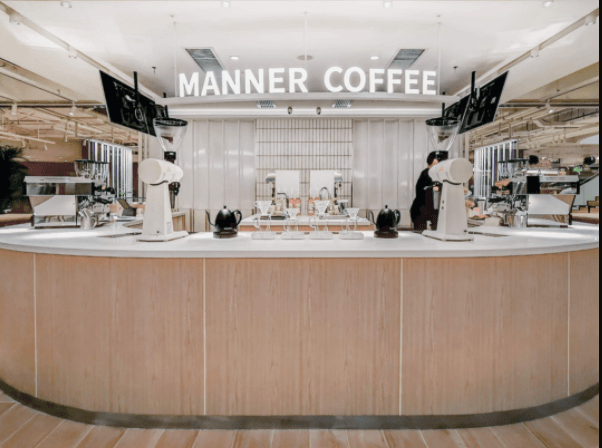
From a tiny Shanghai storefront to 2,000 locations, Manner Coffee has become a prominent player in China’s coffee market. Its model is built around accessible specialty coffee, minimalist design, and lifestyle collaborations that align with the rise of coffee consumers in China’s tier-1 cities. However, this balance is becoming harder to maintain. Competitions among coffee shops in China continues to intensify through price wars and dense expansion. At the same time, the brand’s own managerial issues expose operational vulnerabilities.
Download our China’s F&B industry white paper
China’s coffee market is still booming, but competition is brutal
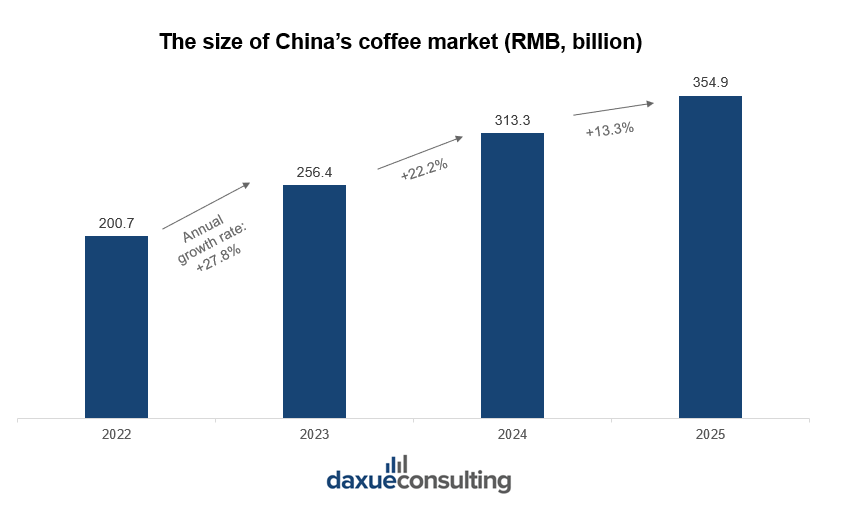
China’s coffee market is still expanding rapidly. In 2025, the industry reached RMB 354.9 billion, up 13.3% year-on-year. Annual per-capita coffee consumption also rose from 16.74 cups in 2023 to 28.57 cups in 2025. These figures suggest that coffee has moved beyond niche urban demand and is becoming a mainstream daily-consumption category, supported by broader consumer adoption and a more developed industry ecosystem.
However, rapid expansion has also made the market more unstable. From 2024 to August 2025, 172,892 coffee stores opened, while 119,726 closed. This means that nearly seven stores closed for every ten new openings. The data points to a market shaped by low entry barriers, aggressive expansion, and equally fast elimination. Simultaneously, price pressure has intensified this challenge. Promotional drinks have fallen to RMB 9.9, RMB 8.8, or even RMB 2.9 with vouchers. As a result, China’s coffee market is becoming more competitive and more selective.
Manner Coffee has built its position through premium accessibility
Against this market backdrop, Manner Coffee’s advantage lies in making boutique-style coffee feel accessible. On the price side, it remains cheaper than traditional international premium coffee brands. For example, a 355ml Americano was reported at RMB 15, compared with RMB 27 at Starbucks. This price gap makes Manner feel like a smart daily upgrade.
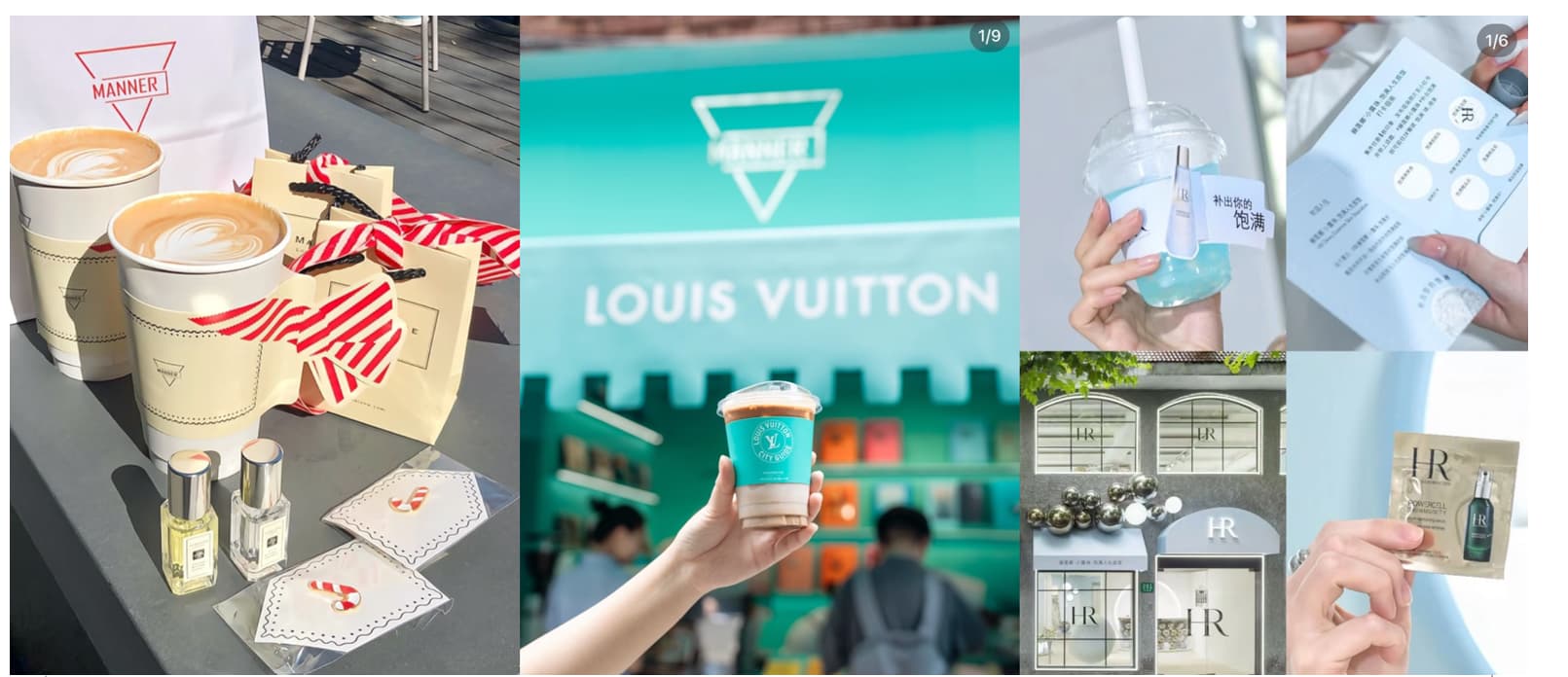
Meanwhile, the brand value also grows through lifestyle co-creation. It collaborates with well-known brands across fashion, beauty, culture, and urban leisure. Examples include Louis Vuitton, Helena Rubinstein, and Jo Malone. These partnerships often involve limited-edition packaging, tote bags, themed store designs, or check-in activities. Through these collaborations, Manner’s coffee becomes a cultural trend that consumers can photograph, share, and participate in. In this way, the brand turns a low-unit-price coffee into a social-media-friendly lifestyle experience.
Will this high-end image resonate nationwide?
Yet this urban lifestyle positioning also raises a scalability question. By 2025, 73.9% of Manner’s stores were located in China’s first-tier cities. This concentration matters because Manner’s identity was built in Shanghai. Its premium-accessible model fits dense office districts and mature coffee culture. In these cities, consumers better understand specialty coffee, minimalist stores, and lifestyle collaborations.
In other words, Manner’s model may be harder to translate into lower-tier cities, since consumers may be less attached to boutique coffee culture. Moreover, competitors have already built deeper exposure to lower-tier markets. By 2025, Luckin had 10,015 stores in third-tier-and-below cities, accounting for 33.0% of its total network. Cotti’s third-tier-and-below store share was also close to 40%. Therefore, Manner’s challenge lies in whether a Shanghai-born premium identity can generate similar demand nationwide.
Direct-operated model as a double-edged sword
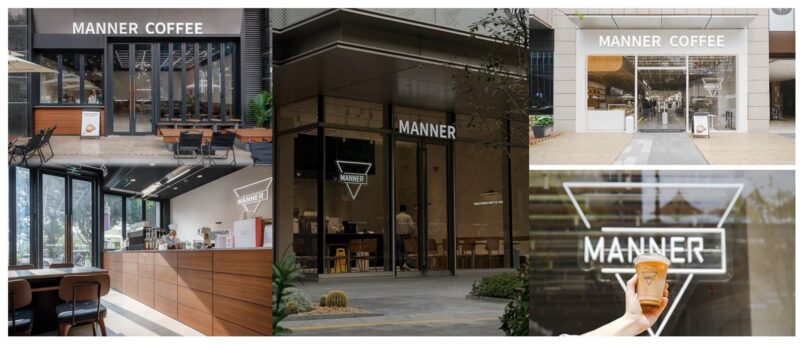
This geographic concentration is also tied to Manner’s operating model. Unlike its competitors, Manner has remained fully direct-operated throughout its expansion. This strategy gives the company full control over store design, product quality, and brand experience, and such consistency has been central to Manner’s premium positioning. However, the same strategy also makes expansion significantly more capital-intensive. Every new store requires Manner to finance its own rent, equipment, staffing, training, and daily operations.
By contrast, competitors have adopted partnership and franchising models that distribute much of these upfront investments. For instance, partnership stores accounted for 34.8% of Luckin’s network by the end of 2025. Its partnership-store business segment also generated about 23.3% of total revenue in 2025. As such, hybrid models tend to provide a stronger financial cushion when a brand is reaching the market.
Hence, the question is not only whether Manner can continue opening stores. It is also whether its directly operated stores can generate sufficient returns at scale. Early estimates suggested that a Manner store could recover its initial investment in less than one year. This was supported by monthly sales of around RMB 240,000 and a net margin approaching 24%. However, higher labor costs and growing operational complexity have increased pressure on store profitability.
Staff incidents expose Manner’s operational pressure
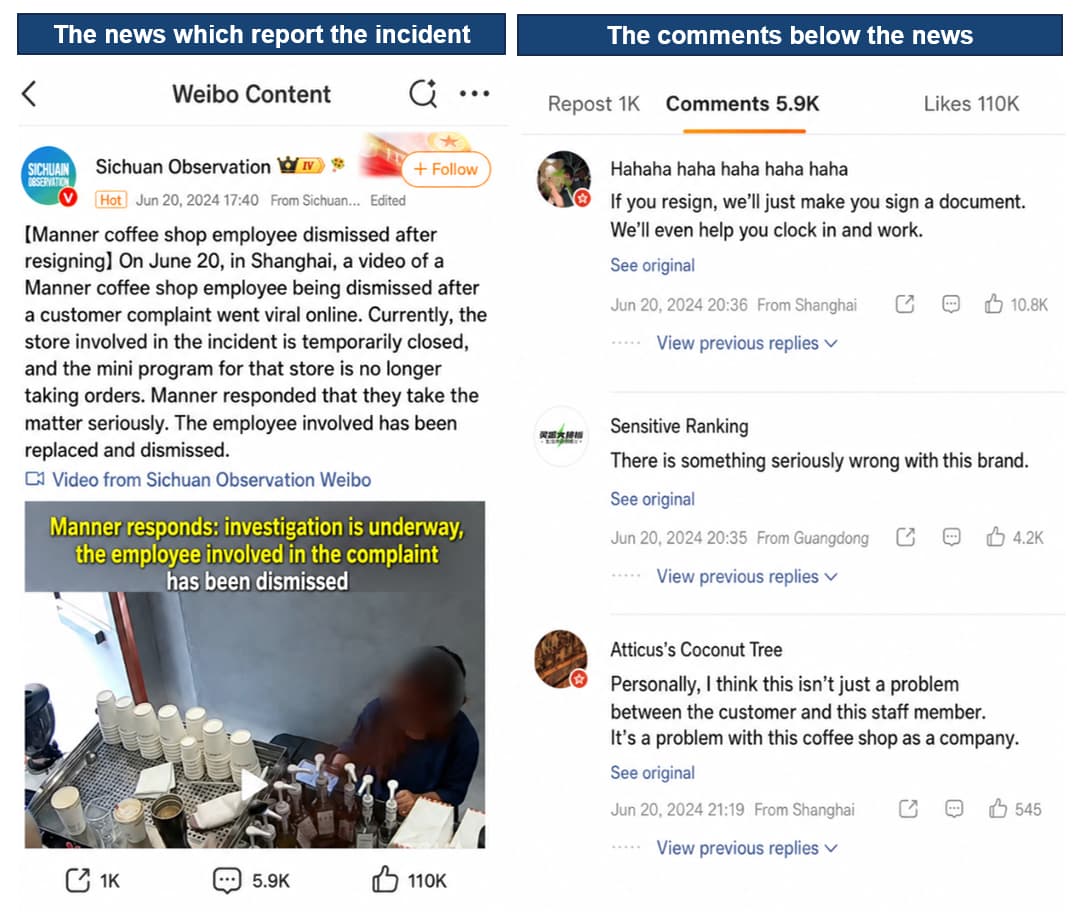
Manner’s premium-accessible positioning depends on its consistent store execution. Nonetheless, this is where the brand has faced public pressure. In 2024, conflicts between Manner staff and customers drew wide public attention. Some viral videos showed baristas losing control during tense interactions with customers. The incidents triggered wider discussion about workload, service pressure, and frontline operations. While Manner later apologized and said it would strengthen staff training, the public anger did not fade easily.
The incidents were not only service failures to be fixed through training. They also exposed pressure inside Manner’s compact store model. Specifically, Manner’s small stores combine made-to-order drinks, limited space, and frequent brand collaborations that support its efficiency. However, it can also create a pressure-cooker environment for frontline staff. Therefore, as Manner expands, it must support this operating model through stronger staffing, better workflow design, and improved store-level pressure management.
Building a premium product funnel amid rising costs
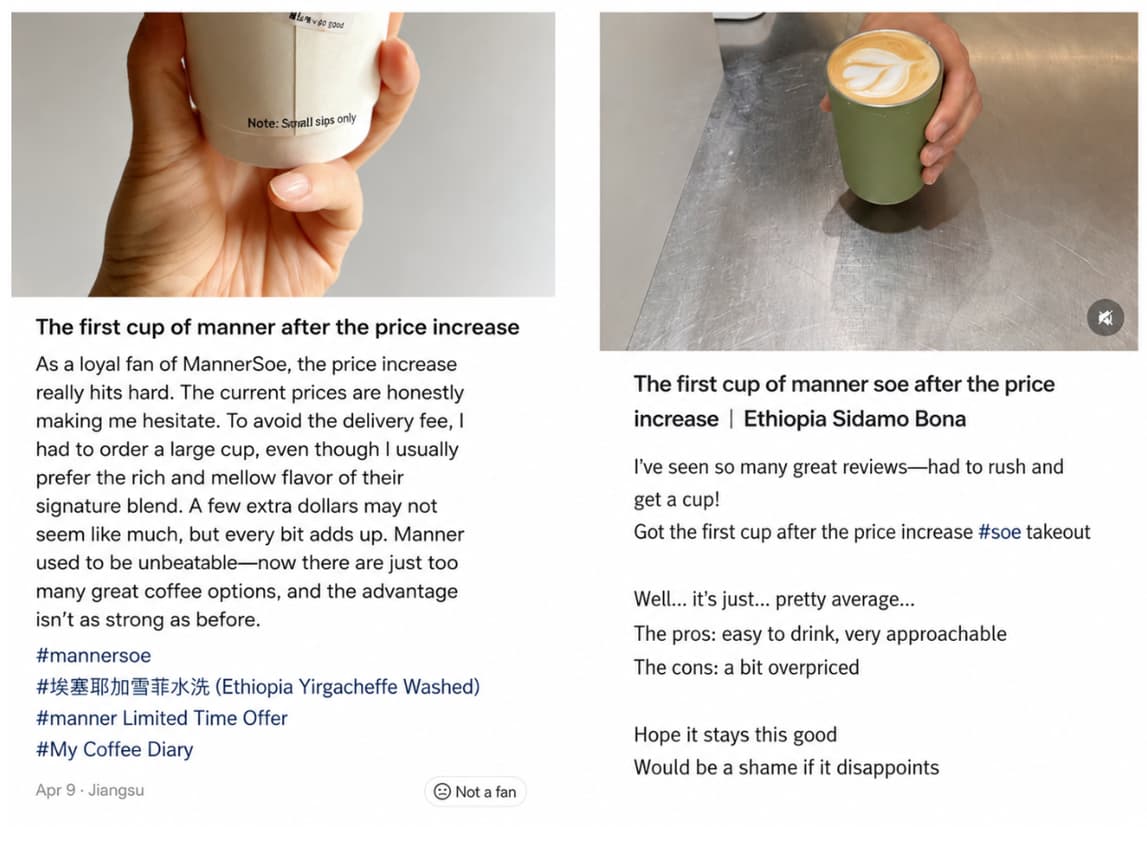
Operational pressure is not the only cost-side tension. At the product level, rising bean costs are also pushing Manner to rethink how it captures value from different consumers. Its recent RMB 5 price increase for SOE products illustrates this shift. SOE, or Single Origin Espresso, uses beans from a specific origin and is positioned around clearer flavor, quality, and product differentiation. Therefore, the price increase is not only a response to rising bean costs. It also signals Manner’s effort to build a price-tiered product funnel: Standard coffee remains the accessible entry point, while SOE becomes a higher-margin option for more discerning and less price-sensitive consumers.
However, this strategy also raises the bar for consumer experience. By 2025, global coffee prices had surged, while Yunnan coffee bean prices also increased by over 62%. This makes quality-led products more expensive to sustain. Yet China’s coffee market remains highly price-sensitive, as consumers are used to low-priced fresh coffee from discount-driven chains. Therefore, Manner must make the added value of SOE visible through taste, store communication, and product storytelling. If consumers cannot clearly perceive the difference, the price increase may weaken Manner’s value-for-money promise rather than strengthen its premium credibility.
The market outlook of Manner Coffee in China
- Manner Coffee demonstrates that affordability does not require a low-end positioning in China’s market.
- Strategic lifestyle co-creation successfully yields a refined yet reachable brand image.
- However, Manner’s premium identity remains highly concentrated in first-tier cities.
- Its direct-operated model protects brand consistency, but also makes expansion more capital-intensive.
- Store-level incidents show that compact stores need stronger staffing and workflow management.
- SOE price increases show Manner’s attempt to build a premium product funnel amid rising costs.
- Ultimately, Manner’s future test is whether its premium-accessible model can scale nationwide while remaining profitable and operationally consistent.
Author: Ming Yii Lai, with additional research by Maeve Fang