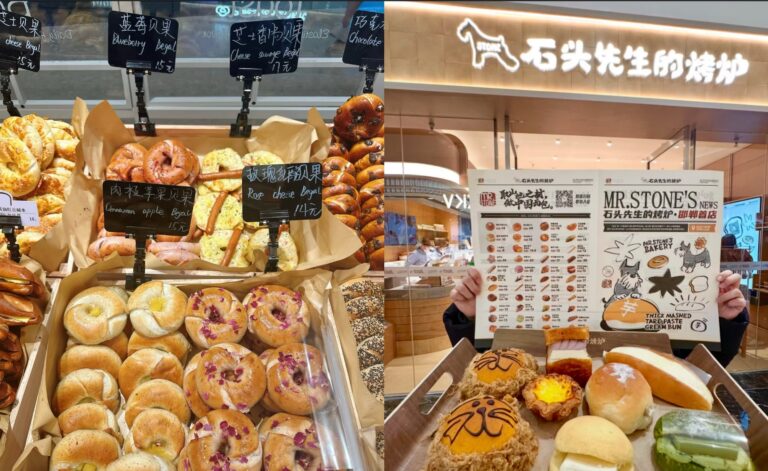

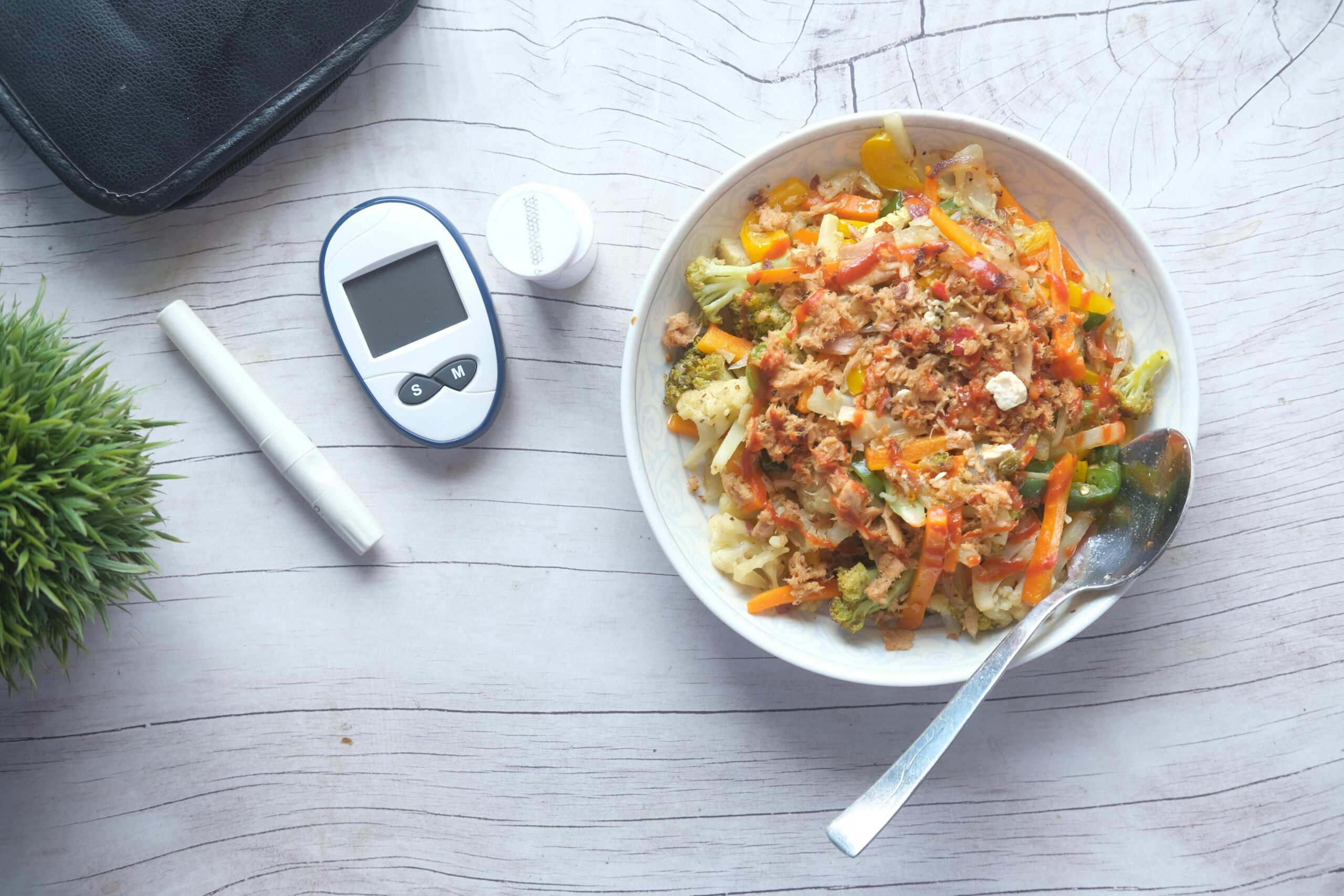
China’s low-GI food market is expanding rapidly, but growth does not yet equal sustainable demand. The category is being driven by policy support, retailer expansion, and brand innovation. Yet, consumer adoption remains constrained by limited understanding, price resistance, and weak product experience. Thus, the challenge of China’s low-GI food market is whether brands can turn early market momentum into repeat purchases.
Download our China F&B White Paper
Supply-driven expansion outpaces consumer literacy
Supported by national health initiatives and rising clean-label demand, low-GI food became China’s fastest-growing health-food segment. By 2025, the category registered a 226% growth rate as distribution channels expanded rapidly across major retail networks. For instance, Freshippo introduced more than 40 low-GI stock-keeping units. Dingdong Maicai also launched a dedicated “low-GI” section in its app. Nonetheless, much of this momentum still comes from policy support and brand launches, while mainstream understanding remains fragmented.
This gap exists because low-GI remains an inherently technical concept compared to intuitive claims like “zero sugar” or “high protein”. To understand low GI, however, consumers need more baseline knowledge of postprandial glucose fluctuations and sustained energy release. Lacking this literacy, mass consumers cannot efficiently differentiate certified low-GI innovations from other products using functional buzzwords. As a result, current skeptical buyers frequently dismiss low-GI claims as a mere “marketing gimmick” rather than a valuable health marker.
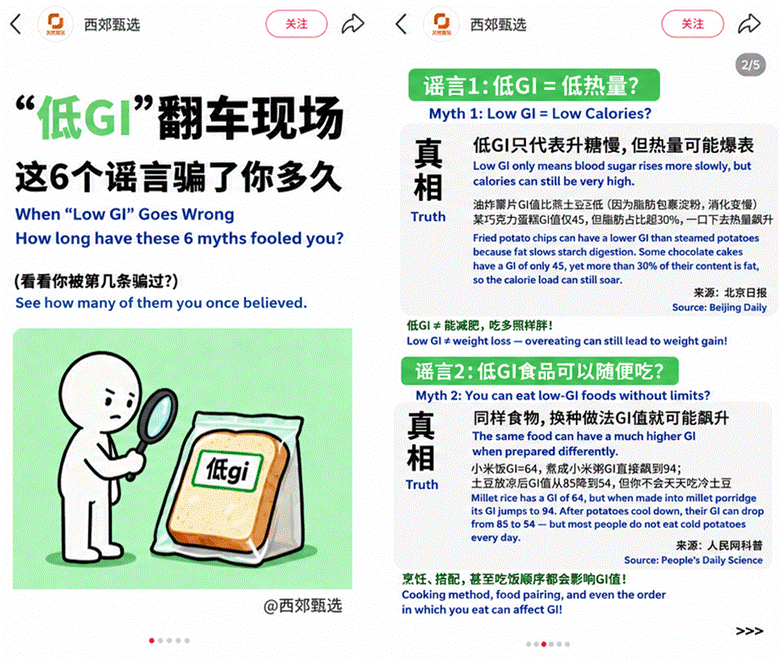
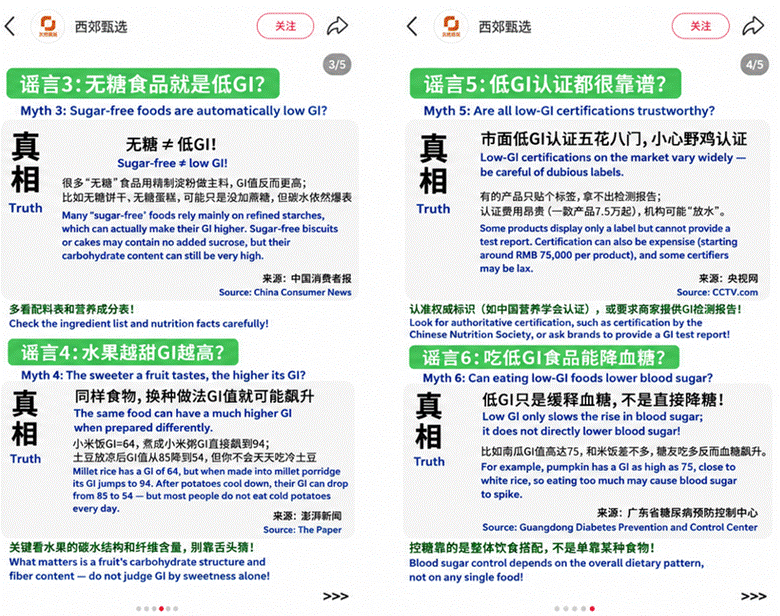
This asymmetry highlights a stark decoupling between market supply and consumer demand. On the former side, manufacturers and distributors aggressively scale product pipelines to fill retail shelves. On the latter side, consumers seek healthier carbohydrates but lack the education and trust signals to buy repeatedly. Ultimately, unresolved knowledge gaps risk transforming supply-side enthusiasm into a structural market risk.
High price limits low-GI’s direct competition with ordinary staples
Pricing is the second major challenge of China’s low-GI food market. Because many low-GI products are positioned within staple categories such as rice, snacks, and convenience meals, their premium positioning often creates a mismatch between consumer price expectations and category norms. For instance, a 2 kg low-GI multigrain rice product retailed at RMB 59.83, while a comparable 2 kg non-low-GI product sold for only RMB 25 on JD.com. On Douyin Mall, a 400 g low-GI toast retailed at RMB 27.9. Yet a 1 kg regular bread product is sold for RMB 16.9. The same pattern appears in convenience foods. A pack of low-GI instant vermicelli sold for RMB 35 on Douyin Mall, nearly four times the price of a regular hot-and-sour vermicelli product priced at RMB 8.9.
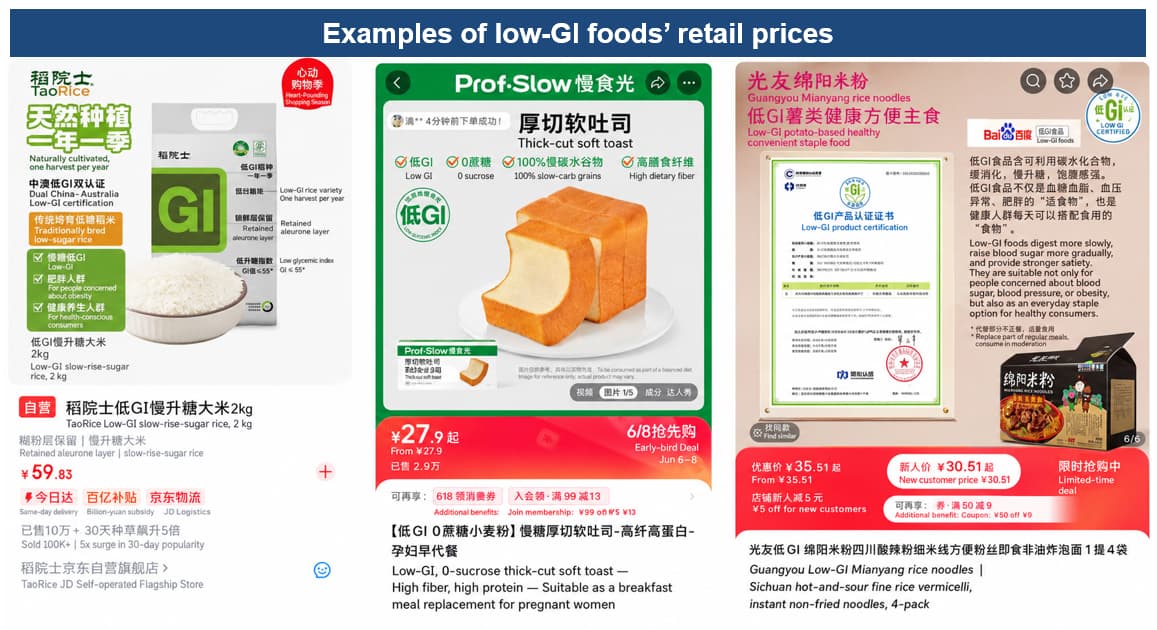

Taken together, these examples show that premium pricing has become a defining feature of the current low-GI market. Specialized ingredients, certification costs, and more complex processing may partly explain these higher prices. However, cost-based explanations do not automatically translate into consumer acceptance, especially when the functional payoff remains poorly communicated. Because many low-GI products are compared against familiar alternatives on price, consumers have little incentive to absorb a substantial premium, especially when the value proposition of low GI remains unclear.
Weak product experience limits repeat purchase
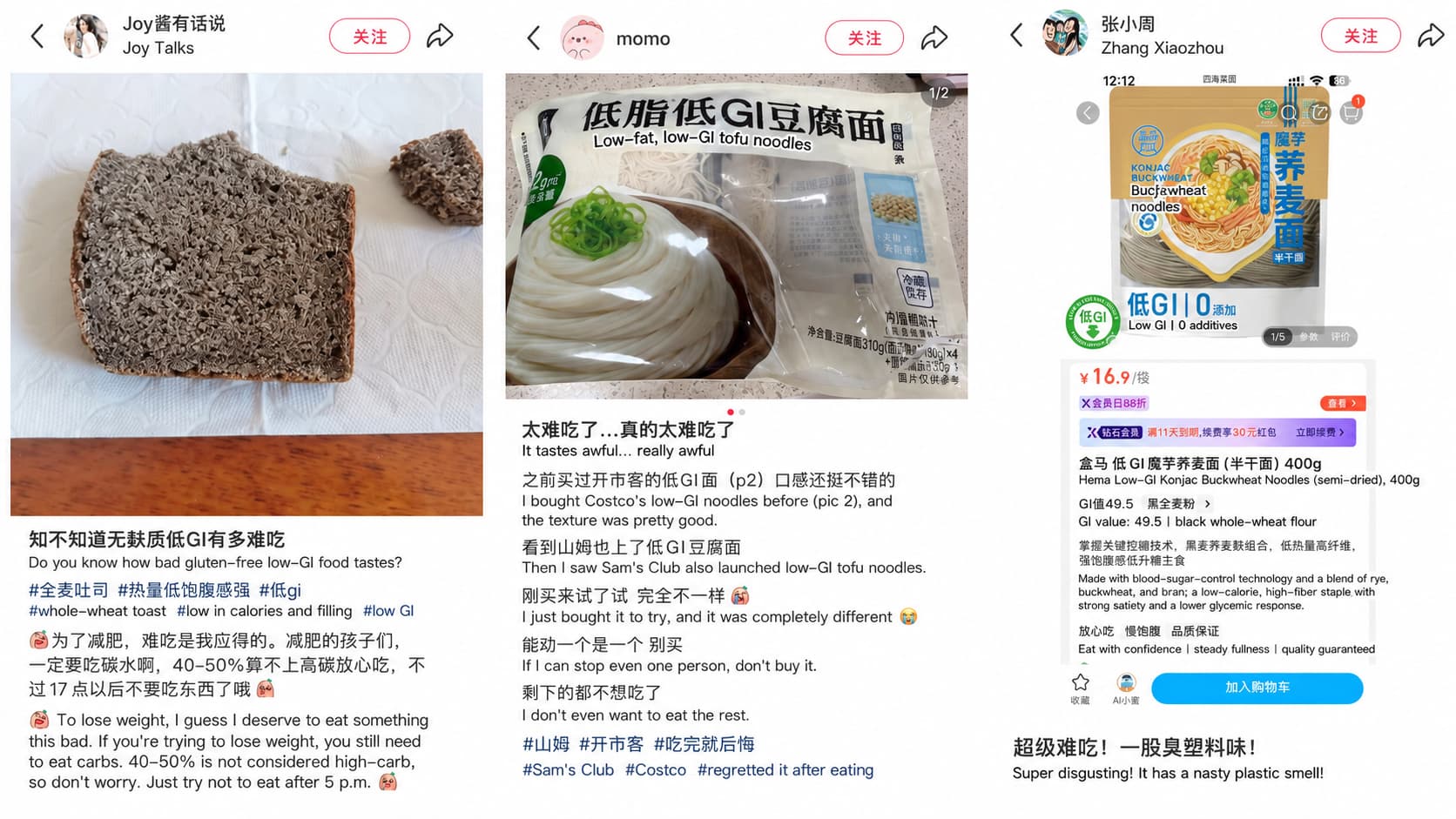
Third, poor product experience makes the category harder to sustain. Consumer reviews on RedNote show recurring complaints about poor taste, hard texture, and an overly “diet-like” eating experience. This creates a commercial problem, not just a sensory one. Since low-GI products already carry a price premium, consumers are less likely to buy again if the eating experience feels like a compromise. Thus, a poor consuming experience can undermine repeat purchase even when initial interest is strong.
Social media gives a voice to the brand
In response to the challenges facing China’s low-GI food market, leading brands are using social commerce not only to explain the category but also to make the product experience more convincing. For example, brands like Tangyou Chufang are actively partnering with Key Opinion Leaders (KOLs) to show how low-GI foods taste and why they are worth trying despite their premium positioning. Meanwhile, it also uses livestreaming to answer consumer questions in real time and trigger sales with promotional pricing.
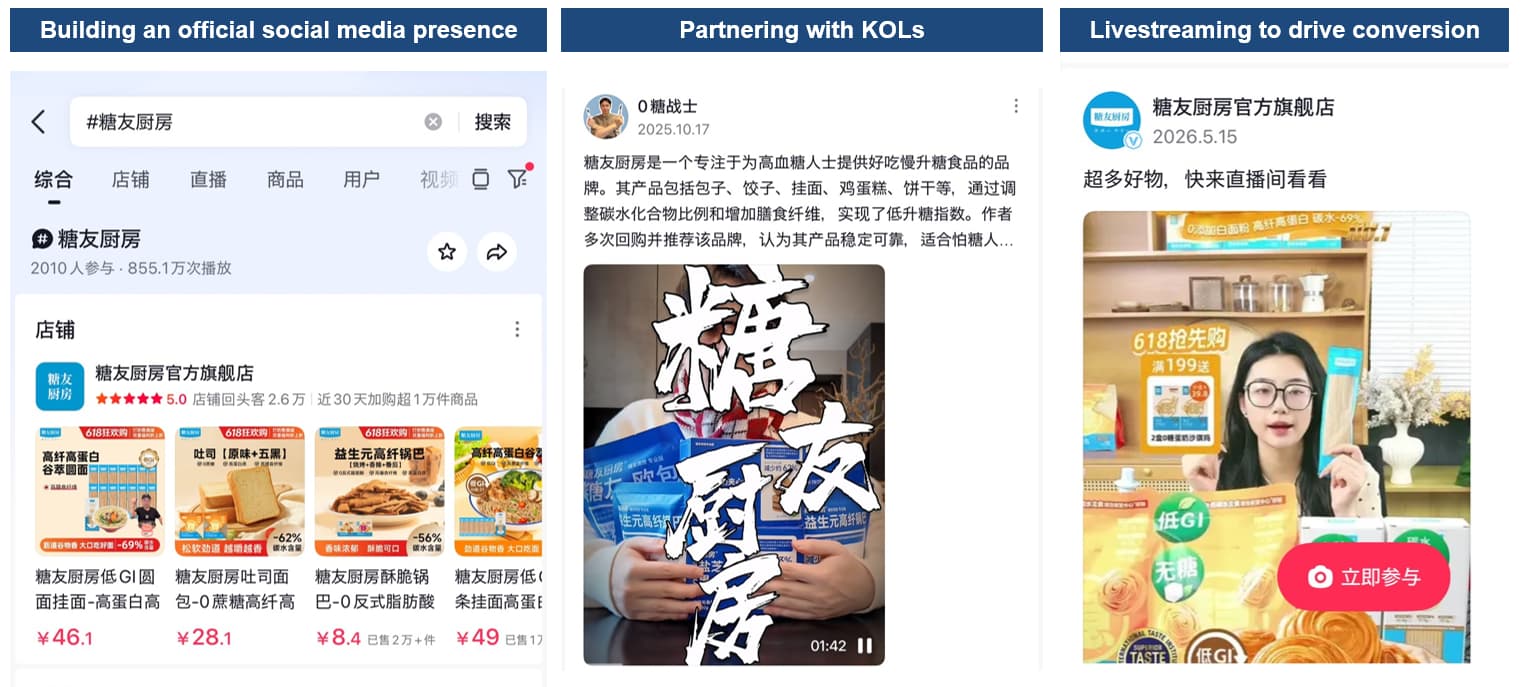
This social-first playbook directly slashes consumer friction. Instead of forcing shoppers to decode complex nutrition labels, brands actively contextualize low-GI products within intuitive selling channels. This interactive proof directly shrinks both the consumer knowledge gap and the price premium barrier. Hence, social commerce evolves from a basic awareness play into an essential engine for customer acquisition and market conversion.
Brands are using occasion-specific formats to make low-GI products more acceptable
Meanwhile, forward-thinking brands are tackling the experience barrier through embedding low-GI benefits into occasion-specific, high-margin seasonal formats. For example, Sanquan Food premiumizes traditional festival categories with blueberry and mulberry tangyuan. Similarly, Wufangzhai captures peak holiday volumes by engineering specialized low-GI sticky rice dumplings (zongzi, 粽子) during the Dragon Boat Festival. By utilizing these high-traffic festive windows, brands successfully convert standard holiday indulgence into a wellness-driven premium purchase.

Concurrently, other brands also segment the low-GI portfolio around precise demographic groups and consumption occasions. Slow Prof, for example, targets the silver economy and corporate gifting markets with premium parent-focused gift boxes. Meanwhile, Qingshishou positions low-GI whey protein bars specifically for fitness-oriented demographics. Taking a comprehensive approach, DGI even bundles its low-GI biscuits, toast, and proteins into all-day meal solutions. In short, each brand places low-GI attributes into frameworks with clear, built-in consumer utility.

Taken together, these strategies show that low GI is gaining traction when it is attached to clearer consumption logic. Seasonal foods, gift boxes, fitness snacks, and bundled meal solutions give the claim a more concrete role in the product offering. This helps brands move low GI beyond a purely technical health message and into formats that feel more purposeful and commercially viable.
How brands are addressing the challenges of China’s low-GI food market
- China’s low-GI food market is expanding quickly, but sustainable demand remains limited.
- The challenges of China’s low-GI food market lie in weak consumer understanding, premium pricing, and poor product experience.
- To reduce consumer friction, brands have used social commerce to make low-GI products easier to understand and easier to try.
- To improve product acceptance, brands have also introduced occasion-specific formats that place low-GI benefits in more targeted and relevant consumption scenarios.
Author: Ming Yii Lai, with additional research by Maeve Fang