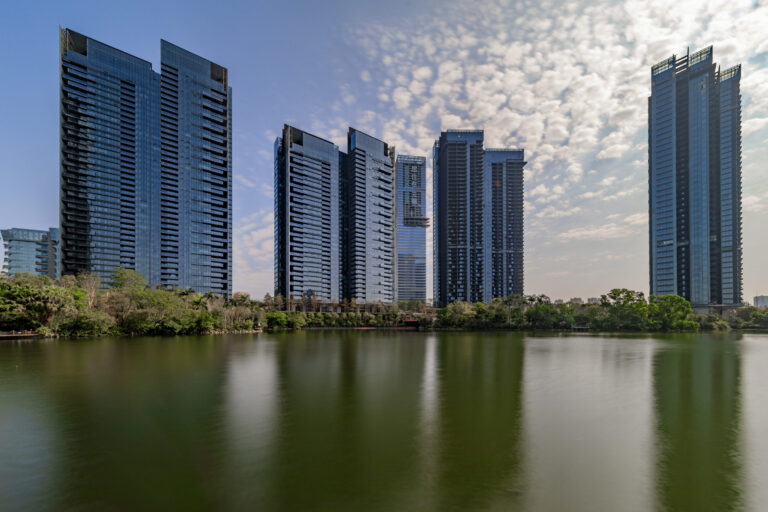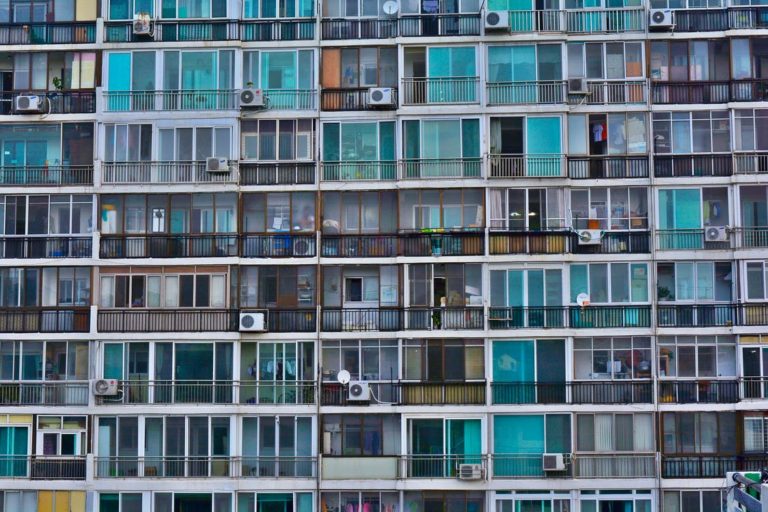

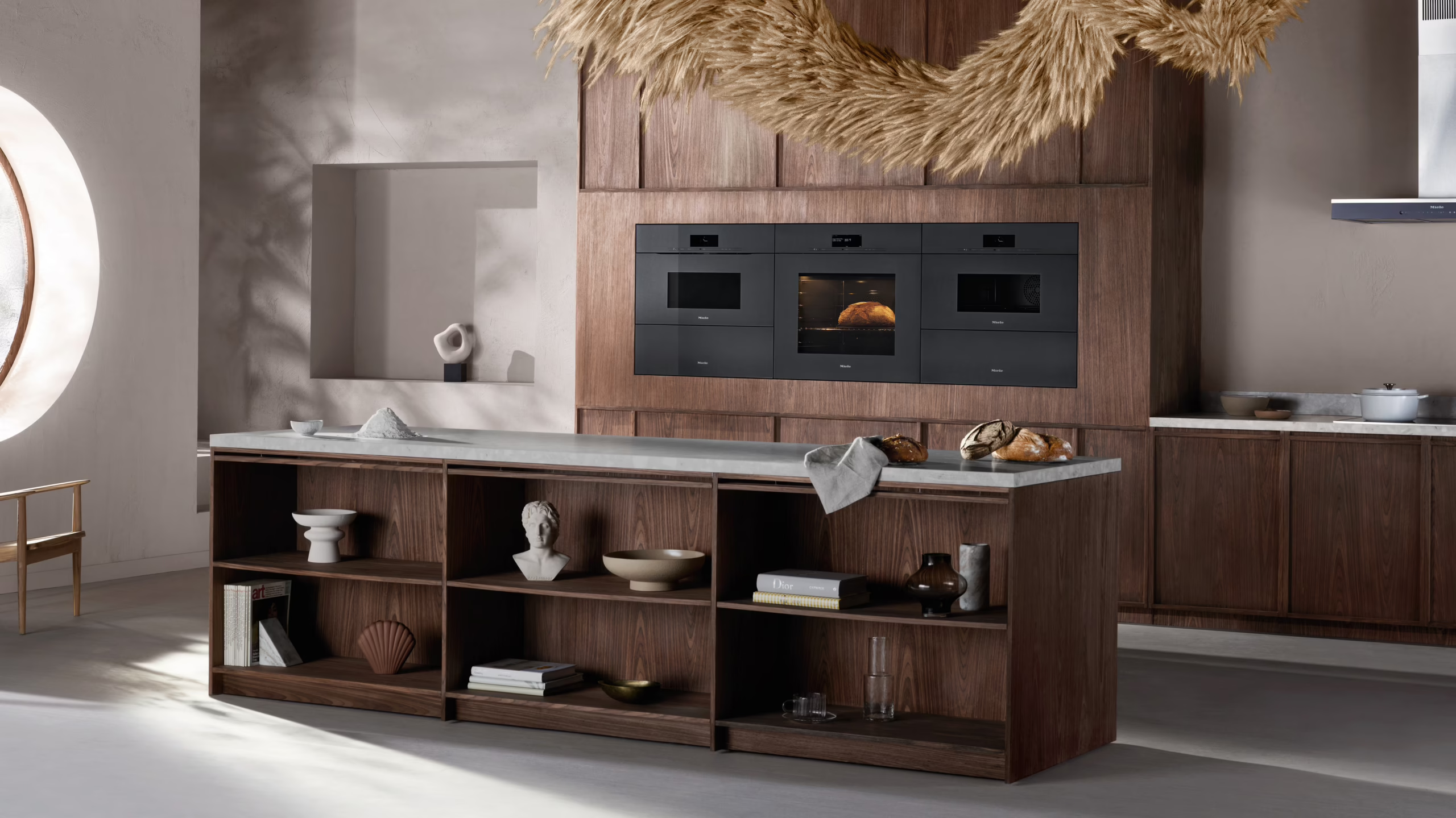
China’s luxury home appliances market focuses on the premium tier of major appliance categories, including refrigeration, laundry, kitchen appliances (e.g., dishwashers, ovens, hoods, cooktops), and cleaning appliances (robot vacuums and floor washers). Collectively, the high-end residential lifestyle market comprises consumers who typically purchase luxury residential properties across most categories. In this context, “high-end” denotes the highest quality, design, and price within each category. For instance, high-end appliances are typically characterized by higher price points, advanced functionality, and brand positioning (e.g., refrigerators priced above RMB 10,000).
Download the report on the rise of Chinese companies here:

China’soverall home appliances marketis boosted by the trade-in program
Driven by policy incentives and consumer upgrades, the overall home appliance market has performed well over the past two years. In 2024, China’s luxury home appliances market reached a historic high, with domestic retail sales (excluding 3C electronics) totaling RMB 907.1 billion, up 6.4% year on year. Retail sales are projected to decline slightly to RMB 893.1 billion in 2025, yet this still represents modest growth compared to 2023’s RMB 889 billion. This robust expansion is partly attributable to the government’s “trade-in” (以旧换新) subsidy program, which incentivizes consumers to replace old appliances with energy-efficient models by offering substantial 15%-20% discounts on eligible products. The program significantly stimulated consumer demand. While large appliance retail sales remained flat year-on-year from January to August 2024, they surged by 24.8% year-on-year from September to December following the subsidy rollout.
Premiumization has become the growth engine of China’s home appliances market
By product category, the two fastest-growing segments were cleaning appliances and color TVs, with year-on-year growth rates of 24.4% and 15.7%, respectively. Sales of cleaning appliances were primarily driven by enhanced cleaning capabilities and the premiumization of popular products, such as floor scrubbers and robotic vacuum cleaners. More brands are integrating AI vision models to enhance dirt-detection capabilities, further improving the effectiveness of cleaning and disinfection. This resulted in a 22.8% year-over-year increase in sales for the category. In offline markets, robotic vacuums priced above RMB 5,000 accounted for 52.2% of total sales, demonstrating strong market acceptance for premium products in this segment.
Growth in color TVs stemmed primarily from rising average selling prices (ASPs), with 2024 ASPs increasing by 17.8% year over year. Key drivers included higher raw material costs and the trend toward larger screen sizes. The most popular size was 75 inches, accounting for 24.1% of retail volume, an increase of 4.2% from 2023. This shift toward larger screens reflects consumer demand for enhanced picture quality, with Mini LED emerging as the primary growth driver in the premium TV market. By 2024, Mini LED TV retail volume reached 5.56 million units, accounting for 18.0% of the overall color TV market. Its sales share has increased significantly by 15% compared to the same period last year. Trade-in incentives also significantly boosted color TV sales. Mini-LED TVs, which feature local dimming, are highly energy-efficient. Consequently, they predominantly qualify as Class 1 or Class 2 energy-efficient products, aligning perfectly with trade-in policy requirements.
How consumers choose high-end home appliances
Driven by the trade-in incentive policy, shipments of high-end home appliances have increased significantly. Sales of TVs priced above RMB 12,000 accounted for 38.6% of total sales, up 5.7% year-on-year; washing machines priced above RMB 7,000 accounted for 36.3% of sales, up 3.7% year-on-year; and refrigerators priced above RMB 12,000 accounted for 32.9% of sales, up 3.1% year-on-year. However, consumers exhibit some consistency in their purchasing behavior when selecting high-end products.
Lifestyle fit and home aesthetics matter more than before
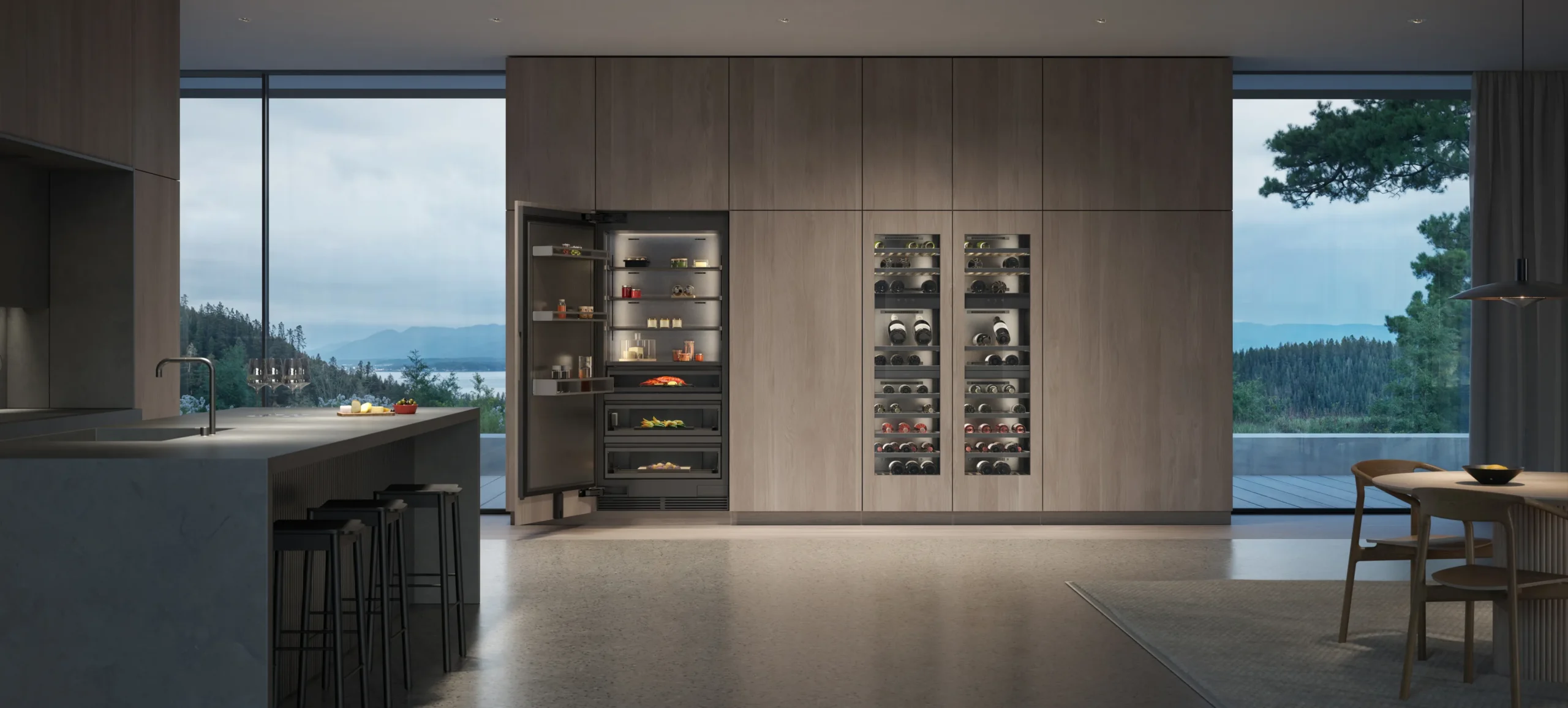
In the premium market, consumers pay not only for functional specifications but also for the overall experience. These experiences encompass fresh performance, consistent design language, reliability, innovative built-in designs, and ecosystem integration. Built-in design has become the core battleground for premium products across major brands in recent years.
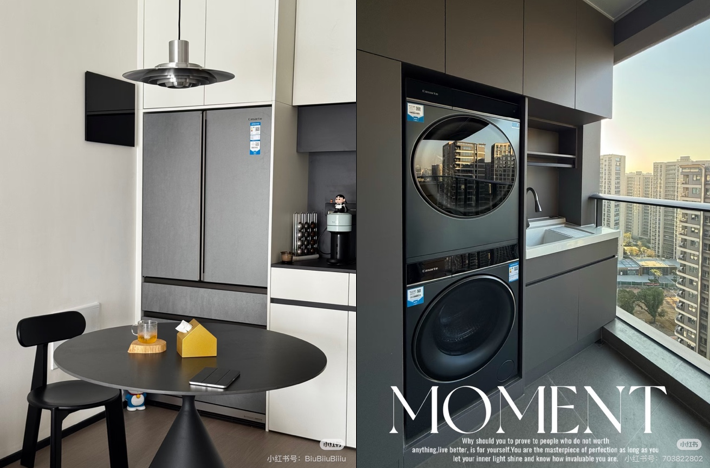
In 2023, conventional refrigerators still held nearly 80% of the retail volume share in offline channels. However, by 2024, this share had declined to approximately 50%. Replacing them are various built-in refrigerator types: flush-mounted (平嵌), zero-clearance (零嵌), and free-standing(自由嵌入式). The primary distinction between these models lies in the gap between the refrigerator and the cabinet on either side after installation. Flush-fit and zero-gap models typically feature gaps of less than 0.5 cm, while free-standing models allow gaps of less than 2 cm. Unlike traditional refrigerators that vent heat from the sides, built-in models primarily dissipate heat through the bottom, with some featuring front ventilation. This installation method achieves a flush-mounted appearance against walls or countertops, emphasizing seamless integration to significantly enhance spatial aesthetics. Superior cabinet designs further elevate this visual effect.
Leader in embedded design for home appliances in China
Casarte, a brand under Haier, is the undisputed leader in built-in design appliances in China. When the refrigerator industry hit a bottleneck, Casarte identified consumers’ demand for maximizing room utilization. Its Free-Fit refrigerator decreased side clearance from 10cm to just 2cm, a significant innovation that nearly set new industry standards. In subsequent years, Casarte secured multiple patents, upgrading side ventilation to front-bottom cooling technology, achieving zero clearance gaps. In 2022, Casarte introduced flush-fit refrigerators with ultra-thin foam-layer technology, enabling 594 mm-thick units to seamlessly integrate into cabinets. By the first half of 2025, Casarte commanded over 50% market share in the premium refrigerator segment priced above RMB 15,000, while dominating the washing machine market with a 90.4% share.
Casarte’s commanding market share in high-end refrigerators and washing machines stems directly from its inherent strengths. Refrigerators and washing machines have long been Haier Group’s core “battlefields.” According to Haier Smart Home’s annual report, these two categories have maintained the most stable market leadership over recent years with exceptionally high household penetration rates, making them prime candidates for standardization as premium products. Additionally, Haier emphasizes another key advantage: rapid user feedback, enabling faster product iteration. Leveraging its robust retail delivery capabilities in China, Haier delivers superior end-to-end experiences encompassing delivery, installation, warranty services, and after-sales responsiveness.
Suite appliances: New immersive living spaces
Building upon its embedded appliances, Casarte has also explored numerous extensions. As a premium brand deeply focused on scenario-based solutions, it aims to seamlessly integrate the kitchen’s multifunctional capabilities into home environments through embedded aesthetic integration, enabling consumers to immerse themselves in entirely new smart scenarios. This led to the emergence of Casarte’s suite of appliances. This sales approach allows consumers to freely mix and match hoods, built-in dishwashers, cooktops, refrigerators, and other appliances to form a complete, full-scenario smart solution. This trend primarily stems from the accelerating youthfulness of the home appliance consumer and the widespread adoption of open-concept kitchens, where Generation Z’s pursuit of harmonious home aesthetics has reached new heights. Through highly integrated design, suite appliances deliver spatial aesthetics and visual harmony unmatched by individual appliance purchases, thereby enhancing the value of premium-quality living.

Leaders across various professional fields
Among the diverse categories of home appliances, numerous brands have established leadership positions within their specialized fields. For instance, the range hood market is primarily dominated by domestic appliance brands. From January to April 2025, China’s online range hood market remained led by three major brands: Fotile, Robam, and Vatti, with market shares of 17.28%, 17.27%, and 10.03%, respectively. However, for non-traditional Chinese kitchen appliances such as dishwashers and wall-mounted ovens, overseas brands lead. By the end of 2024, China’s household dishwasher penetration rate was 4.8%. This is primarily due to persistent consumer misconceptions and the need for improved localization. Among these, built-in dishwashers dominate as the leading product, accounting for 76% of offline retail sales. Siemens holds a commanding 38.6% market share, securing the top position.
Ultra-luxury brand images are still predominantly held by foreign brands
The Bosch Group operates premium brands, including Bosch Home Appliances, Siemens, and Gaggenau, in China. It is the largest foreign-funded home appliance manufacturer in the country. Notably, ultra-luxury brands such as Bosch, Gaggenau, and Miele are often sold through high-end channels, including designers, department stores, and developer-provided finishing packages, rather than conventional offline retail channels. In the real estate pre-fitted market from January to May 2025, Bosch, Siemens, and Gaggenau ranked among the top three foreign brands in both kitchen and major appliances (e.g., TVs, refrigerators, washing machines). The pre-fitted major appliance market is predominantly led by foreign brands. These brands also offer extensive selections of packaged appliances, though they may not employ specific themed naming conventions, such as Casarte.
What is driving China’s luxury home appliance market
- Trade-in subsidies drove a sharp rebound in late-2024 demand and helped premium, energy-efficient models sell faster.
- The fastest growth came from cleaning appliances and color TVs, driven by higher ASPs, AI-enabled features, and consumers upgrading to higher-performance models.
- Beyond specs, consumers increasingly pay for lifestyle fit, seamless design (built-in/flush-fit), reliability, and end-to-end service (delivery, installation, after-sales).
- Casarte turned embedded design leadership, rapid iteration, and superior service execution into outsized market share, especially in the highest price bands.
- Domestic specialists dominate traditional Chinese cooking categories, while foreign brands lead in newer built-in kitchen categories such as dishwashers and ovens, underscoring the importance of suite appliances and channel strategy.