
In 2024, eye makeup only made up 14% of the overall color cosmetics market in China, compared to 53% for face makeup and 31% for lip makeup. However, it is expected to grow rapidly at a CAGR of 17.3% from 2024 to 2029. By segment, mascaras make up the largest segment at 36%, followed by eyeliners at 32%. Eye shadows and other products made up the remaining category. While eyeliner was the fastest-growing segment at 2.6% CAGR, eyeshadow was the slowest at 1.5% CAGR. This aligns with consumers’ priorities shifting from heavy, dramatic colored eyes to subtle enhancement and functional benefits in China’s eye makeup market.
Download our report on Chinese beauty consumer pain points
Chinese eye makeup preferences are diversifying
Consumer preferences in China’s eye makeup market are becoming more segmented and function-driven. Gen Z consumers prioritize trend responsiveness and visual experimentation, while sensitive-skin consumers increasingly demand gentler formulations with skincare-oriented ingredients. Male beauty consumers are also contributing to category diversification, particularly through eyebrow and subtle complexion-enhancing products that emphasize natural appearance over dramatic styling.
Consumers seek softer and more functional enhancements
Mainstream eye makeup preferences in 2025 increasingly reject heavy, multi-colored Western “cut-crease” styles. Instead, consumers favor softer and more functional enhancements that make the eyes appear naturally larger, rounder, and brighter. This reflects a broader shift toward understated aesthetics and daily wearability rather than highly performative makeup looks.
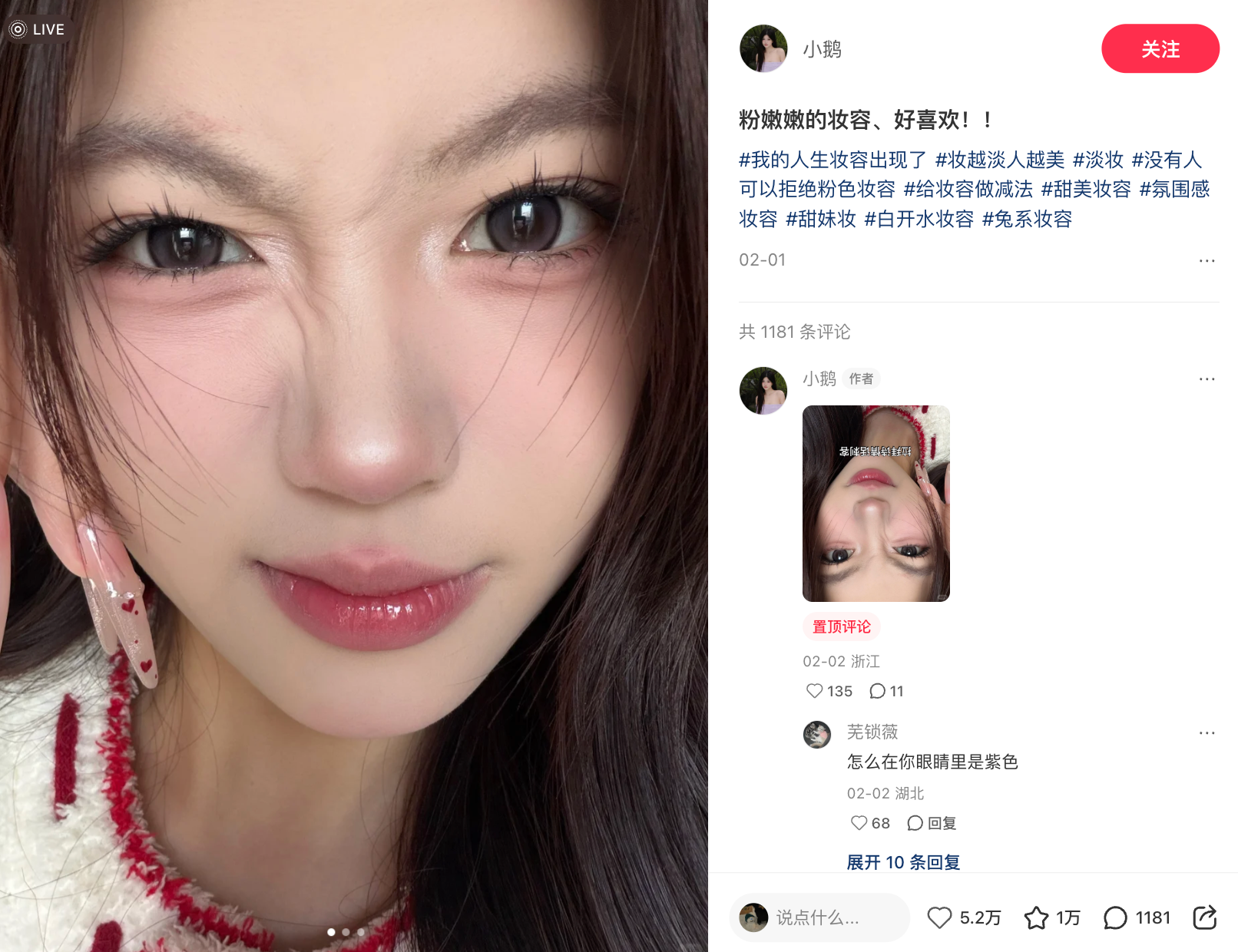
This preference for subtle enhancement is closely tied to the broader skinification trend (彩妆护肤化), which increasingly dictates product development logic within the category. Consumers now expect eye makeup products to combine aesthetic performance with skincare functionality and scientific validation. As a result, hybrid products such as restorative mascaras infused with biotin and other clinically supported ingredients are gaining popularity, reflecting stronger demand for functional and health-conscious beauty solutions.
Korea’s “aegyo-sal” makeup reaches China
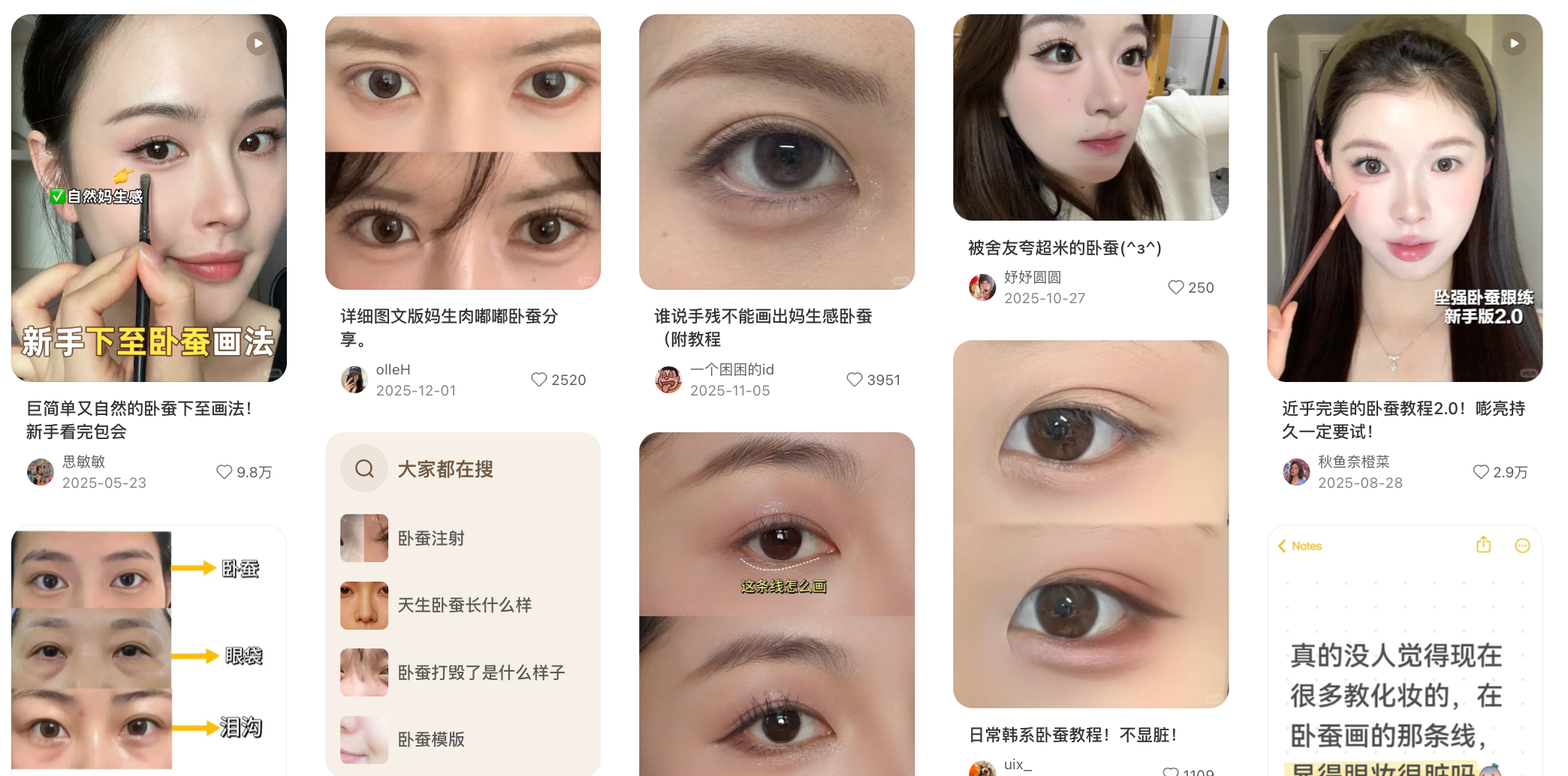
Application techniques have shifted away from Western-style upper-lid contouring toward softer forms of structural enhancement. One of the most influential trends is “aegyo-sal” (卧蚕) makeup, originating from Korea. This type of makeup emphasizes subtle under-eye light and shadow manipulation to make the eyes appear larger while visually shortening facial proportions. This aesthetic aligns closely with broader consumer preferences for youthful, natural, and approachable facial balance.
Guochao builds emotional connection
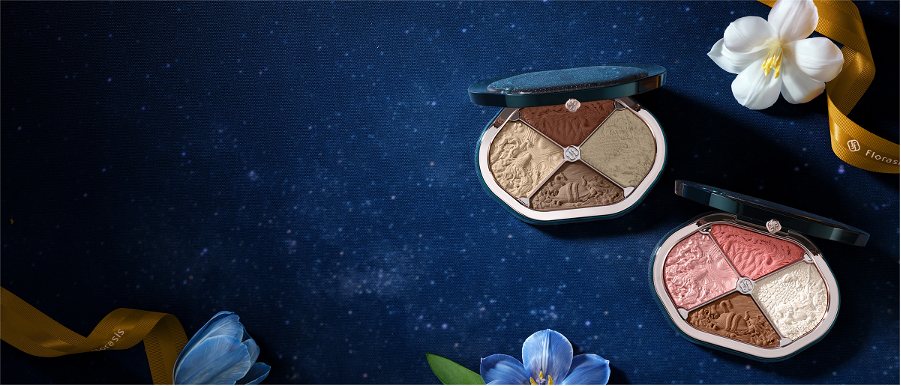
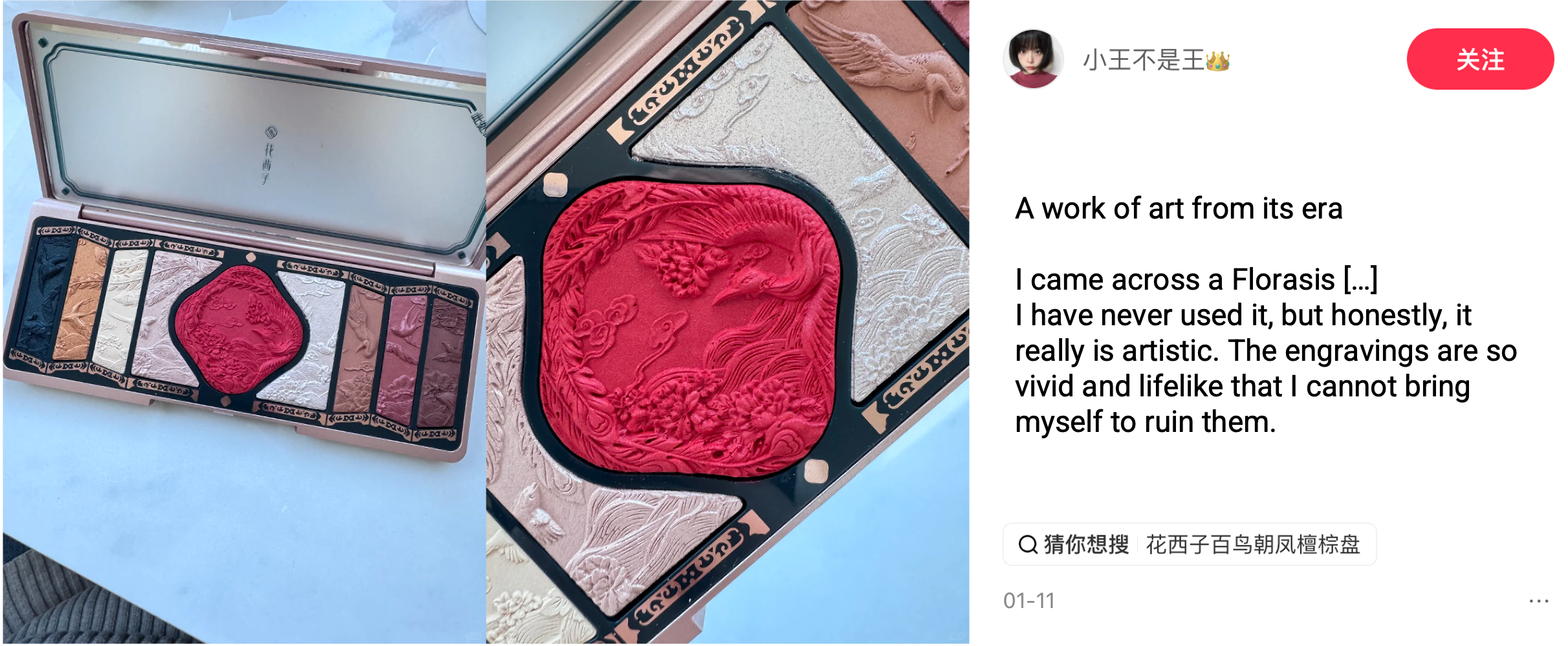
Guochao (国潮) beauty is gaining visibility. It combines traditional Chinese elements into makeup styles, turning the entire eye makeup into an emotionally resonant experience. It can typically be in the form of localized color palettes or packaging featuring traditional Chinese motifs, embossed textures, and viral aesthetic themes such as “Maillard” (美拉德) and “Y2K.” Florasis, for example, is known for its art-like packaging inspired by Chinese culture. Their products are so intricate that consumers often describe their products as “works of art.”
Winning brands don’t necessarily need expensive celebrity endorsements
E-commerce is the primary driver of growth in the China’s eye makeup market. Traditional online retail accounted for 54.05% of the overall cosmetics market in 2025, while Douyin’s cosmetics GMV reached an estimated RMB 20 billion (USD 2.9 billion) in July 2025 alone.
Domestic brands such as Judydoll (橘朵), founded in 2017, actively target Gen Z consumers with products priced under RMB 100 (USD 14.7). These brands leverage agile supply chains and maintain continuous social listening to rapidly capture emerging Xiaohongshu trends, including Y2K-inspired glitter makeup and “sunburn” blush styles.
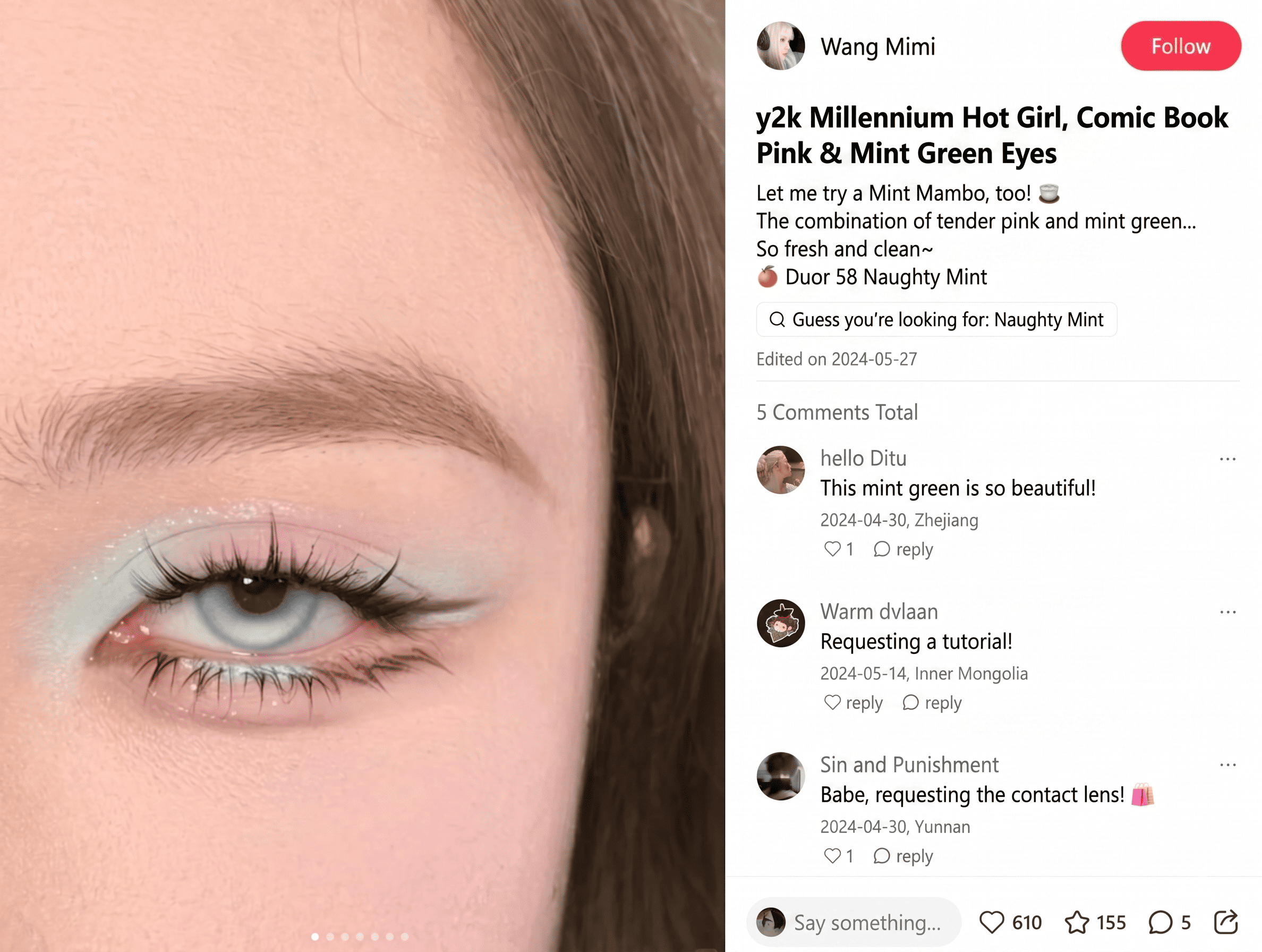
Successful brands do not rely exclusively on expensive top-tier celebrities. Instead, they implement a pyramid KOL marketing strategy in China, distributing marketing budgets across mid-tier Key Opinion Consumers (KOCs) and user-generated content (UGC). Rather than relying purely on organic reach, brands drive conversion by combining authentic short-form tutorials and detailed color-testing content with targeted traffic amplification and highly specific consumption scenarios.
Successful brands often operate through an integrated omnichannel strategy that assigns different conversion roles to each platform environment. Xiaohongshu primarily works for consumer education, trend seeding, and peer-driven product discovery, while its growing livestream ecosystem increasingly supports direct conversion. At the same time, Douyin’s high-velocity livestreaming and recommendation algorithms capture impulse purchases and short-term demand through entertainment-driven commerce. Within this broader ecosystem, Tmall flagship stores reinforce institutional trust, support deliberate search behavior, and strengthen long-term brand credibility. Together, these platforms create a continuous conversion loop where brand building, consumer education, and transactional execution occur simultaneously across multiple touchpoints.
China is a global eye makeup producer
China also has a massive physical production infrastructure that powers the entire economy. One of the most distinctive sectors is the export‑oriented false eyelash industry. In Pingdu city, Shandong province, more than 5,000 related businesses support an industry employing over 60,000 workers. The city produces roughly 120 million pairs of false eyelashes annually, generating an output value of approximately RMB 10 billion (roughly USD 1.4 billion). These products supply an estimated 70% of the global market for false eyelashes.
However, domestic consumption remains modest by comparison, accounting for only USD 157.9 – 232.9 million in retail value. This large export-to-domestic disparity highlights how China functions as a global production engine even as its internal beauty market continues to mature. Yet analyzing the market solely through the lens of export production overlooks the distinct cultural and behavioral dynamics shaping domestic eye makeup demand. Consumption within China is increasingly driven by highly localized aesthetic preferences and identity-oriented purchasing behaviors.
What drives conversion in the Chinese eye makeup market
- China’s eye makeup market is increasingly driven by functional aesthetics rather than dramatic transformation, with consumers favoring softer enhancement techniques that create brighter, larger, and more youthful-looking eyes.
- Domestic demand is shaped heavily by localized beauty preferences and cultural identity, particularly through trends such as “aegyo-sal” makeup and the broader Guochao movement, which transform eye makeup products into emotionally driven lifestyle purchases.
- The skinification trend is reshaping product development across the category, as consumers increasingly expect eye cosmetics to combine visual performance with scientifically supported skincare functionality.
- Digital ecosystems are critical to consumer conversion, as Xiaohongshu (also known as RedNote) drives trend discovery and peer validation, Douyin accelerates livestream commerce and impulse purchases, and Tmall reinforces long-term trust and repeat purchasing behavior.
- Agile domestic brands are gaining competitive advantage by combining rapid trend responsiveness, social listening, and integrated omnichannel strategies that allow them to quickly translate viral aesthetics into commercially scalable products.
Author: Sory Park, with additional research by Merry
Contact us for in-depth beauty market research in China
The cosmetics market in China is a rapidly evolving landscape, driven by the rising demand for high-quality products, innovative ingredients, and sustainable practices. Daxue Consulting offers specialized market research in China, providing a comprehensive understanding of the preferences, behaviors, and emerging trends shaping the cosmetics market.
Our Chinese consumer insights empower businesses to tailor their products and marketing strategies to resonate with local tastes and expectations. We offer consulting services that help you stay ahead of industry developments and achieve sustainable growth. Connect with us today to discover how our expertise can support your brand’s success in China’s thriving cosmetics market.