
Investment-driven luxury in China is entering a new era. Consumers no longer purchase luxury products just for their craftsmanship, status, and exclusivity. They now evaluate luxury through a broader lens, considering preservation of value and resale potential as well. Changes in consumer priorities and economic conditions have expanded the concept of luxury goods to include long-term financial, emotional, and symbolic value.
Investment-driven luxury in China and why it matters now
The Chinese luxury market is entering a new phase after a decade of extraordinary expansion. The mainland China personal luxury market reached approximately RMB 433 billion in 2025, having contracted by approximately 3 to 5% from 2024, yet signs of stabilization emerged as several major luxury groups reported improving performance and a gradual recovery in Chinese demand.
Following years of rapid growth, luxury consumption has experienced a significant transition to an investment-driven model where consumers evaluate products’ value with changing spending priorities and increasing sensitivity toward luxury pricing. The shift doesn’t mean that consumers are turning purely financially motivated. Instead, they’re incorporating additional considerations before they make final purchasing decisions.
What drives investment-driven luxury consumers
This shift is also closely related to China’s investment landscape. The demand for investment-driven luxury in China is motivated by the limited attractiveness of traditional investment approaches. Historically, real estate was a significant portion of Chinese investment. It drove 51.5% of investment in fixed assets nationwide in 2020. However, the real estate crisis over the last six years has hindered hope. Then there’s the Chinese stock market, which for a variety of reasons lags China’s actual economic growth. Therefore, even among affluent Chinese households, there’s relatively limited direct stock market participation. Among China’s rising affluent, stocks account for only 7% of the average investment portfolio, compared with 57.3% in cash and fixed deposits.
As there are fewer attractive traditional investment opportunities, how to evaluate and preserve the long-term value of their purchases has become a question for Chinese consumers. They become savvier with what material investments they choose. This has created favorable conditions for the luxury market where ownership provides certain financial reassurance.
Considering all factors, luxury goods, particularly those with strong resale markets, limited supply, and price resilience, have hence been viewed as assets capable of preserving wealth. This growing investment mindset is reshaping the luxury market in China.
From status symbols to value-preserving assets: The evolution of Chinese luxury consumption
Investment-driven luxury in China builds upon the existing desires for status and identity, while adding a stronger emphasis on value preservation and self-expression.
China’s luxury boom was largely driven by rapid economic development, expanding wealth, and consumers’ desire to demonstrate social success. Luxury products served as visible symbols of achievement, social position, and belonging among emerging affluent groups.
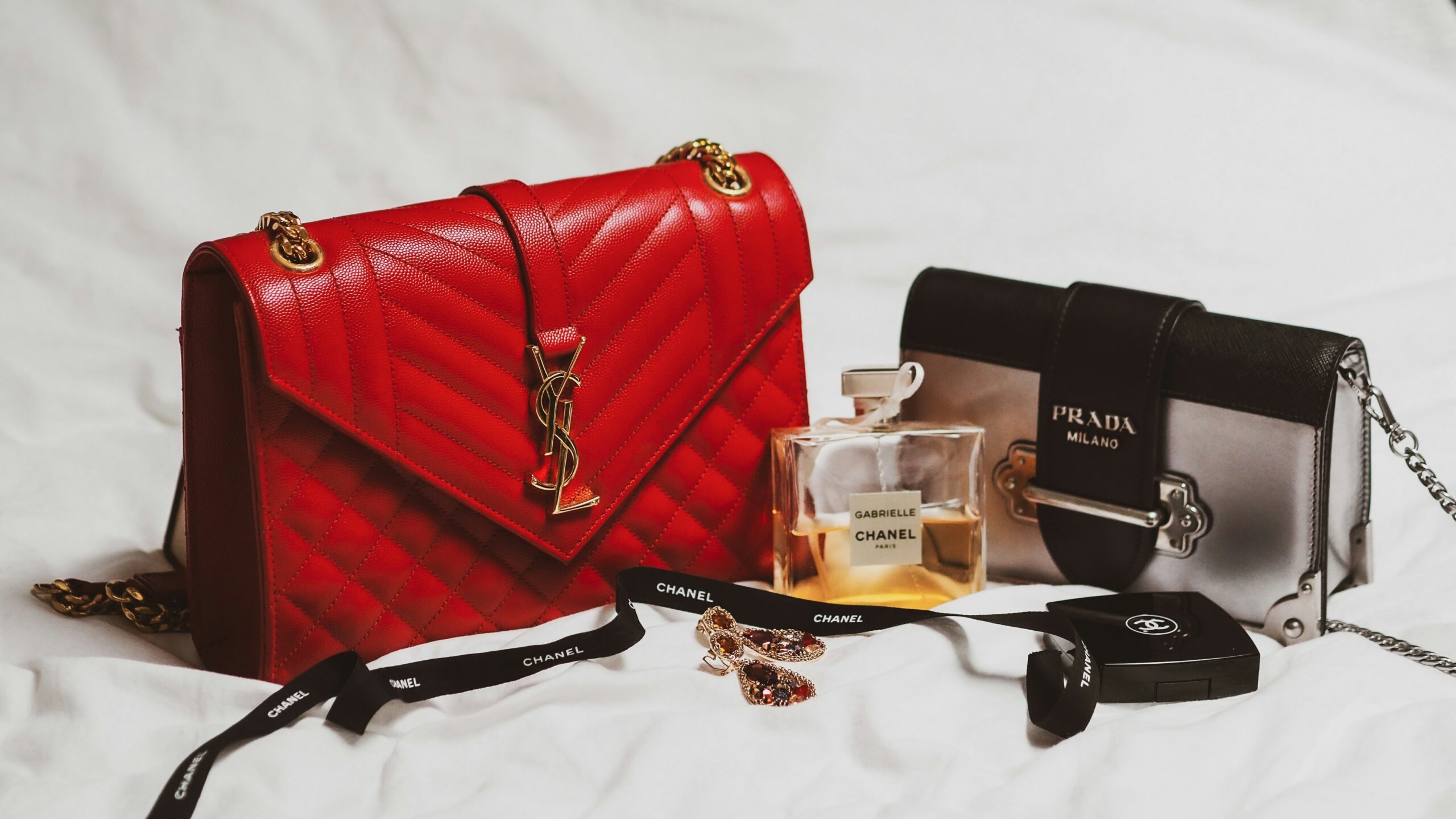
During this period, Chinese consumers were mainly attracted to recognizable luxury symbols such as monogram handbags, luxury watches, and highly visible branding. Luxury purchases were often driven by social recognition and symbolic meaning attached to global luxury brands. Chinese cultural factors such as mianzi (面子, which means self-esteem) and guanxi (关系, which means social relationships) further reinforced the role of luxury goods as tools for communicating status and strengthening social identity. Visibility is the primary value of luxury.
Nevertheless, as the market matured, luxury consumers gained greater product knowledge and purchase experience. Visible branding alone wasn’t sufficient to justify rising prices, which created a mismatch with consumers’ expectations. As a result, a new consumption logic considering other factors emerged.
Consumer motivations gradually expanded, incorporating more rational and long-term considerations into their purchasing decisions. They increasingly evaluate luxury purchases by asking questions such as whether a product can retain its value, justify its premium price, and remain desirable over time. Luxury products no longer only stand for success, but represent a meaningful and worthwhile investment. Therefore, products that combine emotional satisfaction with long-term value preservation have become more attractive in the market.
This shift is particularly evident in categories such as heritage handbags, luxury watches, and fine jewelry, where scarcity, craftsmanship, and brand heritage contribute to stronger resale demand.
China’s evolving definition of luxury value
A unique resale evaluation ecosystem
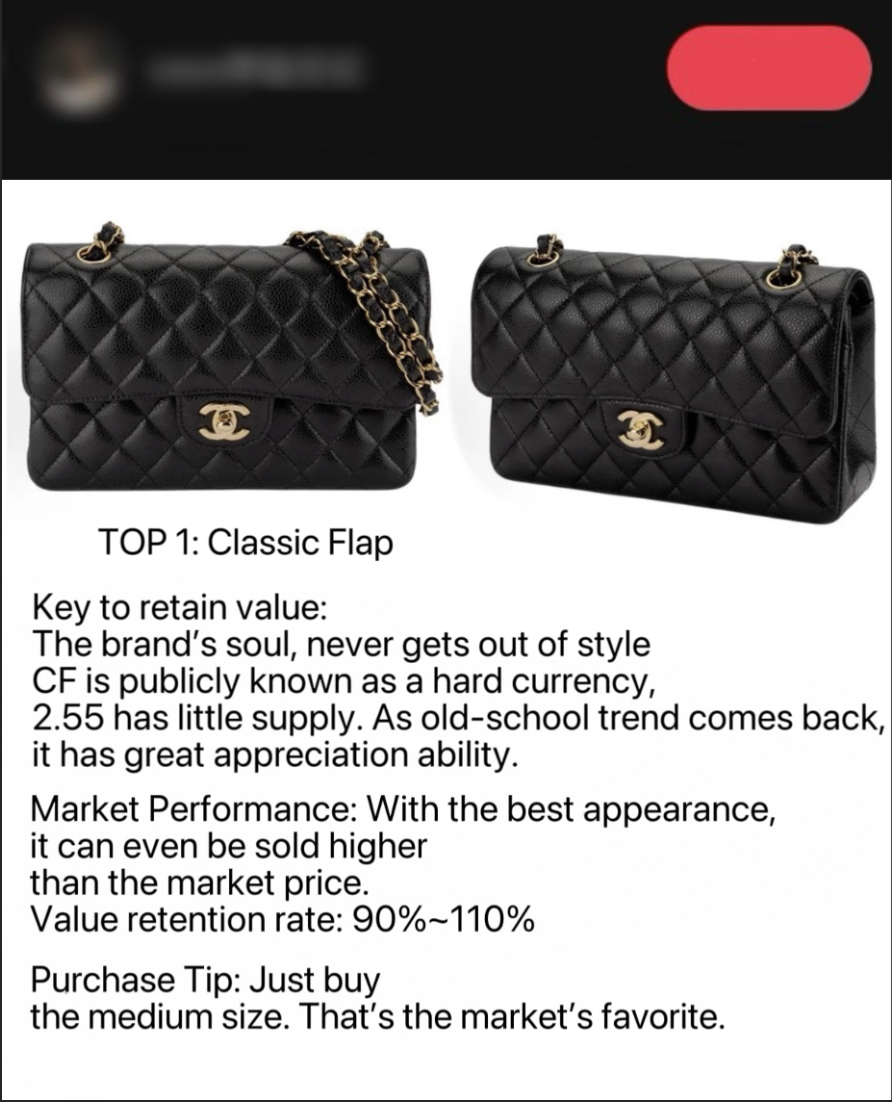
One of the biggest drivers behind investment-driven luxury is the rapid development of China’s second-hand luxury market. It has changed how consumers evaluate luxury goods fundamentally. In the past, brands had absolute power in defining value, and consumers had to rely solely on them. Now, luxury value is determined through a combination of both primary-market reputation and second-market trends. Consumers can independently evaluate products through resale prices, market demand, authentication services, and online discussions across platforms such as Douyin, Rednote, and Xianyu.
These Chinese digital platforms have further accelerated this transformation by popularizing discussions around concepts such as “保值率” (value retention rate), “值得买吗” (whether a product is worth buying), and resale potential. Consequently, consumers increasingly research the future value of a product or a brand before purchasing, creating a more transparent market where brand reputation is increasingly validated by secondary-market performance instead of marketing alone.
Economic uncertainty strengthens demand for justifiable luxury
Luxury value is undoubtedly shaped by broader macroeconomic conditions. China’s luxury market has slowed in response in recent years. The slowdown marks instead changes in standards by which luxury purchases are justified.
After years of luxury price increases, consumers have become more sensitive toward whether premium pricing corresponds with meaningful improvements in craftsmanship, exclusivity, product quality, and long-term value.
Case Study: Laopu Gold
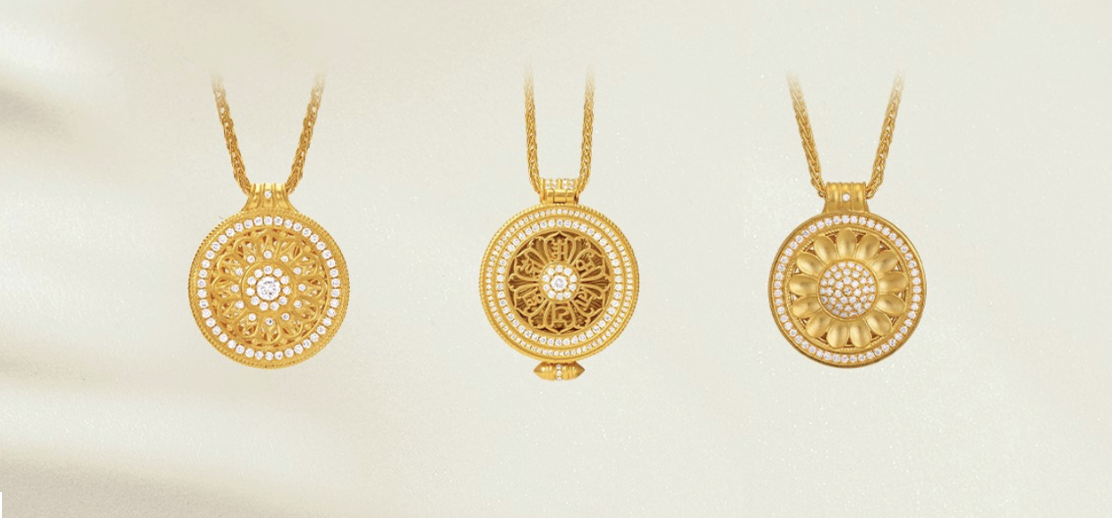
Laopu Gold is a great example of investment-driven luxury in China. Unlike traditional luxury jewelry brands that emphasize their prestigious reputation, Laopu Gold differentiates itself through a combination of material value, cultural meaning, and craftsmanship. This perfectly aligns with rational luxury consumers’ requirements.
Laopu Gold’s 24K Dragon and Phoenix Pendant incorporates traditional Chinese symbols associated with prosperity and harmony while providing intrinsic 24K material value. It has a stronger value-preservation potential, transforming the Chinese luxury market into a long-term value-oriented investment.
The market responded remarkably. In 2024, Laopu Gold’s annual sales approached RMB 10 billion in 2024, more than tripling from RMB 3.18 billion in the previous year.
Key takeaways on investment-driven luxury in China
- Investment-driven luxury is becoming a key consumption logic in China’s maturing luxury market. Luxury is no longer only a symbol of status, but increasingly an asset-like purchase that requires long-term justification.
- Chinese consumers are redefining luxury value through ownership and preservation. Financial value with emotional and symbolic returns is all taken into consideration.
- Chinese rapid developed resale system shapes consumers’ perceptions of luxury desirability and long-term value, as it allows consumers to assess luxury purchases through resale prices, market demand, and value retention rates.
- Economic uncertainty has shifted consumers from aspirational buying toward value-driven investment, boosting investment-driven purchasing behaviors.
- The future of investment-driven luxury lies in balancing financial value with emotional meaning. The strongest luxury brands will be those that transform investment value into lasting cultural, emotional, and ownership value.
Author: Allison Malmsten, with additional research by Zoey, edited by Sory Park