
Ryohin Keikaku, the Japanese company that owns Muji, closed its fiscal year 2025-26 with revenue of JPY 784 billion, up 18.6%. It achieved operating profit of JPY 74 billion (+ 31%), which are record results for the Japanese brand. Mainland China same-store sales and e-commerce sales grew 10% for the year and even accelerated to 13% in the first half of 2026. “East Asia” (as there is no detail specifically on China) posting a 19%-margin. This makes it the most profitable region in the group.
Basically, posting great results! What does this say about the market? Why have competitors failed to take market share over Muji which is on a segment where Chinese players would be legitimate candidates?
China’s competitors to Muji have struggled and didn’t make it. why?
When we analyze the 4 main direct competitors of Muji – three Chinese, one of them Japanese. None has built a lasting asset, and here is some explanations that could be found.
Japanese dollar store retailer: Daiso
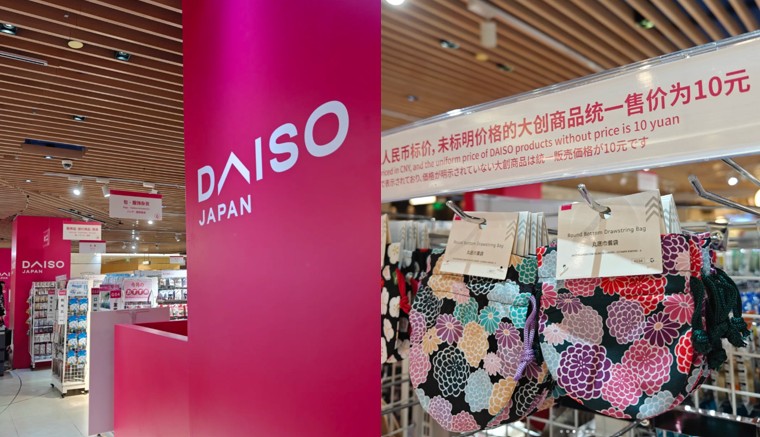
Daiso, the Japanese retailer known for its JPY 100-store format (Miniso later copied largely). It reached a maximum of 28 stores in mainland (nothing close to what Muji has achieved). Daiso closed its Tmall flagship in 2024 and shut its last two Shanghai stores in 2025. This signals a quiet exit from the market (Huxiu, 新零售, Nov 2024). Its store-selection model (low-visibility spots like parking levels and department-store upper floors), has worked in Japan but failed in China. In China, unbranded RMB 10-goods are already everywhere on Taobao. As such, Daiso could not gain the visibility it has in Japan. Comparatively, Muji iced the store locations whether it is shopping malls or at airports.
Chinese tech contender: NetEase Yanxuan
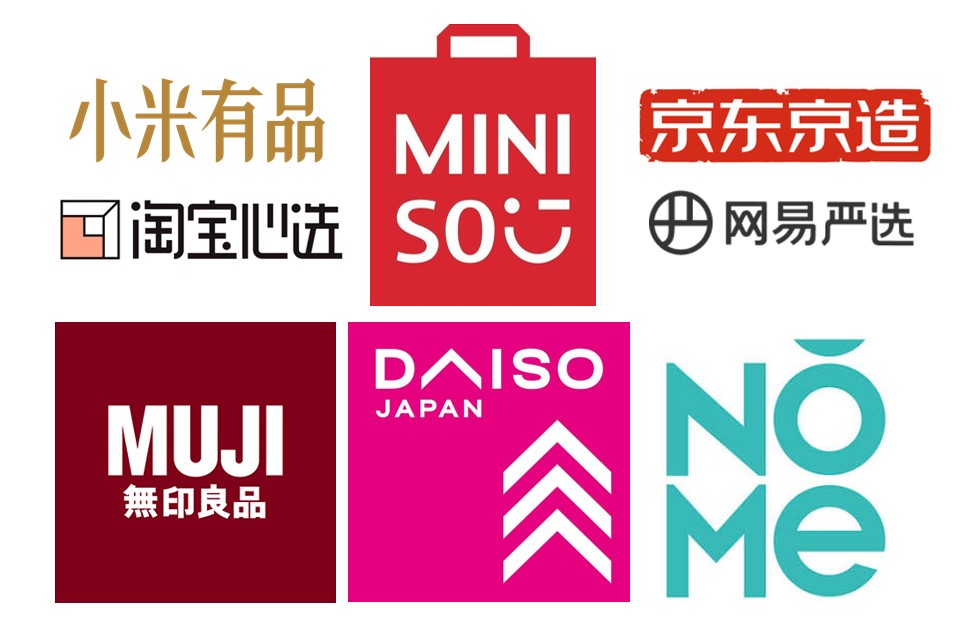
NetEase Yanxuan (网易严选) was launched in 2016 and was promising goods from “Muji’s own factories but half the price.” The GMV for its first month topped RMB 30 million (which is a low number for a platform like NetEase). Founder Ding Lei thought of rebuilding NetEase around it. It missed all targets and didn’t help turning around NetEase. The same promise of “same as Muji but half price” was copied by Taobao Xinxuan (淘宝心选), Xiaomi Youpin (小米有品) and JD Jingzao (京东京造) within a year. Same here, Muji used its shop network as a moat and resisted those new digital-native players. Most Chinese consumers sticked with the brand – consistency, reliability and brick-and-mortar access.
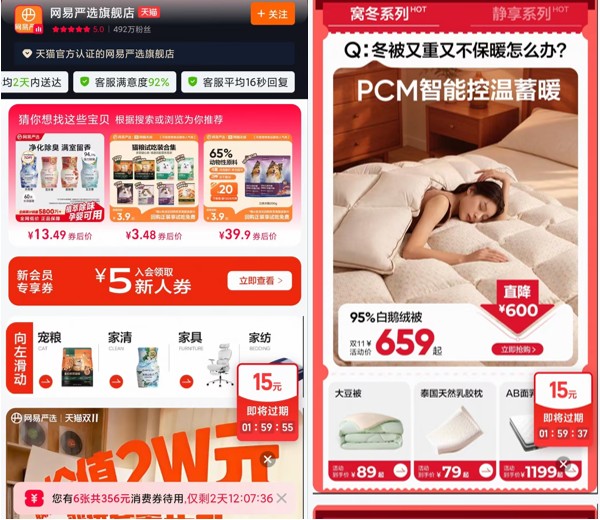
Other Chinese brands in the same space
Xiaomi Youpin (小米有品) and Taobao Xinxuan (淘宝心选) which reused the idea of discounting Muji’s price, were demoted or folded into supply-chain brands by 2021 and 2022. None of them became a sustainable category in their respective organization.
NOME (诺米) raised roughly RMB 460 million from Capital Today and Sequoia in 2017. It opened 150 stores in two months only and over 400 by the end of 2018 (within 2 years). It was pitched as “Muji’s minimalism, but colorful Nordic,” so the two references for minimalism . NOME was often directly across the mall aisle from Muji itself. It burned flagship-level rent at the moment Muji was running nine consecutive price cuts. NOME did not manage to scale and even closed most of its stores by 2026.
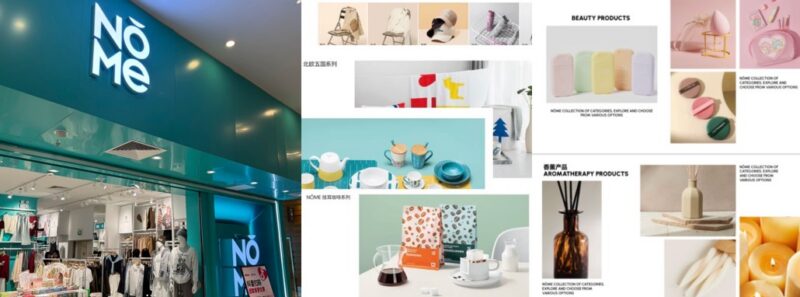
What worked (and don’t) for these competitors
Investment was not scarce in any of these four attempts, and neither was the ambition. What was missing, was at least two of five things Muji had built at the same time:
- a coherent design system across 7,000 SKUs,
- quality that survived moving around 80% of sourcing in China,
- an honestly anchored pricing system,
- physical stores that function as product proof, discovery space and a returns desk,
- a parent company for whom the category is the whole business and entire business, not an experiment a board can cancel (like the internet players we mentioned earlier like NetEase did)
Competitors which attacked on price or aesthetic alone. Meanwhile, skipping the rest (stores, pricing as a system, commitment for the segment), tended to lose ground against Muji. The brand nearly failed to learn this lesson about itself before COVID. Indeed, between 2018 and 2021, Chinese prices ran up to 70% above Japan’s price on identical goods. Same-store sales went negative, and local media gave a nickname “IQ tax” that means “the tax on being stupid.” The recovery that produced 2025’s relies on the 5 factors we listed earlier.
That said, most of Muji’s strengths also carry a risk
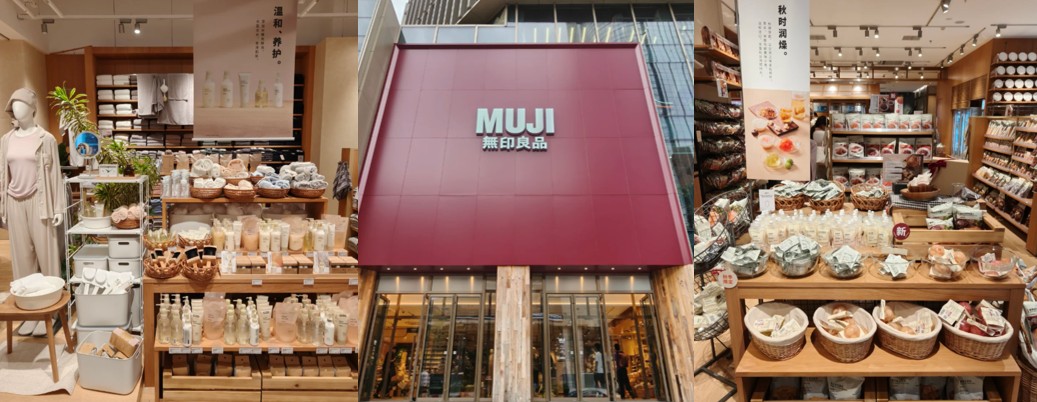
The strategic analysis goes indeed deeper than “Muji has good stores.” Each asset blocks a specific seet of competitors. It opens a specific growth segment. At the same time, there is some risk to each asset.
Strategic analysis of Muji’s assets
| Asset | How it captures opportunity | Risk tied to this asset |
| Store network About 440 stores, increasingly flagships with in-store restaurants (MUJI Diner), repair counters, embroidery services, and workshops | Converts store visits into “third place” destinations (like Starbucks in the past), somewhere between home and work, that pure e-commerce players and Miniso (with its small box format) can’t replicate; anchors older, higher-income shoppers, a segment where competitors are mostly unable to catch. | 100+ stores are over ten years old, aging; flagship capex is real. |
| Local sourcing ~80% local sourcing with centralized Japanese QC | Communicates “Japanese quality, Chinese price,” capturing the consumption-down-grade trade from premium brands without importing Japan’s cost structure. | China is both MUJI’s largest foreign market and one of its main manufacturing bases for China and other markets; a tariff or logistics shock would hit sales and supply all together. |
| Denationalized, logo-free design identity | Absorbs Japan-China sentiment cycles better than any visibly Japanese player (Uniqlo, Shiseido, etc.); same-store sales stayed positive through boycott waves that hurt autos and cosmetics. | Logos have always been central in Chinese consumers’ decisions to buy; the slighter association to Japan is also a missed asset. |
| MUJI 500 RMB 10–30 small-format entry store launched in China in 2025 | Directly contests Miniso’s and Pinduoduo’s impulse-price / Gen Z traffic without discounting the core brand. | Still unproven at scale in China; risks of diluting rather than recruiting if seen as “discount.” |
| China-only product development Rice-fermentation skincare, Heilongjiang hemp, Inner Mongolia wool, city-limited foods | Builds a “discovered in China” story that deepens local relevance without conceding the Japanese quality signal. | Skincare depends on China’s NMPA registration process, which can take 12 to 24 months and ties a growth engine to regulatory timing MUJI does not control. |
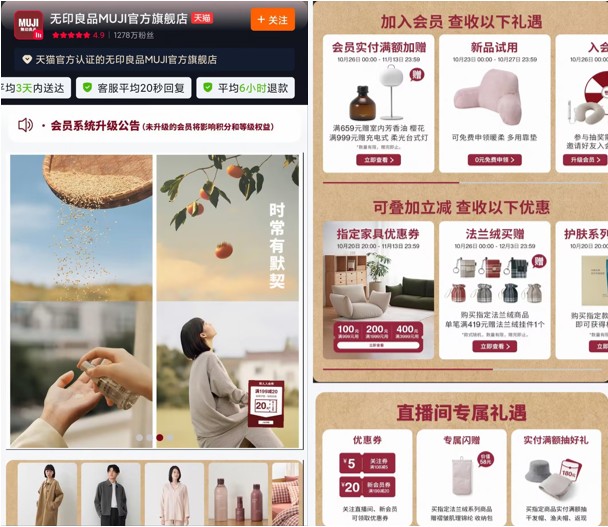
| MUJI “passport” and CRM | The only channel MUJI owns outright rather than rents (compared to stores and e-commerce platforms), and it powers member pricing, events and Douyin commissions. That’s an asset that for instance KFC has also built and is a real asset compared to emergent Chinese players which are very dependent on the e-commerce platforms. | Legal and regulatory risks when internalizing client data management. |
That said, Miniso is also winning with a different strategy
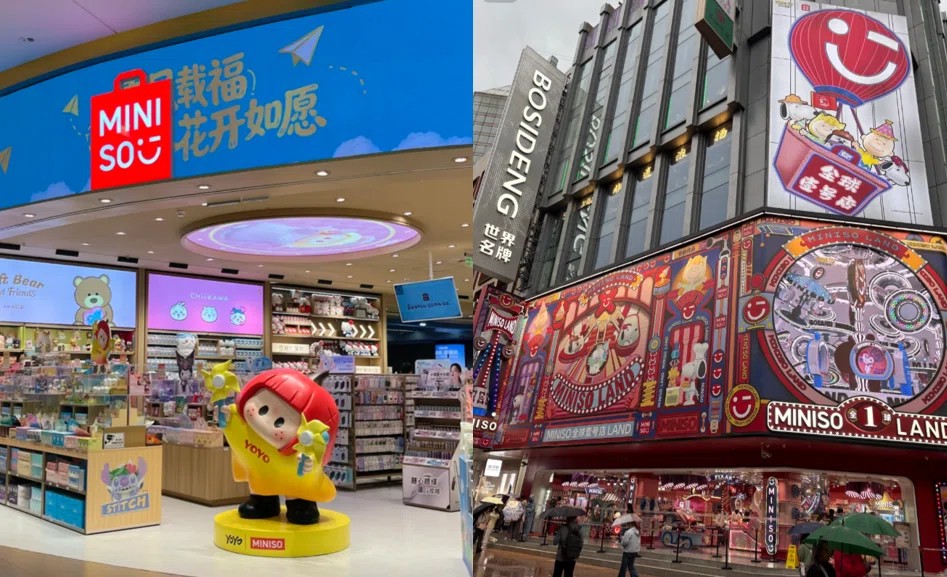
It would be a mistake to read Miniso’s 4,386 mainland stores and RMB 17.0 billion in 2024 revenue. It achieved a growth of 22.8% (Retail Insight Network, March 2025), as a counter-example to Muji’s reasons of success. Miniso leaves Muji’s “five-layer system” alone. Instead, Miniso wins on two layers Muji deliberately refuses to leverage: licensed IP, now representing roughly 30% of sales. It was targeted at 50% by 2028 per the company’s own guidance, and livestream-native merchandising on Douyin. Miniso sells “borrowed emotion” which means an emotion that owns only the license and not the trademark. It sells fast though as new IP drops every few weeks, bought on impulse while scrolling Douyin or going into Miniso’s shops.
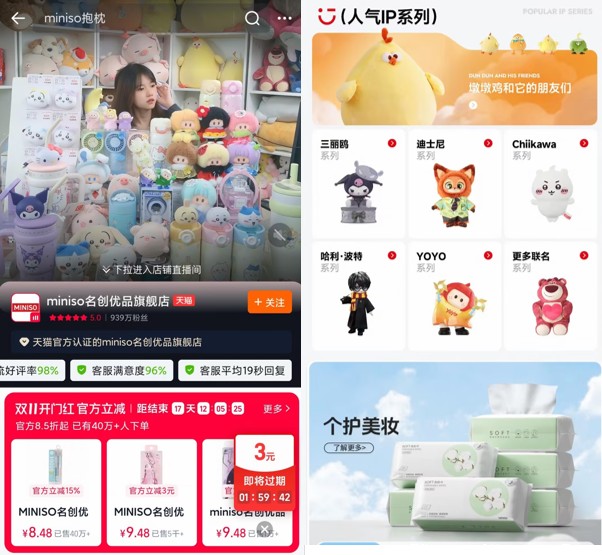
On the opposite, Muji sells its own meaning. The kind of purchase that doesn’t depend on being “fashionable”. It sells timeless affordable pieces. The overlap to watch is Miniso’s move to the up-market into larger formats of stores and higher price points. That is the one place its loudest asset starts to compete directly for Muji’s adult, core customer rather than Gen Z’s first apartment.
Localization matters in China
IKEA and Daiso illustrate a different disappointment than NOME’s reckless and unfruitful expansion. Both IKEA and Daiso have been patient, well-funded retailers whose format simply stopped matching how China shops. IKEA’s roughly 30 suburban, parking-anchored stores were built for a car-commute (same issue as with Carrefour in the late 2010s), weekend-destination shopper while instant retail and 30-minute delivery have eroded that premise. And its “exotic Scandinavian” positioning has eroded as domestic options matured.
Daiso’s failure was narrower and faster: a transplanted site model plus a price anchor (around RMB 10) that Taobao and Pinduoduo undercut (with delivery included), and no livestream or social-commerce presence to compensate. Capital was not really the gap for either of them. Muji avoided this trap largely because it re-built its China playbook after nearly dying of the same rigidity between 2018 and 2021, treating RED and Douyin as first-class channels, developing China-only SKUs, and rebuilding its pricing system locally rather than importing Japan’s system.
Muji’s recovery reveals how Chinese consumers think about trust
Muji’s recovery is less as a retail case study and more as a data point on where trust currently sits in Chinese consumption. The term driving this market, 质价比 (zhìjiàbǐ, roughly “value for verified quality”, very different from Xinjiabi (value for money) that we covered in previous articles), is very different from cheapness. It describes a consumer who has lived through a property-wealth decline large enough to erase tens of trillions of yuan in household value at the size of the country since 2021.
The same consumer has seen several domestic “curated quality” brands turn out to be reselling the same OEM factories at a discount. In the end, the Chinese consumer has responded by making trust itself the scarce resource he is willing to pay for. Muji’s stores, physical proof point with a return desk, happen to be a good answer to that expectation, almost by accident of its original Japanese design philosophy rather than by any China-specific insight.
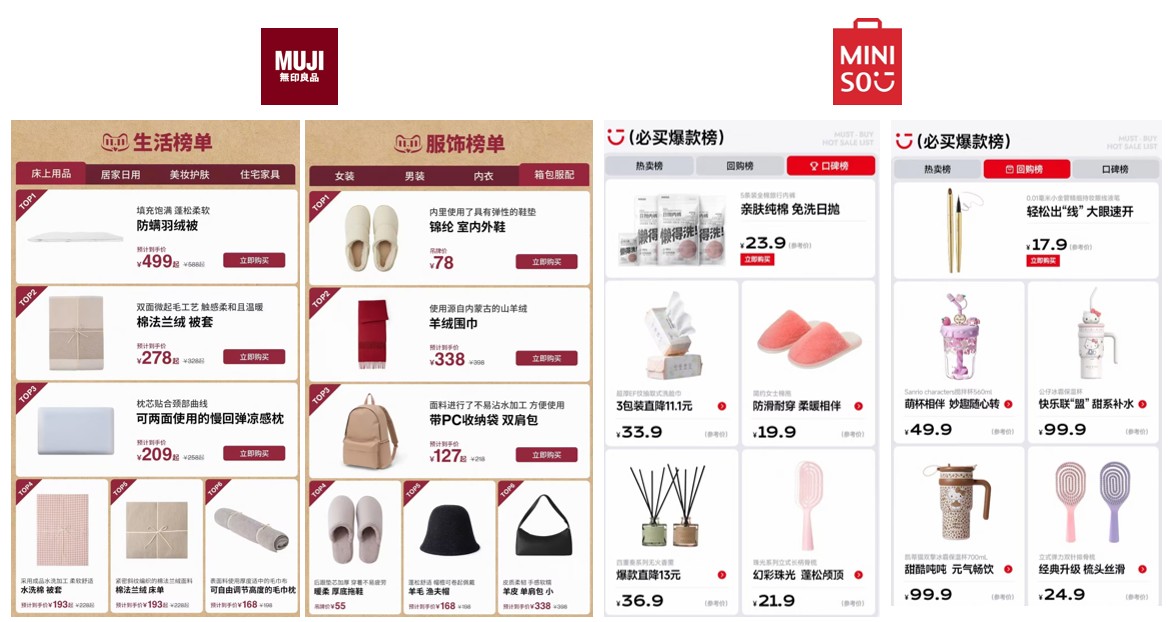
Let’s look at the segments Muji is addressing. Its “Rational Upgrader” persona segment, urban professionals auditing each purchase after years of buying designer basics. This segment is paying for Muji’s products today specifically through skincare, where “Japanese quality” still represents safety. On the opposite, its “Gen Z Explorer persona” segment loves the aesthetic on RED. However, they spend at Miniso, PinDuoDuo, and Douyin livestreams, because trust is not yet the thing a 22-year-old on a RMB 5,000 monthly budget cares. The gap says more about generational trust than about Muji’s marketing: dignity and affordability are trading off differently for each generation in China right now and it plays in favor of Muji.
What this means for brands entering the Chinese market or developing within the market
The concrete implication for an international brand learning from this case should be more than “open flagship stores” or “localize your sourcing.” In a market this sensitive to trust (as it has always been through logos and heritage for instance in China), there are many ways of facing competition from digital-native brands. It would be a good exercise for a brand to audit how many of the five parameters we described earlier it has actually built. This is close to the distinction we track in our own work on China’s new retail transformation, where store-as-media format has mattered more than channel foot count. And in our research on the consumption-downgrade story, where “downgrade” has mostly meant paying less while keep demanding more, it has not meant that consumers would go for low perceived quality summarized well with the wording “downgrade with dignity”.
Author: Matthieu David, edited by Ming Yii Lai