
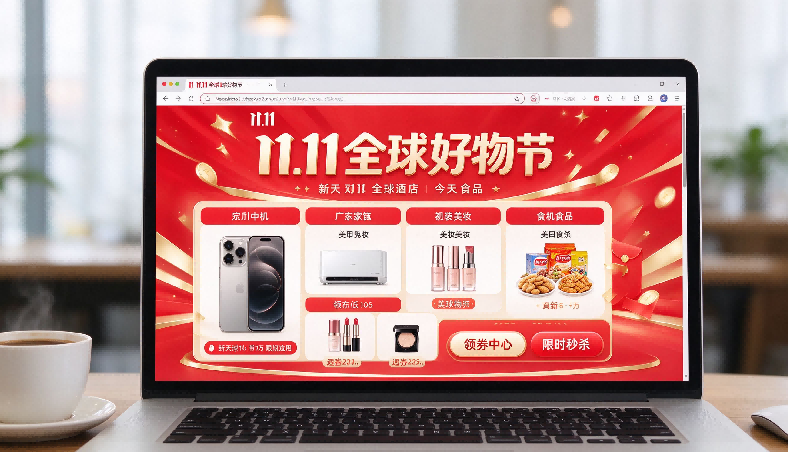
In November 2026, the Double 11 shopping event was held for the 18th time in China. As in recent years, the shopping frenzy is fading as people are not concentrating their spending on a single event but throughout the year. In turn, competition is less about lower prices and more about better value – buying products that are worth it. The event has become an opportunity for brands to launch new products and test demand because people are buying products more rationally, not strongly driven by promotions and subsidies, and they are willing to pay for novelty items. Therefore, Double 11 has also become a period for brands to quickly test ideas and prove their value.
Double 11 experiences slower growth but leaves room for more brands
From October 7th to October 31st, 2026, cumulative sales on general Chinese e-commerce platforms reached RMB 1.03 trillion, an increase of RMB 23.7 billion compared with the same period last year. By November 11th, total online retail sales reached approximately RMB 1.78 trillion, with a YoY increase of 4.8%. This indicates that the 2026 Double 11 shopping festival continues to be the largest shopping festival in China, and it’s going through a phase of steady, mild growth. It also shows that platforms and brands can’t rely on Double 11 to drive their annual sales performance.
However, it is an opportunity for a broader range of brands as people are diversifying their spending across categories and brands. According to Tmall, 60,000 merchants participated in Double 11 for the first time in 2026, and 182 brands that had been on the platform for less than five years and broke into their category’s top 10. This suggests that while market leaders keep their position, smaller brands are receiving more attention.
WeChat Stores encourage social sharing and consumer engagement
WeChat Stores officially entered the Double 11 shopping festival for the first time, surpassing 100 million daily active users. During its 35-day campaign, it encouraged users to share and recommend products, turning those interactions into purchases. For example, users can get bigger discounts by sharing coupons with friends, while merchants and creators can share vouchers before a livestreaming session. The biggest difference with WeChat Stores is that shopping happens within chats and Moments. The community-based approach of WeChat Stores has successfully taken off because today’s consumers are more likely to trust recommendations from people they know or from within their communities.
Tokens and AI products are emerging as a new category
Home appliances, mobile phones and digital devices, and apparel remain the top three categories for Double 11, with market shares of 15.9%, 14.3%, and 13.8%, respectively. Although these three major traditional categories of essential goods still dominate the market, emerging segments such as Artificial Intelligence (AI) hardware and services are rapidly gaining ground.
During JD.com’s Double 11 event, over 50 million AI products were sold. Sales of AI glasses and AI PCs doubled year-over-year, while sales of humanoid robots increased by 700% year-over-year. Moreover, tokens have become a new category during the 2026 Double 11. GMV in Tmall’s token category rose 450% compared with the previous period on its first day of sales. About 100,000 monthly plans for Qianwen Office were sold in Li Jiaqi’s livestream in just half an hour.
Service consumption itself has become a product
During the 2026 Double 11 shopping festival, services such as home services and car maintenance services became an independent category in the major sales event. For example, on JD.com, over 300 million service orders were placed during Double 11, with sales of home services increasing by more than 240% year-over-year in the first half alone. This reflects shrinking room for growth in physical goods consumption, and services have become a source of growth that both platforms and brands have to prioritize. It means that in the future, the competition between platforms and merchants won’t be about who can sell physical goods at lower prices, but rather about who can turn non-standardized services into standardized, guaranteed products that people are willing to purchase in advance.
Consumers are starting to buy services in advance and in bulk, just as they do with daily necessities. This is mainly because demand for these services tends to be cycle-based, so consumers are increasingly willing to take advantage of promotional prices to incorporate recurring household expenses like housekeeping and car maintenance into their household budgets all at once. A 2026 survey by National Business Daily found that among 3,000 respondents, 55.2% buy services in bulk because they use them frequently and find it more cost-effective, while 54.7% do so because these are things they’ll need to do sooner or later, and buying in advance ensures they’ll be available when needed.
Emotional consumption becomes a focus of the Double 11 shopping festival
Many see emotional value as worth paying for, and Double 11 has become a planned moment to spend on it. For example, during Tmall’s Double 11 event, presale revenue for the trendy toys category increased by 120% year-over-year, while sales of blind boxes increased by more than 30% year-over-year.
However, the way consumers buy emotional products has changed. In the past, consumers bought products because they feared missing out. Now they care less about that and more about products that they actually need and want.
Key learning points from the 2026 Double 11
- Competition continued to shift from price to value. Consumers are less driven by promotions and more open to new products, so brands are using Double 11 to launch products and test demand.
- Overall sales growth was slow, so brands can’t rely on Double 11 for their annual performance. But 182 brands less than five years old broke into their category’s top 10 on Tmall, showing that brands beyond the market leaders are growing.
- WeChat Stores officially joined Double 11, showing that shopping is spreading beyond traditional e-commerce platforms to chats and personal recommendations.
- While traditional categories still dominate, new categories are emerging. In 2026, AI products, tokens, and services showed growth. Consumers are also buying services like housekeeping and car maintenance in advance and in bulk.
- Consumers are more selective, but they still spend on what they value, from practical services to emotional purchases like trendy toys and blind boxes.
Author: Sory Park, with additional research by Zhixin Piao