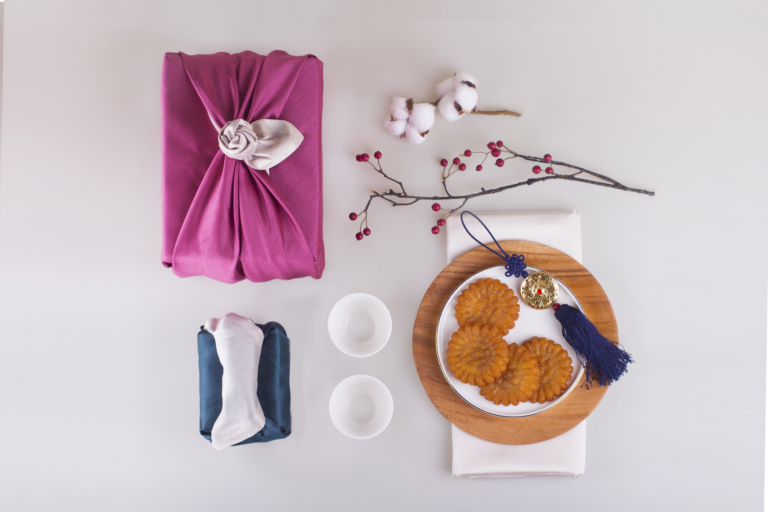


For centuries, tea was integral to Korean life. It is believed to have been introduced by Buddhist monks who visited China during the sixth and seventh centuries. However, despite its deep roots, the modern tea market experienced long periods of stagnation. As coffee culture expanded from the 2000s onward, tea consumption declined. Now, renewed interest in health, mindfulness, and premium experiences, especially among young consumers, is bringing attention to the tea market in South Korea.
Read our Korea F&B industry report

From coffee to tea: A modern revival among the MZ Generation
Although Korea is widely known as a nation of coffee lovers, tea has been making a remarkable comeback in recent years, especially among the MZ Generation. According to Euromonitor, the tea market in South Korea was KRW 1.59 trillion in 2024. While it is significantly smaller than the coffee market, it showed an 8.8% year-over-year growth and an impressive 44% growth since 2020.
Interest in tea is driven by three main motivations: health, curiosity about new drinks and flavors, and a desire for mindful experiences. Many young Koreans are turning to tea for its health benefits, including digestion support, stress reduction, and antioxidants. Its low-calorie content also makes it a popular “healthy pleasure” for the health-conscious MZ Generation, who seek balance in their fast-paced lifestyles.
Tea market in South Korea: A new blue ocean for Chinese brands
The growing tea market in South Korea has drawn the attention of major Chinese tea brands. Although the ovearll tea market, especially milk tea and specialty blends, remains relatively small in Korea, it is seen as a promising blue ocean. Moreover, many Chinese tea companies view the country as a strategic gateway for global expansion, using it to test trends and raise global visibility.
Building on their success at home, Chinese milk tea brands are exploring South Korea for innovation and expansion. Chinese beverage brand Mixue, for example, entered in 2022, and other brands, including ChaPanda and Heytea are following suit. These brands are positioning tea as “healthy indulgences,” offering customized, health-conscious, and visually appealing drinks – precisely the kind of trendy beverages that resonate with Korean consumers who enjoy sharing their lifestyle online.
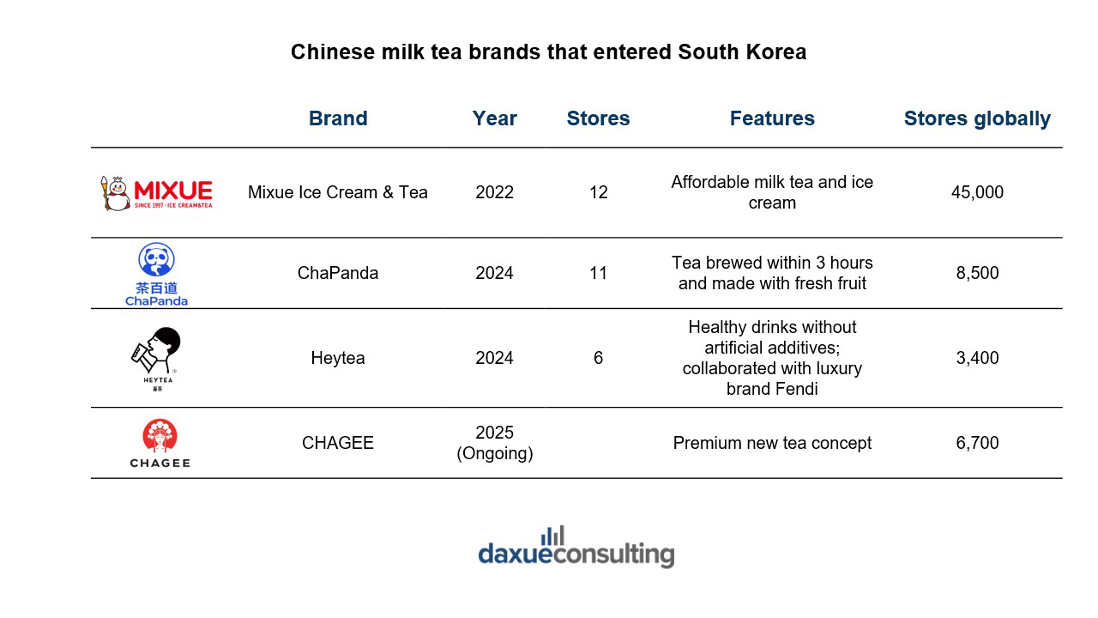
How Chinese tea brands are winning over Korean consumers
ChaPanda and Heytea are reshaping the tea scene with word-of-mouth marketing, modern aesthetics, and strong social media presence.
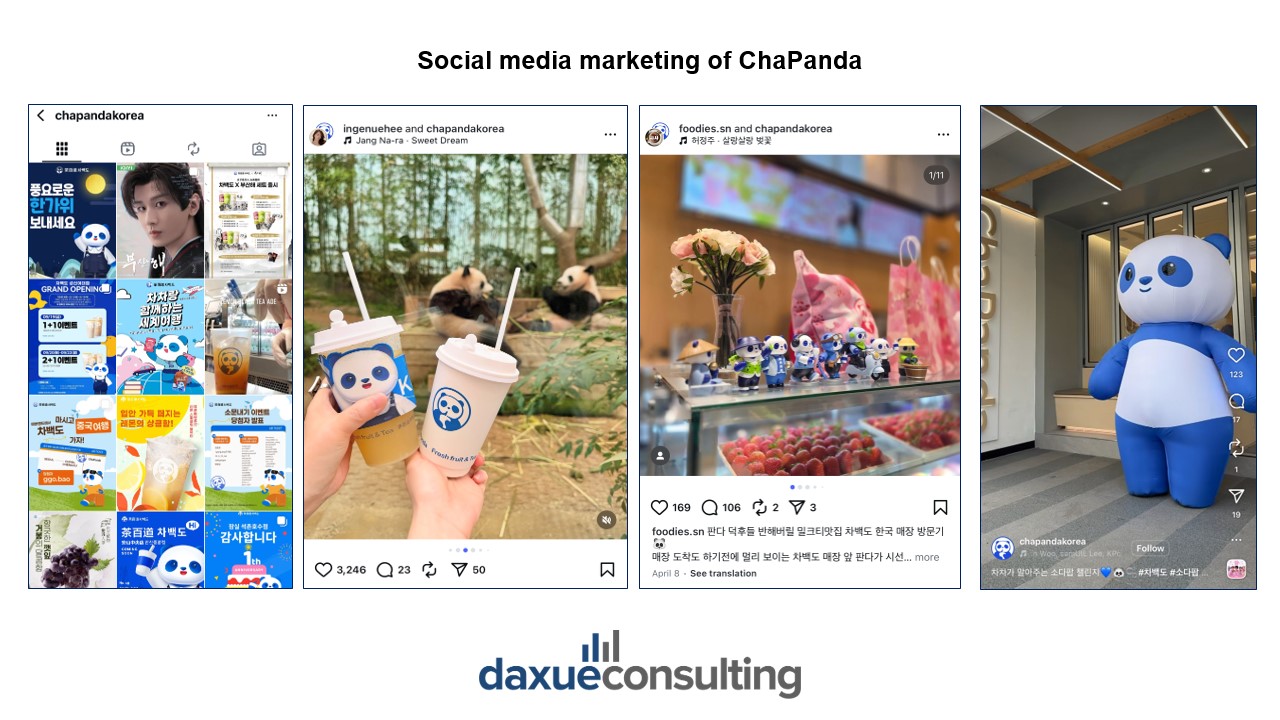
ChaPanda quickly became popular thanks to its adorable panda mascot, the centerpiece of its brand identity. A Naver Blog user named “ing” shared, “The pure and simple reason I visited ChaPanda was because the panda is cute.” Commenters even compared the mascot to Fu Bao, South Korea’s first naturally born giant panda, and praised the store’s cute design and packaging.
Capitalizing on this popularity, ChaPanda opened a flagship store near Fu Bao’s shelter in Everland, Yongin, attracting South Korean customers, who search for cute stores and products. Another Naver blogger with the nickname 리즈 wrote that she “rushed to see and try the beverages” and described them as healthy, fresh, and delicious.
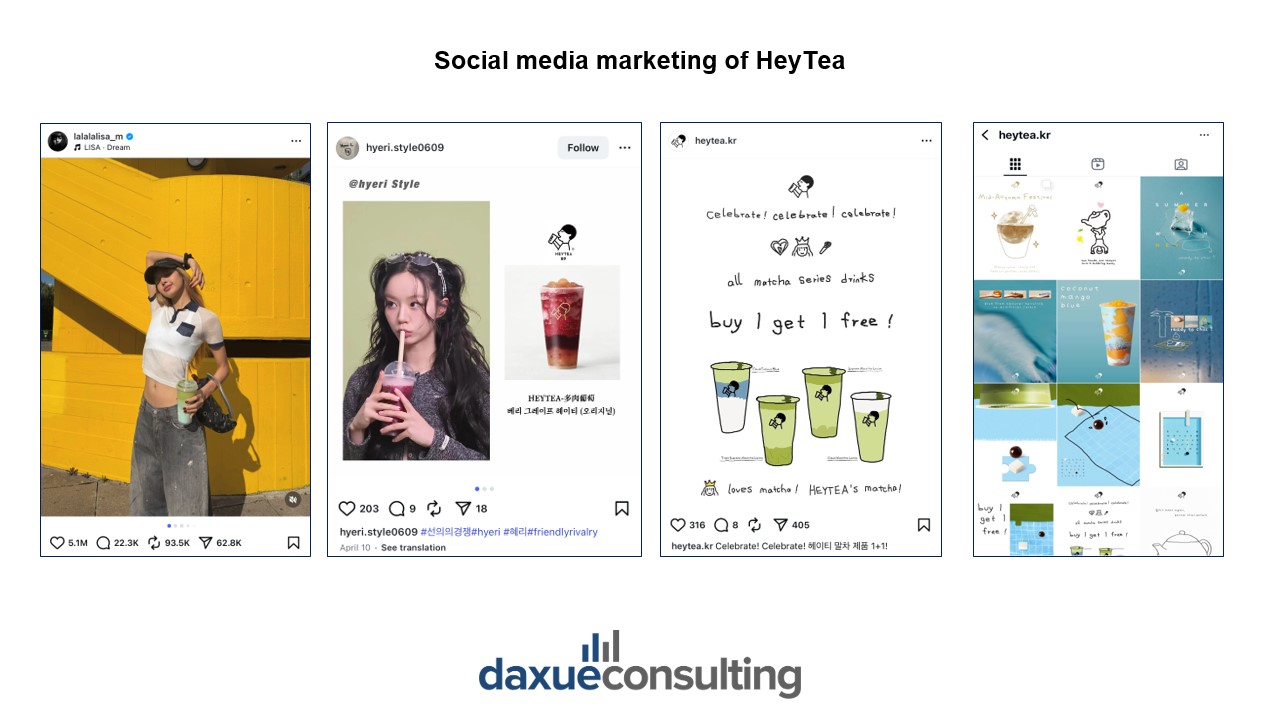
Heytea, on the other hand, chose an “Instagram-worthy” location in Apgujeong. It also launched a limited Seoul-only fridge magnet inspired by Namsan Tower, known for its romantic night views and love padlocks. The magnet, featuring Namsan Tower and a Heytea finger heart logo, symbolizes love and happiness, inviting customers to feel romance while enjoying their drinks.
The brand gained further buzz when BLACKPINK’s Lisa posted about a custom matcha and coconut milk drink on her social media. Heytea quickly turned this into a one-day 1+1 promotion in August, sparking excitement across Instagram and inspiring many to try the drink.
By combining emotional appeal, creative marketing, and cultural connection, Chinese brands such as ChaPanda and Heytea are reshaping how consumers experience tea in South Korea.
South Korea’s tea culture blends tradition with modern creativity
- The tea market in South Korea is experiencing growth again, driven by younger consumers seeking healthy and novel experiences.
- Chinese brands see South Korea as a promising blue ocean market for creative and premium tea experiences.
- ChaPanda and Heytea successfully connect culture, emotion, and design to engage Korean consumers.
- The tea trend reflects a broader shift in Korea, where tradition meets modern lifestyle, turning tea into both a ritual and a trend.