
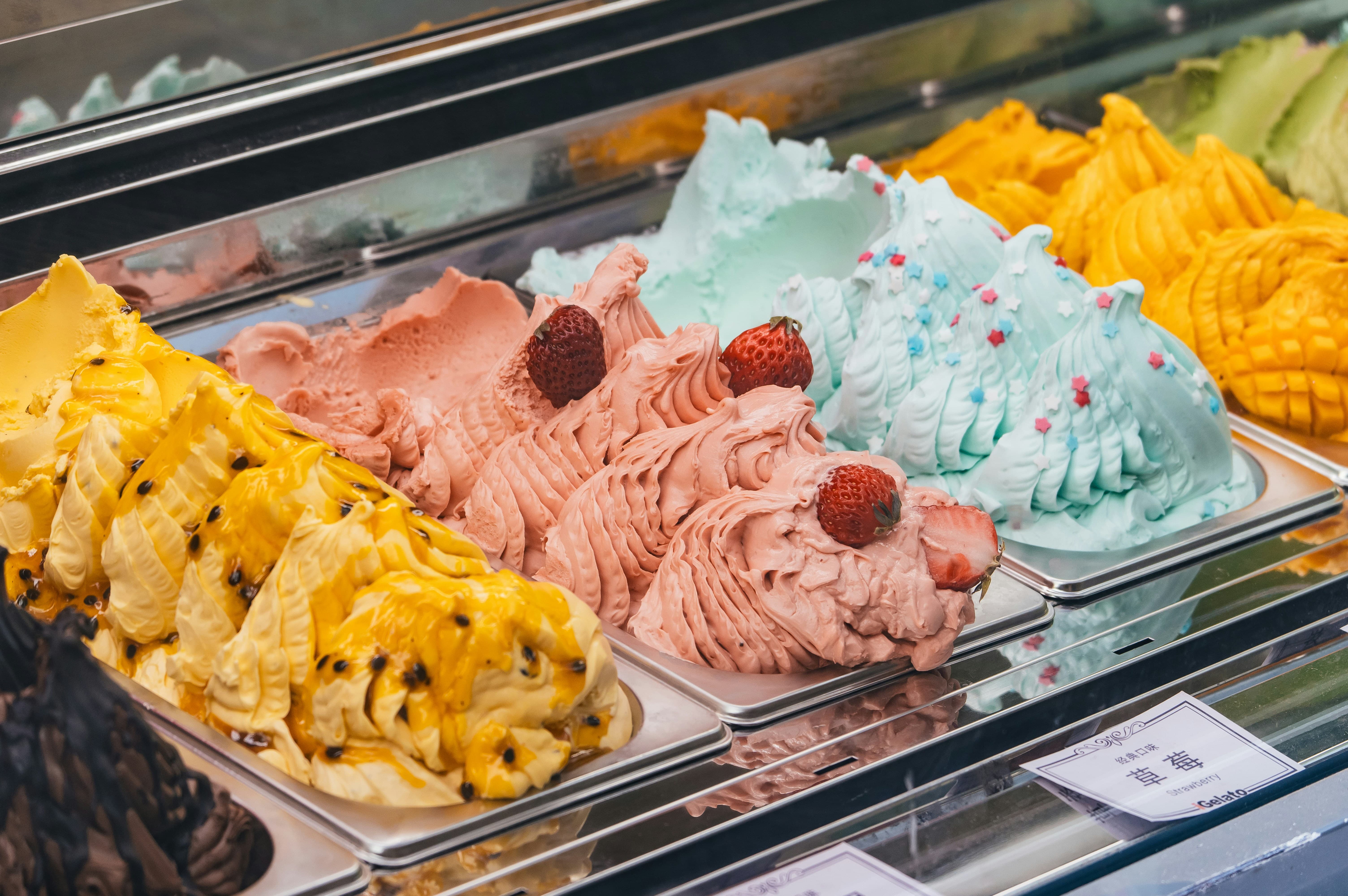
China’s ice cream market is expanding beyond convenience and supermarket products towards freshly prepared frozen desserts. While industrial ice cream still dominates the market, its growth has slowed as China’s gelato market expanded.
Founded in Beijing in 2011, Yeah Gelato (野人先生) spent more than a decade developing its products, supply chain, and store model before accelerating national expansion in 2024. Its development shows that gelato growth in China requires more than importing an Italian concept. Rather, market timing, localized flavors, operational standardization, and control over fresh ingredients transformed an early niche business into a national chain.
Download our China’s F&B industry white paper
China’s gelato market benefits from a growing ice cream category
The overall ice cream market in China reached USD 24.1 billion in 2025 and is projected to reach USD 34.9 billion by 2033, representing a CAGR of 4.8% over the 2026 to 2033 forecast period. The broader frozen-dessert sector in China encompasses several core segments, including mass-produced industrial ice cream, soft-serve ice cream, handcrafted artisanal gelato, fruit sorbets, and plant-based frozen-dessert alternatives.
Gelato differs from traditional ice cream with its dense texture, minimal air content, high-quality fresh ingredients, and small-scale artisanal production. In China, the gelato market generated USD 1.2 billion in 2024 and is expected to reach USD 2.61 billion by 2033, growing at a strong 9.1% CAGR, outpacing the overall ice cream market.
Ice cream has shifted from a seasonal summer treat to a social food
In a 2025 survey, consumers aged 18 to 35 accounted for 78.1% of respondents. Gelato’s visual styling, regularly rotating seasonal flavors, customizable options, and made-to-order fresh production align with the social media-active young group. This younger, digitally engaged consumer base provides a natural audience for China’s gelato market.
Frozen dessert consumption is mainly concentrated in first- and second-tier Chinese cities, where numerous high-end shopping malls and well-developed leisure economies drive strong market demand for premium, freshly made gelato.
How health and freshness support gelato growth
Although gelato is often positioned as lighter due to lower fat, reduced sweetness, and fresh ingredients, its nutritional profile varies considerably by recipe. Its lower air content produces a denser texture, while in-store preparation strengthens freshness perceptions. Seasonal fruit and rotating flavors support novelty, limited editions, and repeat visits, while fruit-based products may also strengthen gelato’s perceived fit with health-conscious consumption.
Flavor localization makes gelato more culturally relevant
Flavor localization has become an important strategy in China’s gelato market, helping adapt an Italian product format to Chinese tastes. Brands are moving beyond chocolate, vanilla, and pistachio towards tea, grain, fruit, and botanical flavors. Matcha, jasmine green tea, and pu’er flavors connect gelato with China’s established new-tea market, while tea chains have introduced frozen versions of signature drinks, in which familiar flavors can lower barriers to trial and differentiate gelato from conventional ice cream.
Social media accelerates gelato discovery
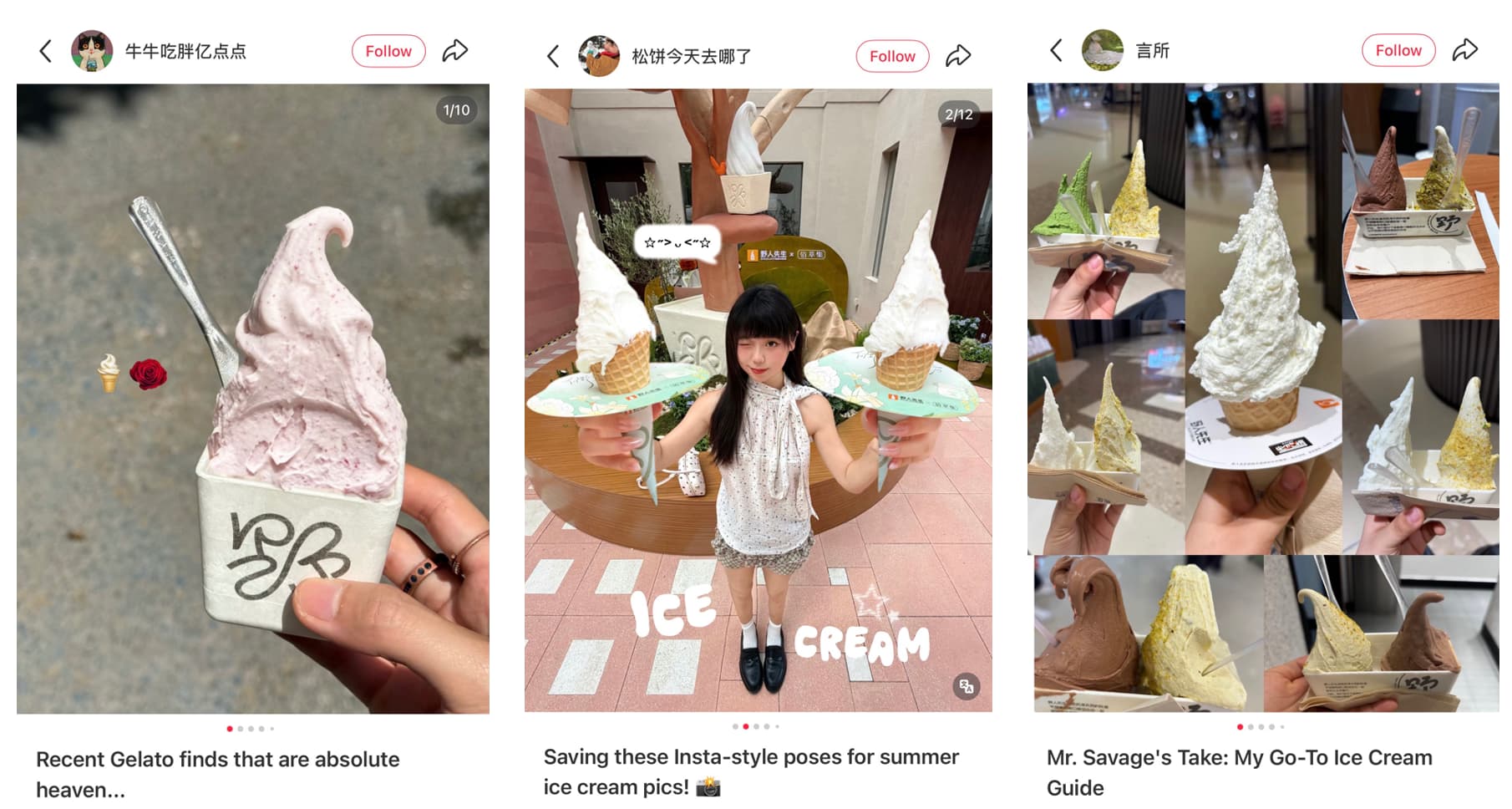
Xiaohongshu and Douyin have increased gelato’s visibility as a lifestyle product. Through color, texture, presentation, store design, and preparation process, gelato is well-suited to short-form video and user-generated content.
By 2025, the cumulative view count of the hashtag #Gelato on Douyin surpassed 860 million. Meanwhile, the brand tag #野人先生 accumulated around 480 million views on the same platform. On Xiaohongshu, #野人先生 reached 263.2 million total views, with over 1.4 million user notes published. These platforms support discovery, store visits, consumer reviews, promotions, and limited-flavor launches.
Regional Chinese ingredients build distinct local brand identity
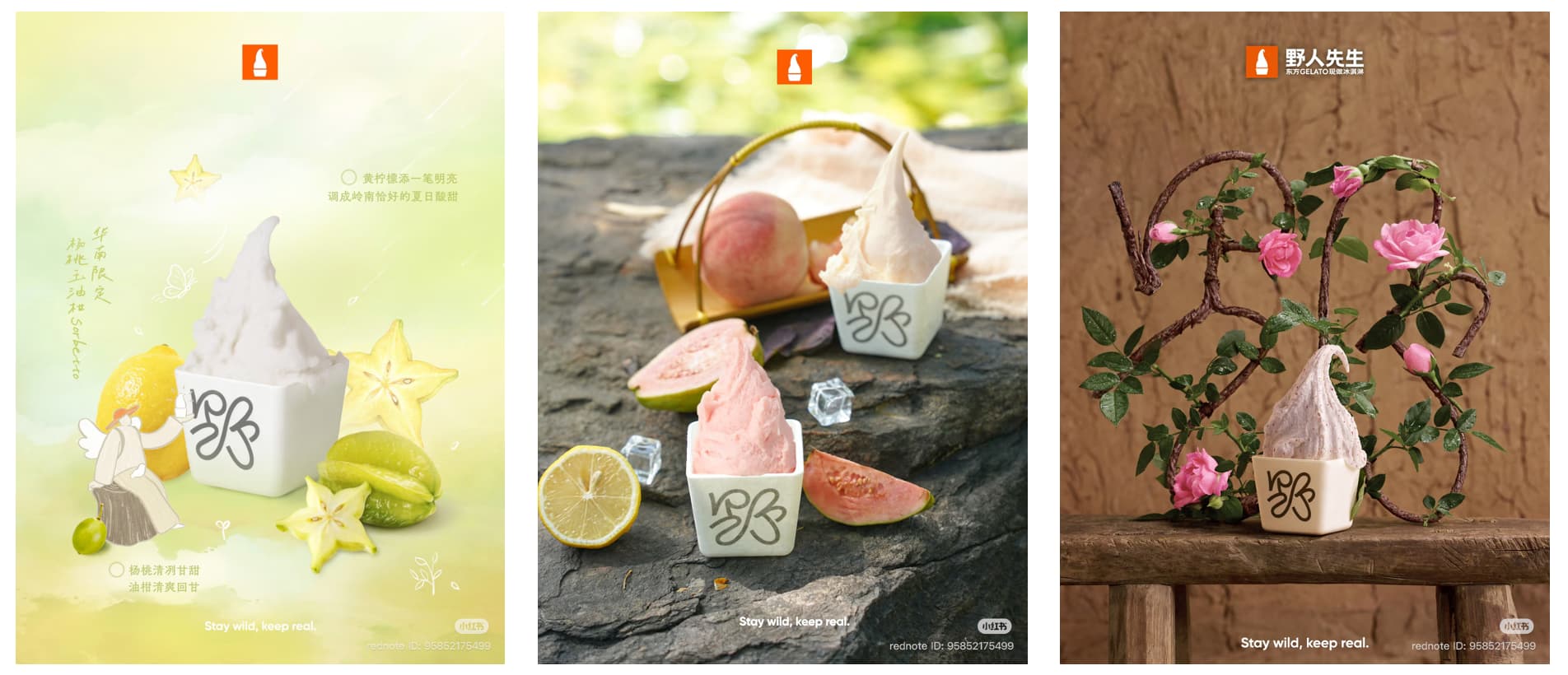
Yeah Gelato develops gelato using Chinese regional ingredients. This includes Wuchang rice, Hengxian jasmine, Xianju red bayberry, Songzi honey pomelo, and Meixian kiwifruit. These flavors blend an Italian production style with ingredients familiar to Chinese consumers. It helps the brand stand out from international competitors. Seasonal sourcing supports limited-edition launches and generates shareable content for Xiaohongshu and Douyin.
Market timing transformed a niche concept into a national chain
Founder Cui Jianwei became interested in Italian gelato while working at an Italian investment firm and learning from gelato specialist Angelo Belgrano. Inspired by Starbucks’ internationalization of Italian coffee culture, he introduced gelato to China. Early expansion revealed weaknesses in regional management, standardization, and consumer awareness. This prompts the company to refine its model before scaling nationally.
Cui viewed 2024 as the right time to scale. By then, milk tea and coffee chains had normalized the habit of buying freshly prepared treats while shopping or for leisure. Gelato could therefore enter an established consumption occasion rather than create one from scratch. This change in consumer habits created stronger conditions for China’s gelato market to scale.
Aligned with this market window, the brand accelerated its physical footprint. It opened over 300 new outlets across China in 2024 alone. It was followed by more than 600 additional store openings in the first eight months of 2025. The expansion reflected a long-term strategy of delaying national scale until the market and consumer base were sufficiently developed.
Supply chain control and operational standardization enable franchise expansion
Yeah Gelato’s growth depended on supply chain control and standardization. Its dedicated milk supply and pasteurization system processes raw milk within two hours of collection, supporting food safety and its fresh-milk, daily-production positioning.
In the early stage, each store was equipped with fully imported Italian gelato machinery at an upfront cost of around RMB 500,000 per outlet. Domestic equipment reduced per-store equipment costs from approximately RMB 500,000 to RMB 50,000-60,000.
The brand has formalized its proprietary “1357 Site & Operation Model“, mandating ground-floor storefronts to be within mainstream shopping malls, restricting raw material delivery to a maximum three-hour logistics radius, adopting a standardized store size of roughly 50 square meters, and targeting a core revenue efficiency benchmark of approximately RMB 7,000 sales per square meter.
Growth creates operational and competitive risks
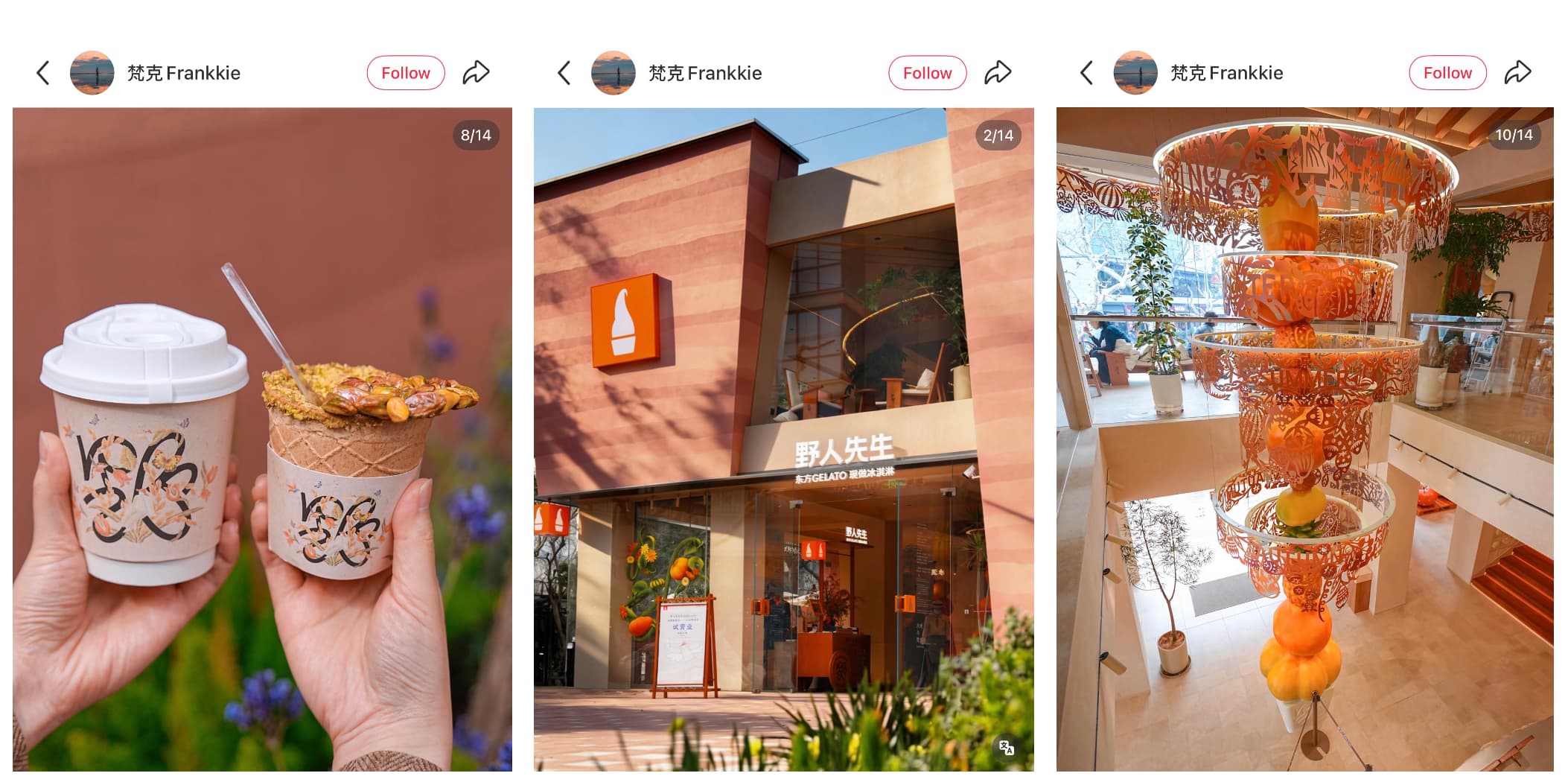
In 2024, Yeah Gelato officially entered Shanghai, tapping into one of China’s most developed premium food and beverage markets but also facing increased competition. The brand competes directly with established ice cream leaders like Häagen-Dazs and DQ, as well as upscale imported gelato brands such as Venchi, all of which target affluent urban consumers. By 2026, major tea chains like Heytea, CHAGEE, Molly Tea, and Mixue had launched their own gelato and ice cream offerings. As a result, Yeah Gelato now competes not only with dedicated frozen dessert brands but also with other sectors that target the same casual spending segment of RMB 20-30.
Meanwhile, rapid expansion has brought operational pressure. Rapid franchising makes it harder to ensure consistent quality across decentralized outlets, increasing the risk of variations in taste, texture, and hygiene. Its premium pricing also makes it difficult to retain repeat customers, and increased market competition leads to more frequent promotions and price reductions. Additionally, the brand’s strict same-day production rule requires precise inventory planning, as unsold gelato cannot be stored or resold the next day.
To maintain its core “freshly made daily” brand promise and reduce inventory waste, the company has established a standardized waste management process. All physical stores strictly follow the rule of “produced on the day, never sold overnight,” serving as credible evidence of its commitment to fresh ingredients. To cut down on spoilage, outlets offer buy-one-get-one-free promotions after 9 p.m. to clear excess stock. Any gelato left unsold after closing is recorded with on-site camera footage before being discarded.
How consumer change, localization, and operational discipline enabled Yeah Gelato to scale
- China’s gelato market is benefiting from the expansion of the wider ice cream category, particularly among premium urban consumers.
- Young consumers are now more likely to see ice cream as a casual, everyday treat and social activity instead of solely a summer-season product.
- Fresh milk, real fruit, lower sweetness, and in-store production enhance gelato’s premium, health-focused image.
- Regional Chinese ingredients and social-media exploration help localize an imported Italian format, boosting consumer interest.
- Yeah Gelato scaled its gelato business by focusing on market timing, investing in supply chain, localizing equipment, and franchising. However, the rapid growth now poses challenges to maintaining quality, encouraging repeat purchases, and competing effectively.
Author: Ming Yii Lai, with additional research by Kyle Gumangan