


Four criteria influence Chinese beverage consumers’ decisions (N=1,168, 2026 April) when purchasing ready-to-drink (RTD) drinks. When asked to select influencing factors (multiple choice), 41% cited taste, while 35% cited each of safety, health attributes, and functional benefits. And finally, functional benefits at 35%. It is reasonable to assume that a beverage combining these various requirements would fare well.
However, consumer criteria are not everything. RTD drink brands must also adapt to a market where marketing strategies have now gone digital.
Download our China F&B White Paper
Social media as a new channel to buy soft drinks
The transformation of the soft drink market is also accompanied by a shift in how these beverages are distributed and sold. Chinese beverage consumers are increasingly using social media platforms in order to discover new beverages. Recommendations on short-form video platforms (52%) and content-sharing platforms (48%) are now the leading channels for brand awareness and are surpassing traditional television advertising (40%). This shift is significant because consumers discover products through user experiences and recommendations from Key Opinion Consumers (KOCs).
RedNotes has emerged as a key battleground for Chinese beverages, particularly those aimed at health-conscious consumers. The platform has amassed more than 800,000 reviews of beverages and has driven a 31% increase in sales of low-sugar and niche-flavored products.
The Prince Charming case and the success of this trend in China
One example is “Prince Charming” (白马王子汤), whose unusual story illustrates how social media can create trends. The juice, which gets its color from spirulina, first went viral when a Chinese student in the UK posted a Douyin video about her weight-loss routine. In the video, she showed herself drinking “Blue Bolt” by the European brand Innocent and joked: “If drinking this makes you lose weight, maybe you’ll even summon your ‘White Horse Prince.'” The video generated over 110 million views. Seizing on this momentum, Chinese retailer Freshhippo (Hema, 盒马) adopted the concept and launched its own version under the same name “White Horse Prince Soup” (白马王子汤).

Nostalgia: Time-tested flavor remains in the market
Wahaha (娃哈哈) remains a significant player in China’s beverage market, particularly with its AD钙奶 (“AD Calcium Milk”, a classic dairy beverage that contains milk, Vitamin A, Vitamin D, and Calcium ; it has become a childhood staple and a cultural icon for generations of Chinese consumers) and packaged water, representing a major legacy competitor. In 2025, Wahaha’s total system-wide revenue reached approximately RMB 70.5 billion.
The changing expectations of Gen Z
Foreign and legacy brands face a generational risk as Gen Z consumers increasingly perceive international labels as out of touch compared to the local and agile domestic competitors who can leverage rapid product cycles and digital-native marketing.
For example, Lemon Republic, a startup founded in 2021, launches up to 30 new products annually and tests them on Douyin and RedNotes via low-cost influencer campaigns. This rapid iteration cycle allows domestic players to capture emerging trends before foreign competitors can respond.
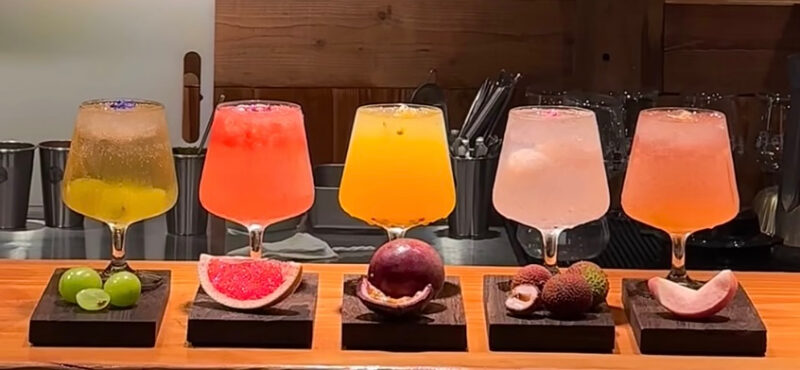
Unlike previous generations who socialized largely in KTVs or bars, younger consumers (post-95s and post-00s) now host small gatherings at home. This is driven by costand a desire for control over ingredients and aesthetics. RTDs that mimic speakeasy-style flavors (low sugar, tea-infused, floral notes) or allow easy ‘cocktail hacks’ (adding fresh fruit or soda to an RTD base) bridge home mixology and convenience.
Two challenges facing the RTD industry: the sugar tax and the competition between small and large players
The soft drink market in China is facing some structural and regulatory challenges. The most immediate threat is the intensifying discussion around a “sugar tax”; the potential introduction of a domestic tax on high-sugar beverages represents a risk for brands reliant on traditional recipes. As the market has already shifted away from sugar, a sugar tax would primarily hurt the remaining sugary drink segment (without necessarily threatening the overall industry).
If a tax of 0.5 RMB per liter were introduced with an 80% pass-through rate, margins in the sugary segment would be compressed, but for low-sugar and health-oriented brands, this tax could actually act as a tailwind. Large players can absorb or pass on the tax through pricing power, supply chain efficiency, and diversified low-sugar portfolios. The small and medium brands with weak brand recognition face a risk of being priced out of the market.
Latest trends from China’s RTD market
- Digital and social media drive discovery. Short-form video platforms and RedNote have overtaken traditional TV advertising as the primary channels for brand awareness.
- Generational risks loom as there’s varying expectations of Chinese beverage consumers across ages. Gen Z increasingly favors agile domestic brands over foreign incumbents whilst older generations prefer bottled tea.
- Health attributes influence purchasing decisions: the trend toward health beverages is no longer a niche segment of this industry but has become a defining feature
Author: Ming Yii Lai