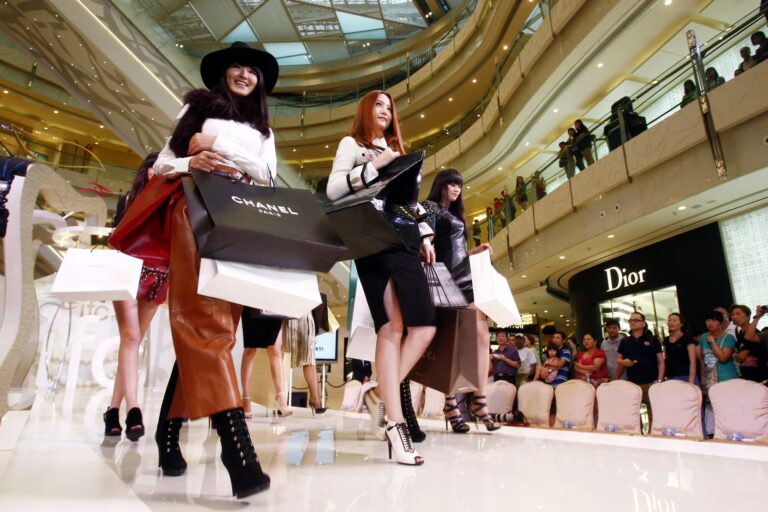

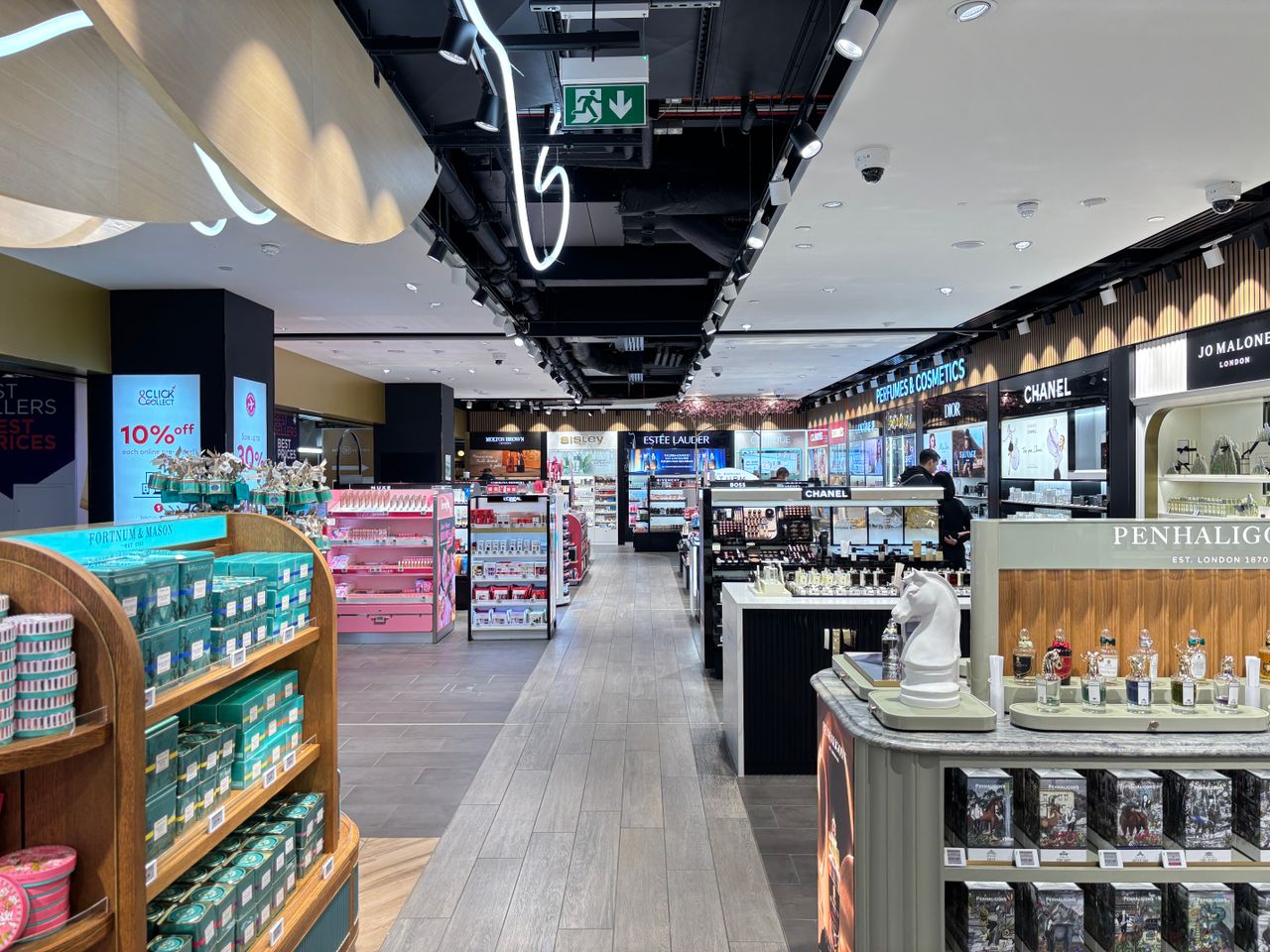
Following years of contraction and the island-wide special customs operations, Hainan is experiencing a rebound. Having once struggled to compete with non-duty-free beauty brands sold at good prices, duty-free stores are now competing less on price and more on experiences. Hainan in particular merges duty-free products with cultural tourism. Consumers can now even buy products in Hainan even when they are not traveling, as long as they have left Hainan at least once during the calendar year.
Market share of mainland airport channels has declined, with Hainan alone driving growth
In Q1 2026, beauty sales in the Asia-Pacific travel retail sector fell from RMB 35.44 billion to RMB 31.27 billion, a YoY decline of 11.1%. Mainland China (excluding Hainan) accounted for 93% of the region’s overall decline, primarily due to changes in retailers and the renegotiation of franchise agreements at major domestic airports, which led to store closures and disruptions in sales.
Performance among major beauty groups stood out in the first quarter of 2026, with Hainan emerging as one of the few clear growth drivers. Kose’s first-quarter travel retail sales jumped to RMB 760 million in the same period last year from RMB 120 million, representing a YoY increase of 53.7%. The Group attributed the growth to a recovery in demand for duty-free goods in Hainan and improved operational efficiency following the completion of the operator consolidation. Estée Lauder’s retail sales in Hainan grew by more than 30% from January through March 2026, with ten of its brands achieving double-digit growth.
The recovery of Hainan’s duty-free sector is driven by both residents’ daily shopping habits and brand-testing activities
PPolicy support for travel retail in China served as the starting point for the recovery of Hainan’s offshore duty-free market in 2026. From the island-wide special customs operations of Hainan on December 18th, 2025, through January 10th, 2026, offshore duty-free shopping reached RMB 3.89 billion, a YoY increase of 49.6%. The benefits of border closures are evident in the travel retail beauty market. During the Spring Festival, fragrance and cosmetics sales reached over RMB 1.36 billion, with more than 998,500 items sold. Sales of skincare, fragrances, makeup, and men’s grooming products at the Hainan Wangfujing Duty-Free Store all increased significantly, but the growth in high-end fragrances and niche and light luxury brands was the most notable.
For Hainan residents, Duty-free shopping don’t require leaving the island, which became more convenient. From November 1st, 2025, residents of Hainan Island who have left the island at least once during a calendar year can purchase cosmetics, perfumes, and other goods an unlimited number of times throughout the year. However, this convenience is strictly limited to the following four conditions: in-store pickup, individual items priced at less than RMB 20,000, an annual total of no more than RMB 100,000, and a record of having actually left the island during the calendar year. This means that duty-free shopping not only benefits tourists but also residents. Residents can enjoy beauty products at duty-free prices in their everyday lives, not just when they are traveling.
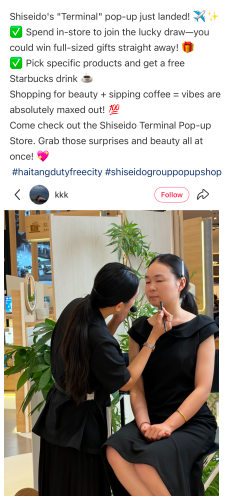
Meanwhile, beauty brands are increasingly viewing Hainan as a space to refine new concepts and experiences. Shiseido Travel Retail launched the Beauty Terminal concept space, bringing together ten premium brands including SHISEIDO, CPB, and NARS to simulate a multi-brand collaborative experience in a travel retail setting.
Local shopping preferences drive enhanced channels and supply in travel retail beauty products
Downtown duty-free shops have extended the decision-making process from just a few minutes before boarding to a leisurely shopping experience before departure. From 2019 to 2026, spending by Chinese tourists at domestic airports increased by 20%. This is because China has upgraded its duty-free policies to boost domestic consumption. From November 1st, 2025, the government announced improved duty-free store policies, introducing omnichannel online reservations, which allow travelers to place orders at downtown duty-free stores and pick up their purchases at border crossings.
Improvements in the quality of domestic beauty brands have also made Chinese consumers more willing to shop locally. In the first half of 2026, sales of domestic beauty products reached RMB 268.67 billion, a YoY increase of 7.89%. Sales of foreign-branded beauty products reached RMB 250.23 billion, rising by 1.2% YoY. Chinese consumers have access to beauty products that are both aesthetically pleasing and cost-effective in local stores and online platforms. As a result, it is increasingly unnecessary to purchase beauty products abroad or seek out Daigous (代购).
Travel retail channels have become the primary channels for Chinese beauty brands to expand overseas
Chinese beauty brands’ overseas offline stores are concentrated in duty-free retail shops and locations with high tourist traffic, such as duty-free stores and shopping malls located within popular tourist attractions. As of June 2026, more than 16 leading domestic beauty brands have established a network of physical retail locations overseas, covering Southeast Asia, East Asia, the Middle East, Europe, and the United States. In January 2026, Winona launched at the Doha Mall in Doha, Qatar, becoming the first Chinese functional skincare brand to complete registration in Qatar.
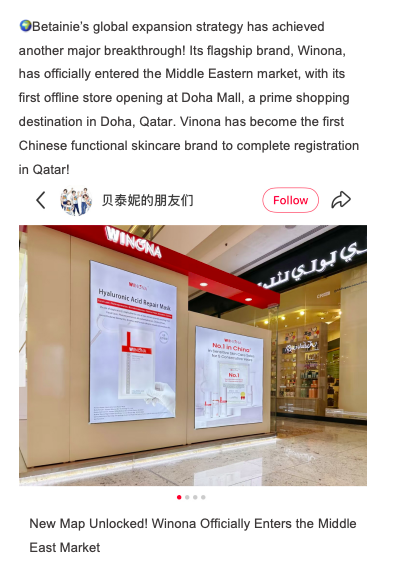
Travel retail has become a channel for Chinese beauty brands to expand into overseas markets. China Duty Free International has clearly defined “Bringing Guochao to the World” as its strategic direction for 2026. By leveraging its duty-free retail network and overseas resources, the company aims to identify opportunities and establish channels for Chinese beauty brands to enter the global travel retail beauty market.
Key learning points in travel retail beauty in China
- The Asia-Pacific travel retail beauty market experienced an overall decline, with mainland China being the primary contributor to the downturn, while Hainan emerged as one of the few growth drivers.
- Hainan’s offshore duty-free sector has shown a marked recovery driven by border closures and policy support.
- As Hainan’s duty-free customer base expands, beauty brands are using Hainan as a testing ground for new concepts and experiences.
- Local shopping preferences are on the rise, driven by both greater convenience in shopping channels and improvements in the quality of domestic products.
- Travel retail has become a key channel for Chinese beauty brands expanding into overseas markets.
Author: Sory Park, with additional research by Zhixin