
In the first quarter of 2026 around 122,000 of the 128,000 short dramas released in China were made with AI, more than 95% (The Paper). A few weeks later, on 1 April, the National Radio and Television Administration (NRTA) required every online animated micro-drama to be filed before release, and platforms removed tens of thousands of titles.
Few industries have shown so clearly, in such a short time, what generative AI does to content : costs collapse, supply explodes, quality drops, and the regulator steps in. For brands that buy media and content in China, this story is worth more than a curiosity.
AI in Chinese entertainment : key figures
| Indicator | Figure | Source |
|---|---|---|
| AI comic-drama (AI漫剧) market, 2025 | RMB 16.8 billion (DataEye) to RMB 19 billion (other estimate) | PEdaily ; The Paper |
| AI comic-drama users, 2025 | About 120 million | PEdaily ; The Paper |
| AI comic dramas launched in 2025 with more than 100 million views | 96 out of 60,946 (0.16%) | DataEye via PEdaily |
| Share of AI-made short dramas, Q1 2026 | More than 95% | The Paper |
| Kling AI revenue, Q2 2026 | Above RMB 850 million, +200% | Kuaishou results via 10jqka |
From the box office to the phone screen
In 2019, our articles on Chinese entertainment were about cinemas. We wrote that “for many years, China’s box office has relied heavily on the celebrity effects and hot IP topics”, and that “as long as the films demonstrate their sincerity and creativity, the audience will embrace them with a warm welcome” (Movie preferences in China, 2019). That year, The Wandering Earth showed that a Chinese science-fiction blockbuster could work.
Six years later, the fastest-growing screen in Chinese entertainment is a vertical phone screen. Micro-dramas (短剧), episodes of one or two minutes with cliffhangers every few seconds, became a mass market around 2023, first with real actors. We explained how brands use them in Chinese mini dramas. AI then entered this format, and moved faster than anyone expected.
2025 : the AI micro-drama gold rush
Costs fell by orders of magnitude
An AI comic drama (AI漫剧) is an animated micro-drama made with image and video generation models. Industry reports quoted by The Paper put the cost of a premium AI drama at around RMB 1,000 per minute in 2025, and comedy titles at RMB 50 to 150 per minute, when traditional animated dramas cost several thousand per minute. Some media analyses speak of a gap of 300 times with live-action production (PEdaily). These numbers are rough and vary a lot, but the direction is clear.
Supply exploded, and so did the number of losers
DataEye counted 60,946 AI comic dramas launched in 2025. Only 96 passed 100 million views, a hit rate of 0.16%, and about 64% did not reach 1 million views. About 80,200 new companies related to comic dramas were registered in 2025, up 37.1%, and industry surveys suggest about 90% of small operators lose money (PEdaily). In other terms, AI made production cheap, but distribution and attention stayed expensive.
Platforms fed the rush. ByteDance, Tencent and Kuaishou entered, standalone apps such as Hongguo Manju (红果漫剧) appeared, and incentive programs reached more than RMB 100 million per platform. A real-person short drama took about four years to go from early experiments in 2019 to a boom in 2023. AI comic dramas went through the same curve in roughly one year.
AI made production cheap. Distribution and attention stayed expensive, and that is where the money is.
The case that summed it up
Early 2026, a short AI drama about the Han general Huo Qubing went viral with a story that sounded perfect : a team of three, 48 hours, less than RMB 3,000, 500 million views. The director later explained that RMB 3,000 covered only computing costs, that the team was close to 20 people, that the work was two short films of 4 and 6 minutes, and that she could not verify the view count (PEdaily). The story did not show that AI makes hits for free, it showed how quickly the market wanted to believe it.
2026 : the regulator and the platforms clean up
The NRTA’s filing rules for online animated micro-dramas took effect on 1 April 2026. Unfiled works had to go offline, and new works must be filed before release. Hongguo, ByteDance’s short drama app launched a clean-up on 7 April and removed 3,522 titles in one week. By June, the industry had removed more than 70,000 low-quality AI short dramas, and daily new uploads fell from more than 2,000 to about 350 (The Paper).
This is consistent with how Chinese authorities have handled entertainment for years : let a new format grow, then set rules once it reaches scale. We described an earlier episode in the crackdown on the Chinese entertainment industry. For serious producers, filing is a cost but also a barrier that protects them from the flood of low-quality content.
About Daxue Consulting
Daxue Consulting is a market research and strategy consulting firm founded in Beijing in 2012, with offices in Shanghai, Beijing and Hong Kong. We have run more than 800 projects for international companies in China, including media consumption studies, social listening on Douyin, Xiaohongshu and Bilibili, and content strategy reviews for consumer brands.
Related reading : Generative AI in China and The short video market in China.
The tool makers : Kling and the platforms
Behind the dramas are the models. Kuaishou’s video model Kling (可灵) earned more than RMB 850 million in the second quarter of 2026, up more than 200% year on year (10jqka, reporting Kuaishou’s results). Kuaishou says it will push Kling into professional creative work, which means advertising, film pre-visualization and animation, not only amateur clips.
The other large groups follow similar paths with their own models and their own content platforms, which we described in Tencent’s AI strategy. The business logic is the one of the gold rush : the people selling shovels, the models and the computing power, earn money more reliably than most of the people digging.
Beyond micro-dramas
AI is also changing other parts of Chinese entertainment and media, more quietly.
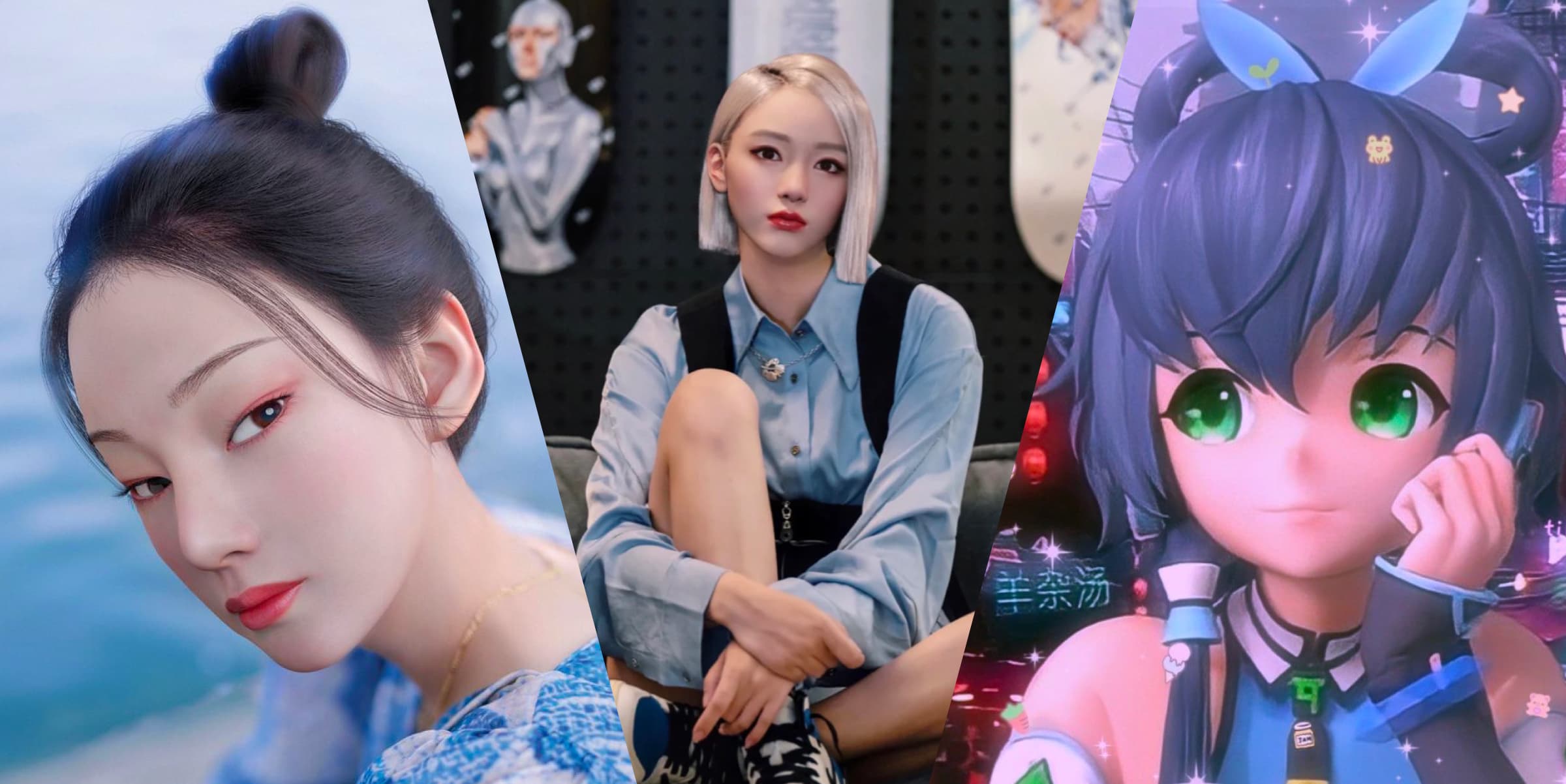
- Virtual idols and digital humans : AI-generated hosts sell products in livestreams around the clock. We covered the trend in metahumans in China and its roots in the China idol economy.
- Advertising production : brands use AI to make dozens of versions of the same video for different platforms and audiences, at a fraction of the former cost. We saw a similar shift in AI in China’s beauty industry.
- Film and series : studios use AI for storyboards, effects and dubbing. This is the least visible use, and the hardest to measure from outside.
Daxue Overview
- AI micro-dramas grew from almost nothing to an RMB 17-19 billion market in 2025.
- Supply exploded : more than 95% of short dramas were AI-made in Q1 2026, but only 0.16% of 2025 titles became hits.
- The NRTA filing rules from April 2026 removed tens of thousands of low-quality titles.
- Model makers such as Kling earn more reliably than most producers.
Daxue Take
I would tend to think the AI micro-drama story is a preview of what will happen to most branded content in China. When production becomes almost free, the bottleneck moves to distribution, attention and trust. The winners are the platforms that control traffic, the model makers, and the few creators with a real story or an existing IP.
For brands, what we observe is a temptation to produce more content because it is cheap. That is rarely the right answer. Chinese audiences have become more sophisticated, as we already noted with cinema in 2019, and they quickly recognize low-effort AI content. A brand that floods Douyin with generic AI videos risks looking like the 64% of dramas nobody watches.
Daxue Recommendations
- Use AI to test and localize content faster, not to multiply low-quality output.
- Keep a human story and a recognizable brand world. That is what AI content lacks most.
- Check the filing and labeling rules before sponsoring or placing products in micro-dramas.
- Measure attention, completion and brand recall, not the number of videos produced.
FAQ
What is an AI micro-drama in China?
A short vertical series, often one or two minutes per episode, produced mostly with image and video generation models. The animated version is called AI漫剧 (AI comic drama).
How big is the AI micro-drama market in China?
Estimates for 2025 range from RMB 16.8 billion (DataEye) to about RMB 19 billion, with around 120 million users.
Is AI content regulated in China?
Yes. Since 1 April 2026, online animated micro-dramas must be filed with the NRTA before release, and unfiled works were taken offline.
Which Chinese AI video tools are used in entertainment?
Kuaishou’s Kling is one of the leaders, with more than RMB 850 million of revenue in Q2 2026. ByteDance and Tencent have their own models and platforms.
As a conclusion, China ran the full cycle of AI content, from boom to clean-up, in about eighteen months. The lesson is the same for media companies and for brands : cheap production does not buy attention. What is your plan for content when everybody can produce it for free?
About the author
Matthieu David is the founder and CEO of Daxue Consulting. He arrived in China in 2009, founded Daxue in Beijing in 2012 and hosts the China Paradigm podcast. He has advised more than 400 companies on their China market strategy.