

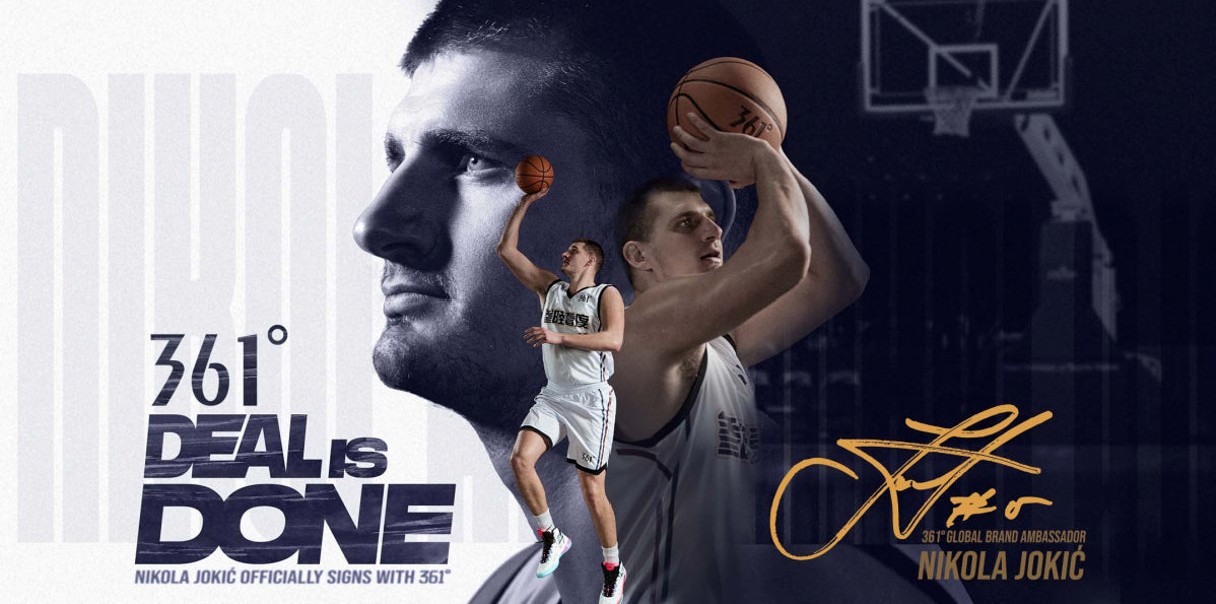
In June 2026, Stephen Curry ended thirteen years with Under Armour and signed a ten-year deal with Li-Ning, a partnership worth roughly USD 400 million that wasn’t even the most lucrative offer he received. It was the loudest moment yet in a quiet takeover. Across the NBA, Chinese sportswear brands are now signing the sport’s most popular names. Anta has Kyrie Irving and Klay Thompson, Li-Ning has Curry and Jimmy Butler, and smaller firms are in the game too: 361° has Nikola Jokić and Aaron Gordon, while Rigorer signed Austin Reaves. These are landmark deals, several reaching nine figures. However, these brands still sell almost nothing outside China. So why spend so much?
Buying mindshare and legitimacy before the revenue
The first answer is credibility. Landing a player of Curry’s magnitude was described as a “landmark victory,” proof that Chinese sportswear brands can compete with Nike and Adidas for the athletes who define the market. In a business where endorsement rosters signal the positioning of a brand, the signing itself is the message.
The second answer is that they can afford it. Anta’s 2025 revenue reached a record RMB 80.22 billion (USD 11.8 billion), up 13.3%, with operating profit climbing 15% to RMB 19.09 billion. Li-Ning earned around USD 4.3 billion and now reaches more than eighty countries. But that revenue is overwhelmingly domestic. Li-Ning drew more than 98% of its 2025 revenue from inside China, and 361°’s international operations were just 1.5% of turnover in the first half of last year. Visibility runs far ahead of overseas sales, which is exactly the point. For these Chinese sportswear brands, the signings are advance investment in Western consumers’ mindshare, bought years before the revenue that might one day justify them.
Superstars aren’t the only lever. Anta also expands by buying Western names outright. In January 2026, it took a 29.06% stake in Puma for EUR 1.5 billion, becoming the brand’s largest shareholder. But a player signing is cheaper and faster than a multibillion-euro acquisition, and it puts the brand on the world’s most-watched courts right away.
What players get from Chinese sportswear brands that the market leaders won’t give
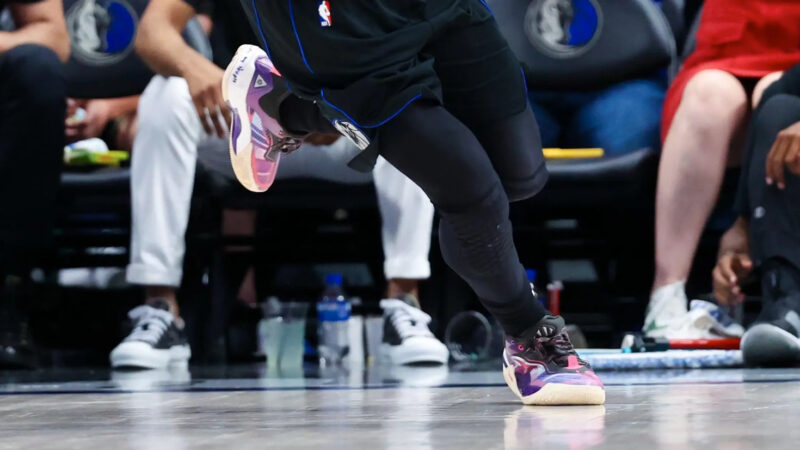
If the brands need legitimacy, the players need something the global giants rarely hand out: a signature shoe, creative control, and more money than what a mid-tier star might command at Nike. Klay Thompson saw it early. Signing with Anta in 2014, he passed on more modest Nike and Adidas offers because neither was likely to give him his own shoe or much say in it. With Anta, he wanted to “be the Michael Jordan one day of Anta.” The logic reaches well below superstar level. Players who are unlikely to headline a Nike line, such as Austin Reaves and Aaron Gordon, now have signature models of their own.

The relationship also deepens the longer it runs. Kyrie Irving isn’t merely endorsed by Anta; he is its basketball chief creative officer, shaping the product line rather than just wearing it. Meanwhile, Li-Ning is working with Curry in developing the Curry Brand across basketball, golf, and beyond, with stores planned in both China and the US. This escalation, from a sneaker to a title to part-ownership of a brand, buys something that market leaders’ more transactional model struggles to offer: loyalty, authenticity, and a partnership that outlasts a playing career.
Foreign partnerships move products, not just image
None of this would matter if the shoes didn’t sell. They do. The clearest proof is Irving’s first Anta shoe. StockX, a prominent sneaker resale platform, named Anta its fastest-growing brand of 2024, up more than 1,900% YoY, with the KAI 1 alone making up 76% of Anta’s sales on the secondary market app. Moreover, Klay’s first KT shoe sold 650,000 pairs in China in just his third year with the brand, then the fastest-rising of all Anta’s player lines.
The demand has since outgrown the internet. By the 2026 NBA All-Star Game, Irving was on his third signature shoe and Anta had opened its first US store, in Beverly Hills. The sale mechanism here is unusual. Western buyers discover these brands not through advertising but through players, with sales spiking after a shoe appears on the game floor. Furthermore, the products now back up the hype. Anta, Li-Ning, and 361° currently build with their own supercritical foams and carbon-fiber plates, the same class of technology as Nike’s ZoomX or Adidas’s Lightstrike. And most importantly, the surest proof that these Chinese sneakers perform is the MVPs and All-Stars who compete in them.

The NBA is the bridge, and it’s a fragile one
All of this rides on the NBA, which serves both sides at once. The league returned to China in October 2025 with preseason games in Macau, six years after a 2019 dispute froze the relationship. Tickets topped USD 3,000, and NBA renewed its partnership with Alibaba, whose co-founder Joe Tsai owns the Brooklyn Nets. Through this renewed connection, the league is chasing its second-largest market as US television viewership slides.
The brands ride the same bridge in reverse. Summer-2025 China tours by superstars including LeBron, Curry, Jokić, and Irving, most of whom already wearing Chinese sneakers, built each player’s Chinese fanbase while lending Chinese sportswear brands Western credibility. One signing pays off in two markets. Meanwhile, the incumbent market leader is wobbling. Nike’s Greater China net profit fell 86% in the quarter ending May 2025 as Chinese brands push outward, leaving the NBA in the middle of a two-way shift.

But the NBA bridge is fragile. In 2019, a single executive’s tweet was enough for Chinese state television to drop games and sponsors to suspend their deals. In addition, Western markets carry their own risks for Chinese brands, from the Xinjiang supply-chain scrutiny to the plain fact that overseas revenue still stays tiny against ambitious goals. Notably, Li-Ning wants 30% of its sales to come from abroad by the end of 2028. The player-signing strategy is powerful precisely because it spans two enormous markets, and vulnerable for the very same reason.
Keys to Chinese sportswear brands’ playbook
- Chinese brands are buying Western attention years ahead of Western revenue. Li-Ning still earns 98% of its money at home, yet just handed Curry USD 400 million.
- They can’t outbid the global giants on prestige, so they outbid it on power: signature shoes, creative control, bigger money.
- The deals are built to outlive players’ career, climbing from a sneaker to ownership and turning an endorser into a stakeholder.
- The court is the storefront. A signing converts global visibility straight into demand, with minimal Western retail network required.
- The NBA lets one signing pay off in two markets at once, but its stability rests on a fragile US-China relationship that froze overnight in 2019 over one tweet.
Author and editor: Ming Yii Lai, with additional research by Hansel Guo