

International Women’s Day has been officially observed in China since 1949. Initially, it focused on promoting gender equality and recognizing women’s contributions to society, especially in education and the workforce. Over time, as women’s social and economic status improved, the meaning of the day has evolved. Today, Women’s Day in China represents both recognition and reflection. It highlights progress in women’s rights while also serving as a platform for discussions around independence, self-development, and consumption. The way the day is celebrated now reflects broader social changes and women’s growing influence in the Chinese economy and public life.
Women’s empowerment and self-care
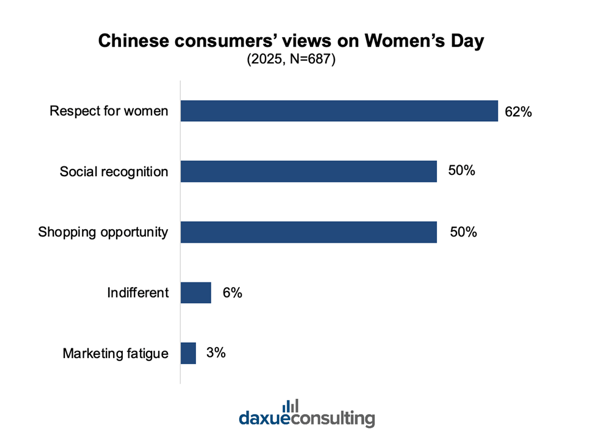
A 2025 survey of 687 respondents (mixed gender) found that 61.86% view International Women’s Day (三八妇女节) as an important occasion to celebrate women’s achievements and recognize their role in society. In addition, 49.64% said they feel a sense of care and recognition from different sectors on that day. This was gained through workplace benefits or broader public attention to women’s rights. These figures remain largely consistent with last year’s survey, suggesting that awareness of women’s social contributions and the idea of female empowerment continue to gain recognition in Chinese society.
This growing awareness is also reflected in the expanding scale of the “she-economy” in China. There are currently more than 9.42 million companies in China related to the she-economy that are operating or active. In 2026 alone, around 227,000 new related companies were registered. Looking at the long-term trend, the number of newly registered she-economy enterprises has increased steadily over the past decade, reaching a peak in 2025.
The continued expansion of these businesses reflects the rising economic influence of female consumers in China. As women’s social participation and economic independence increase, consumption related to lifestyle, self-care, and personal development has become a visible driver of market growth. In this context, the she-economy has gradually developed into an important segment of China’s consumer market.
The rise of the 3.8 shopping festival
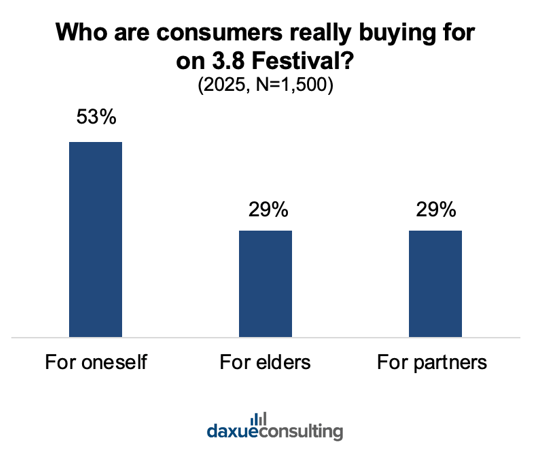
To celebrate Women’s Day in China and stimulate consumption, the holiday has gradually developed into a shopping festival in China. A 2025 survey of 1,500 respondents conducted by Kuaishou shows that, compared with other shopping festivals, the “3.8 Shopping Festival” is more centered on self-care and gifting. About 52.6% of purchases are made for oneself, while around 29% are for parents or elders, and 28.6% for partners.
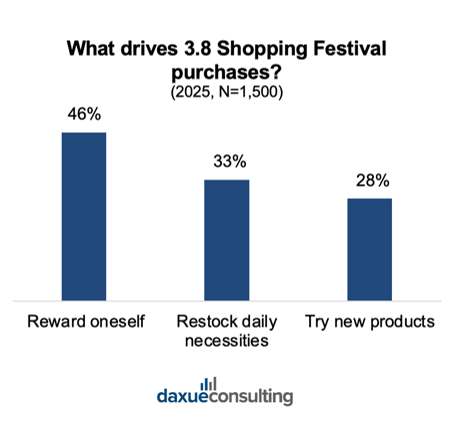
In terms of purpose, 46.4% shop to reward themselves, 32.5% to restock daily necessities, and 27.8% to try new products. The patterns suggest that the 3.8 Shopping Festival is not only driven by traditional gifting culture but also increasingly shaped by self-oriented consumption. It reflects a growing emphasis on personal well-being and lifestyle spending among consumers.
Category preferences also reflect these motivations. Food and beverages are common choices for self-purchases, while jewelry and mother-and-baby products are more frequently selected as gifts. Apparel, beauty, and daily-use items also see steady demand. Overall, categories closely related to women’s lifestyles tend to perform strongly during the festival. Many best-selling products are either purchased by women or intended for women. This pattern reflects the continued development of the “she-economy” in China.
Similar trends are visible on other platforms. Health and wellness products have become a fast-growing category. According to 2025 data from JD.com, consumers aged 36–45 account for the largest share (near 35%) of the nourishing supplements market, followed by those aged 26–35 (near 30%). Rising interest in products marketed for “nourishing qi and blood” suggests that younger female consumers are paying greater attention to health management and product efficacy.
Brand campaigns during Women’s Day in China
Beyond the sales data, the way brands communicate during Women’s Day in China also reflects shifting social attitudes toward women’s roles and identity. As the festival gains cultural and commercial significance, many companies use this moment to launch campaigns that engage female consumers. These brands also connect with broader discussions around empowerment and self-expression.
To engage female consumers, many brands launch dedicated marketing campaigns around Women’s Day in China. These include offline events, short films, and promotional activities. These campaigns often focus on themes related to women’s empowerment, aiming to build stronger emotional connections with female audiences.
Libresse promotes confidence and open discussion around menstruation
Ahead of Women’s Day in China in 2026, female care brand Libresse (薇尔) launched the campaign “Celebrate Every Big Move Women Make.” Through subway advertisements and brand messages in cities such as Shenzhen and Hangzhou, the campaign aimed to challenge stigma around menstruation and encourage women to express confidence and strength.
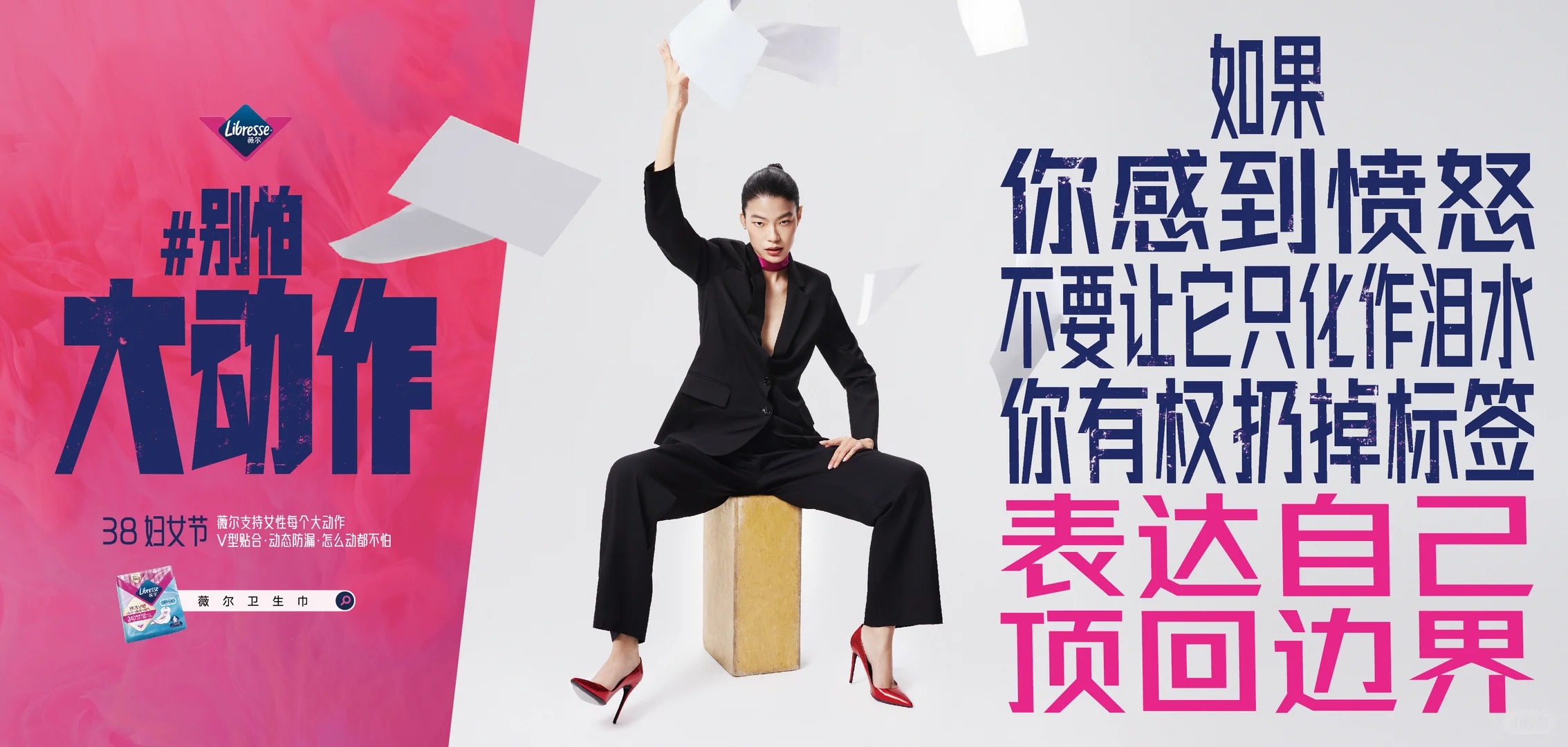
The phrase “big move” (大动作) carries a double meaning in Chinese. It can refer to major life decisions or achievements, but also to physical movement. Many women tend to limit movement during menstruation due to concerns about leakage or discomfort. By using this wordplay, Libresse connects product functionality with a broader message: women should feel supported both in pursuing important life choices and in moving freely in everyday situations. The campaign avoids traditional stereotypes such as portraying women as “gentle” or “elegant,” instead using a more direct tone that encourages women to take action and support one another.
This focus on empowerment continues Libresse’s previous initiatives. Earlier campaigns have encouraged open discussions about menstruation and women’s emotional experiences, including art exhibitions and public awareness projects. Through these efforts, the brand extends its focus beyond product performance to address women’s physical and emotional needs, positioning itself as a supportive presence in women’s daily lives.
Chow Tai Seng highlights everyday resilience through storytelling
As brands explore new ways to communicate during Women’s Day in China, domestic jewelry brand Chow Tai Seng (周大生) adopted a different communication approach by focusing on storytelling. The brand collaborated with Chen Hui, widely known as the “market writer” (菜场女作家), to produce a short film titled Go to Where the Flowers Are (《去有花的地方》). The film focuses on Chen Hui’s daily life as a market vendor who has run a small stall for 18 years while continuing to write.
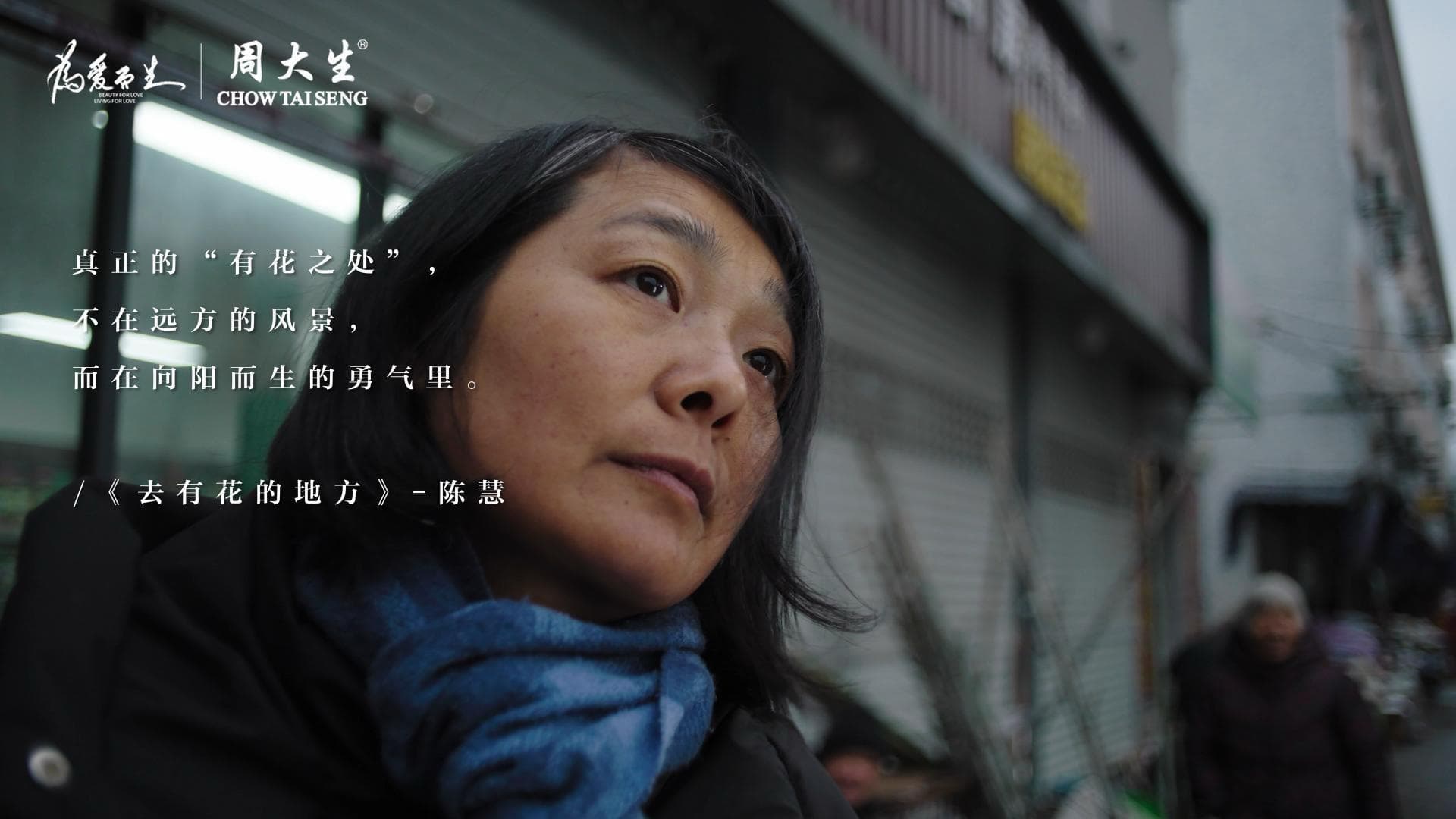
By choosing Chen Hui as the central figure, the campaign highlights the contrast between ordinary life and creative expression. Her story emphasizes persistence and self-reflection. The film suggests that personal fulfillment does not necessarily come from dramatic changes. It can also emerge from long-term dedication to everyday routines. Through this narrative, the brand presents Women’s Day as a moment to recognize not only visible achievements but also the quiet resilience many women show in their daily lives.
Compared with many campaigns that emphasize empowerment through bold messaging or activism, this campaign adopts a calmer tone and focuses on reflection. By using a short film to tell a personal story, Chow Tai Seng offers a different perspective on women’s strength, highlighting the value of consistency, self-understanding, and finding meaning in ordinary moments.
Growing debate over the Pink Tax
As Women’s Day in China becomes increasingly tied to retail promotions, some consumers question whether the celebration is being used mainly as a marketing opportunity. One issue often raised in this debate is the “Pink Tax,” where products targeted at women are priced higher than similar alternatives.
Same function, higher price: Why pink earbuds cost RMB 53.91 while green ones are RMB 39.9?

According to a 2025 survey of 687 respondents conducted by iiMedia Research, 70.31% of consumers believe that products with special Women’s Day packaging, such as “goddess limited editions,” tend to increase in price. In addition, 50.51% think brightly colored versions of products are priced higher than similar items in standard colors. About 30.86% believe that products with similar functions are more expensive when marketed toward women than men. These findings indicate that gender-targeted pricing and product differentiation are commonly observed by consumers, particularly in products marketed toward women.
Public attitudes toward the phenomenon remain divided. The survey shows that 56.19% of respondents consider such pricing strategies a normal sales tactic, while 26.78% view it as gender-based price discrimination. Although these pricing strategies may still generate additional profit in the short term, the growing awareness among consumers suggests that such practices could increasingly affect brand reputation, indicating that Chinese consumers are not entirely indifferent to gender-based pricing.
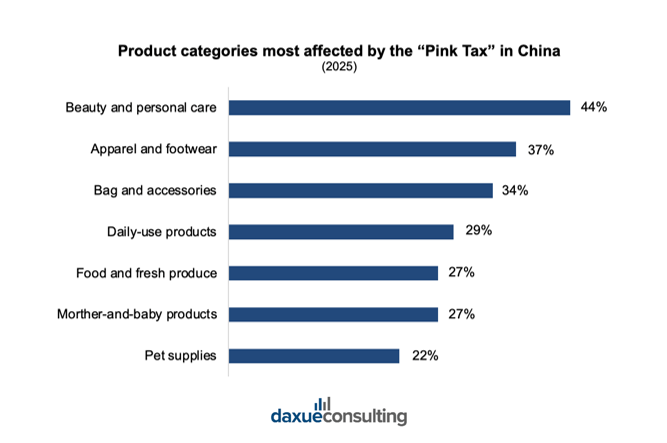
In terms of product categories, beauty and personal care items are most commonly associated with the pink tax (43.96%). This is followed by apparel and footwear (37.12%), bags and accessories (34.35%), daily-use products (28.97%), and mother-and-baby products (27.22%). These discussions suggest that while Women’s Day provides brands with opportunities to connect with female consumers. It also invites greater scrutiny of how empowerment narratives are used in marketing. As awareness of gender equality grows, consumers are paying closer attention to whether brand messaging aligns with pricing practices.
Beyond flowers and discounts: What Women’s Day in China really shows
- Women’s Day in China has evolved from a day focused on gender equality into a broader social and consumer event that reflects women’s growing influence in society and the economy.
- Many women now celebrate the occasion through leisure and self-care activities such as dining, shopping, and entertainment, reflecting the rise of the “she-economy” and stronger female purchasing power.
- The 3.8 Shopping Festival has become an increasingly important retail event. Consumers often purchase products for themselves, particularly in categories related to lifestyle, beauty, and health.
- Brands use Women’s Day campaigns to connect with female audiences through themes of empowerment. Approaches ranging from bold messaging and public discussions to storytelling that highlights everyday resilience.
- At the same time, Women’s Day promotions have also sparked debate around gender-based pricing practices such as the “Pink Tax.” This raises greater awareness about pricing fairness and marketing strategies targeting women.