
In its fiscal year ended 31 March 2026, Bosideng (波司登) posted revenue of about RMB 27.35 billion and net profit of RMB 3.99 billion, its ninth record year in a row (Yicai). A down jacket brand founded in 1976 in Changshu, once sold in market stalls, now has an operating margin of 19.4%, the kind of number that many European fashion houses would like to show.
Bosideng is not alone. Anta passed RMB 80 billion of revenue in 2025, and Songmont (山下有松) sells handbags at an average of more than RMB 2,000. The story of Chinese fashion brands in 2026 is less about cheap alternatives to Western labels, and more about Chinese brands moving into the price ranges that used to belong to foreigners.
Chinese fashion brands in 2026 : key figures
| Brand | Figure | Source |
|---|---|---|
| Bosideng group, FY2025/26 | Revenue about RMB 27.35 billion (+5.6%), net profit RMB 3.99 billion (+13.7%) | Company results via Yicai |
| Anta Sports, 2025 | Revenue RMB 80.22 billion (+13.3%) | Company results via Yicai |
| FILA (Anta group), 2025 | Revenue RMB 28.47 billion (+6.9%) | Company results via Yicai |
| Li Ning, 2025 | Revenue RMB 29.6 billion (+3.2%) | Company results via Yicai |
| Songmont, 2024 | Sales close to RMB 500 million, 21 mainland stores in 2026 | Winshang |
How we got here : guochao, then quality
The first wave of Chinese fashion brands rode guochao (国潮), the “national trend”. Around 2018, Li Ning showed its “China Li Ning” collection at New York Fashion Week, and young consumers started to wear Chinese characters on their sweatshirts with pride. We followed it in our Li Ning case study and in Guochao and cultural confidence in China. Nostalgia marketing in China often resonated with millennials, and Chinese brands used it well.
Guochao was a powerful door opener, but a door opener only. Patriotic feeling makes people try a brand once. It does not make them pay RMB 2,000 for a bag or RMB 3,000 for a jacket. The brands that kept growing after the first wave are those that moved from symbols to product : better materials, better design, better stores. Brands are seeking more creative channels and interesting ways to create an experience and deliver brand value, and the Chinese ones learned faster than many expected.
Three models of rising Chinese fashion brands
1. The old brand that moved up : Bosideng
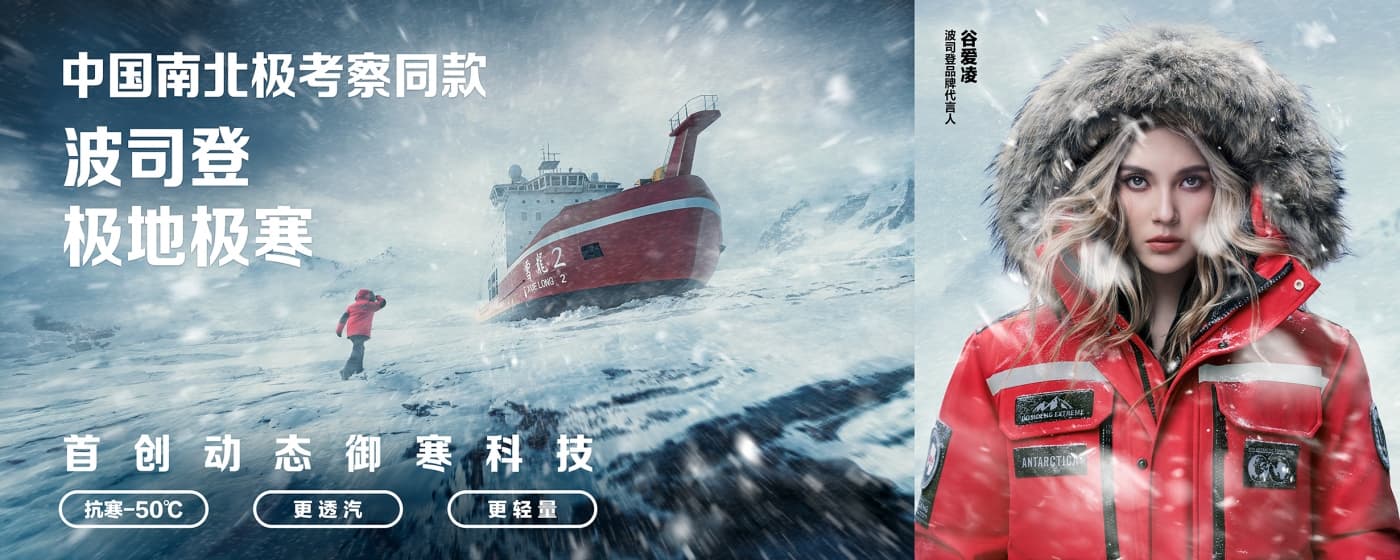
Bosideng is the clearest case of a Chinese brand repositioning itself. Ten years ago it was a mass-market down jacket. Today, the main brand alone brings RMB 19.75 billion, up 6.9%, and inventory turns in 117 days. Its product is sold in 72 countries, and its share price jumped 9% the day after results in June 2026. Its second brand Xuezhongfei (雪中飞) grew 16.6% to RMB 2.57 billion, covering the more affordable segment.
The lesson is that repositioning a Chinese brand upward is possible, but it takes years, and it starts with product. Bosideng invested in technical fabrics, design collaborations and flagship stores before it raised prices. We discussed the wider premium segment in China’s high-end fashion.
2. The group that buys and builds : Anta
Anta took a different road. It built a portfolio. Its 2025 revenue reached RMB 80.22 billion, up 13.3%, and FILA alone brought RMB 28.47 billion. The Anta main brand grew only 3.7% and now weighs less than 45% of group revenue, while Descente and Kolon Sport grew close to 60% from a smaller base (Yicai). In other terms, the largest Chinese sportswear group grows mostly through premium foreign brands that it owns and runs in China.
Li Ning, by comparison, grew 3.2% to RMB 29.6 billion, with profit down 2.6%. Anta is now about 2.7 times its size in revenue (our calculation). Our articles on the athleisure market and sports footwear in China look at this competition in more detail.
Guochao makes people try a Chinese brand once. It does not make them pay RMB 2,000 for a bag.
3. The new designer brands : Songmont and its peers
Songmont was founded in 2013 and grew on Tmall before opening stores. It came close to RMB 500 million of sales in 2024, mostly in mainland China (Winshang). Its main price range is RMB 1,000 to 4,500, and its bestseller went from RMB 880 to more than RMB 1,380. It had 21 stores in mainland China in October 2026, about half of them in Shanghai, Beijing, Shenzhen and Guangzhou, and it has opened in Bangkok, where prices are 20% to 30% higher than at home.
Songmont competes directly with Coach, whose core price range in China is RMB 2,000 to 6,000. Coach is doing well too (Greater China sales up 38% in its last fiscal year, according to Tapestry), which shows that the Chinese “accessible premium” segment is growing for everybody, not only for local brands. Not the most comfortable news for European mid-range labels, indeed, which sit right in between.
Other names follow similar paths in different categories : fragrance brand Guan Xia (观夏), which opened in Hong Kong in September 2025, or Laopu Gold in jewelry, which we covered in Laopu Gold. Such crossovers of different industries are increasingly common in China, with the same consumers buying a Songmont bag, a Guan Xia candle and a Laopu bracelet.
About Daxue Consulting
Daxue Consulting is a market research and strategy consulting firm founded in Beijing in 2012, with offices in Shanghai, Beijing and Hong Kong. We have run more than 800 projects for international brands in China, including brand health tracking, competitor benchmarking against Chinese brands, pricing studies and store audits for fashion and lifestyle brands.
See also our Guochao marketing report and Chinese luxury brands report.
Who buys them
The core buyer of these brands is young and urban, mostly in their mid-20s to late 30s. They are well educated, they travel, and they know Western brands well. Many of them likely grew up with Zara and Uniqlo, moved to Coach or Michael Kors, and now choose a Chinese brand because it feels more personal and less obvious. We describe this generation in Gen Z consumers in China.
One thing is sure, these consumers are not buying Chinese out of duty. They buy Chinese when the product, the design and the store are at least as good as the foreign alternative. The patriotic factor helps at the margin, especially in moments of tension, but it does not replace product.
Tourists are a new signal. At Songmont’s Huaihai Road flagship in Shanghai, overseas visitors reportedly reached half of customers during holiday peaks. Chinese brands are starting to sell to foreigners in China, something that was rare five years ago.
What it means for foreign fashion brands
For foreign brands, the competition has moved. Chinese brands used to compete on price in the mass market. They now compete on design and quality in the RMB 1,000 to 5,000 segment, the comfort zone of many European and American premium labels. At the top, true luxury houses remain far ahead. At the bottom, fast fashion faces Chinese platforms and their low prices, as we described in fast fashion in China.
Unfortunately, some foreign brands still think of Chinese competitors as copycats. That view is ten years old. Brands first need to identify their target consumer needs and understand the competitors, and in China, the competitor is now often a Chinese brand with a better store on the same street.
Daxue Overview
- Chinese fashion brands have moved from cheap alternatives to premium choices.
- Bosideng shows a successful repositioning, with nine record years in a row.
- Anta grows through a portfolio of premium brands it owns in China.
- New designer brands like Songmont compete directly with Coach in the RMB 1,000 to 5,000 range.
Daxue Take
I would tend to think the word guochao is now more confusing than useful. It describes a moment, around 2018 to 2021, when buying Chinese was a statement. In 2026, buying Chinese is a normal choice for young urban consumers, made on product and design. The brands that still rely on patriotic symbols are often the ones that struggle.
What we observe is that the most exposed foreign brands are the mid-range premium labels, not the luxury houses. They have the price of a premium brand, without the heritage of a luxury house or the speed of a Chinese one. That middle is getting very narrow.
Daxue Recommendations
- Benchmark against Chinese brands, not only against your usual Western competitors.
- Test your product and store experience with young Chinese consumers who know both.
- Be clear about what your foreign origin brings : heritage, craft, technology, or nothing anymore.
- Watch the RMB 1,000 to 5,000 segment closely. That is where Chinese brands grow fastest.
- Consider partnerships with Chinese groups, as several foreign brands did with Anta.
FAQ
What are the rising Chinese fashion brands in 2026?
Bosideng in outerwear, Anta and Li Ning in sportswear, and designer brands such as Songmont in bags. Guan Xia and Laopu Gold follow similar paths in fragrance and jewelry.
How big is Bosideng?
Bosideng group revenue was about RMB 27.35 billion in the year to March 2026, with net profit of RMB 3.99 billion.
Is guochao still important in China?
Less than before. Young consumers buy Chinese brands for product and design. Patriotic symbols alone no longer drive premium purchases.
Do Chinese fashion brands compete with foreign brands?
Yes, especially in the RMB 1,000 to 5,000 range. Songmont, for example, competes directly with Coach.
As a conclusion, Chinese fashion brands have grown up. They are no longer the cheap option, they are often the interesting one. What does your brand offer that a good Chinese brand cannot?
About the author
Matthieu David is the founder and CEO of Daxue Consulting. He arrived in China in 2009, founded Daxue in Beijing in 2012 and hosts the China Paradigm podcast. He has advised more than 400 companies on their China market strategy.