
South Korea’s beer market was traditionally dominated by a few large domestic manufacturers. However, as Korean consumers become more adventurous and sophisticated in their tastes, demand for greater variety and creativity in beer flavors has risen significantly. According to Bonafide Research, the market is expected to exceed USD 31.28 billion by 2028.
Read our Korea F&B industry report

Somaek continues to be widely enjoyed more for its experience rather than its taste
“Today I’m going to make you kimchi fried rice and somaek, my favorite drink to have while playing APT. It’s called somaek, a perfect combination of soju and beer. It just makes the beer a little more alcoholic – which we love,” said Rosé of BLACKPINK in an interview with Vogue.
Somaek (소맥), a mix of soju and beer, has long been one of the most popular combinations in Korean drinking culture. According to a survey conducted by Micromill Embrain, 69% of 1,000 office workers aged 19 to 59 said they had mixed beer with other beverages such as soju within the past three months. The main reasons cited were that mixing drinks improved the drinking atmosphere, was recommended by their drink companions, and made the alcohol tastes better.
The MZ Generation, in particular, likes to mix different drinks and find the one that best match their tastes. They like to experiment with different ratios – whether it’s a 1:1 or 1:2 soju-to-beer ratio – as well as varything strengths and flavors to find their best somaek combination. Other reasons for somaek’s popularity include practicality. It offers a stronger effect than beer alone, is cheaper than imported liquor like whiskey, and provides a budget-friendly way to get tipsy quickly.

While foreign brands dominate, foreign brands are catching up
South Korea’s beer market is highly concentrated around a few dominant brands, shaped by strong brand heritage and shifting generational preferences. However, the growing interest in new flavors, craft beer culture, and changing consumer tastes suggests there is room to challenge the current leaders.
Cass was first introduced in 1994, and Hite was introduced in 1993, both of them entering the market around the same time. Traditional brands such as Cass, Hite, and OB continue to be preferred brands with older consumers, while Terra and Kelly have gained greater popularity among younger drinkers. Hite Jinro is trying to catch up by targeting younger people with newer beers like Terra and Kelly.
Cass leads the beer sector with culturally relevant marketing
Cass has ranked first in the beer category for the third consecutive year and has held the No. 1 market share in the domestic beer industry for 13 consecutive years since 2012. According to a Gallup Korea survey conducted from March 22 to April 5, 2024, with 1,176 respondents nationwide, excluding Jeju, Cass was selected as the most preferred beer by more than half of all participants. A total of 52% of respondents chose Cass as their favorite beer brand.
One of the key drivers behind Cass’s success is its aggressive and culturally relevant marketing. Through high-visibility campaigns tied to major events like the Olympics, large-scale pop-up stores, and youth-centered festivals such as CassCool, the brand has effectively positioned itself as the “go-to” beer for energetic and social lifestyles. These experiential marketing tactics not only boost brand recognition but also build emotional engagement that competitors struggle to match.
Other local and foreign brands are challenging Cass’ dominance
Following Cass, Terra (16%), Hite (10%), OB (6%), and Kelly (4%) were selected in that order, with the top five brands accounting for 88% of all responses.
The remaining top 10 brands included Asahi (2.5%), Heineken (1.8%), Kloud (1.7%), Budweiser, and Tsingtao (each around 0.8%). International beer brands are increasingly challenging Cass’s dominance by focusing on premium positioning, leveraging celebrity-driven marketing, and rolling out differentiated product experiences. Many are using Kpop centered campaigns and experiential activations. Examples include Asahi’s collaborations with BLACKPINK and its Super Dry pop-up events. Sapporo also launched Draft Beer 70, pairing the product with premium tasting bars in hotspots like Seongsu-dong to attract younger consumers seeking novelty and quality.

Zero-alcohol drives beverages brands to rethink their product lineups
Korean drinking culture has been shifting toward healthier options, with consumers increasingly avoiding excessive drinking and the discomfort that follows. This shift has increased the rise of nonalcoholic beverages, particularly among people in their 20s and 30s. In Korea, “nonalcoholic” drinks contain less than 1% alcohol, while “alcohol-free” drinks contain less than 0.05%. To align with this change in consumer behavior, beer companies have begun expanding their nonalcoholic product lines and directing their marketing efforts toward this expanding segment.
According to Euromonitor, the domestic nonalcoholic beer market grew by 769% over the past decade, rising from KRW 8.1 billion in 2014 to KRW 70.4 billion in 2024. It is expected to expand by 1,068% by 2027 compared with 2014. With this growth and strong future projections, domestic beverage and liquor companies are actively broadening their nonalcoholic beer portfolios, suggesting continued market expansion driven by both consumer trends and competitive movement within the industry.
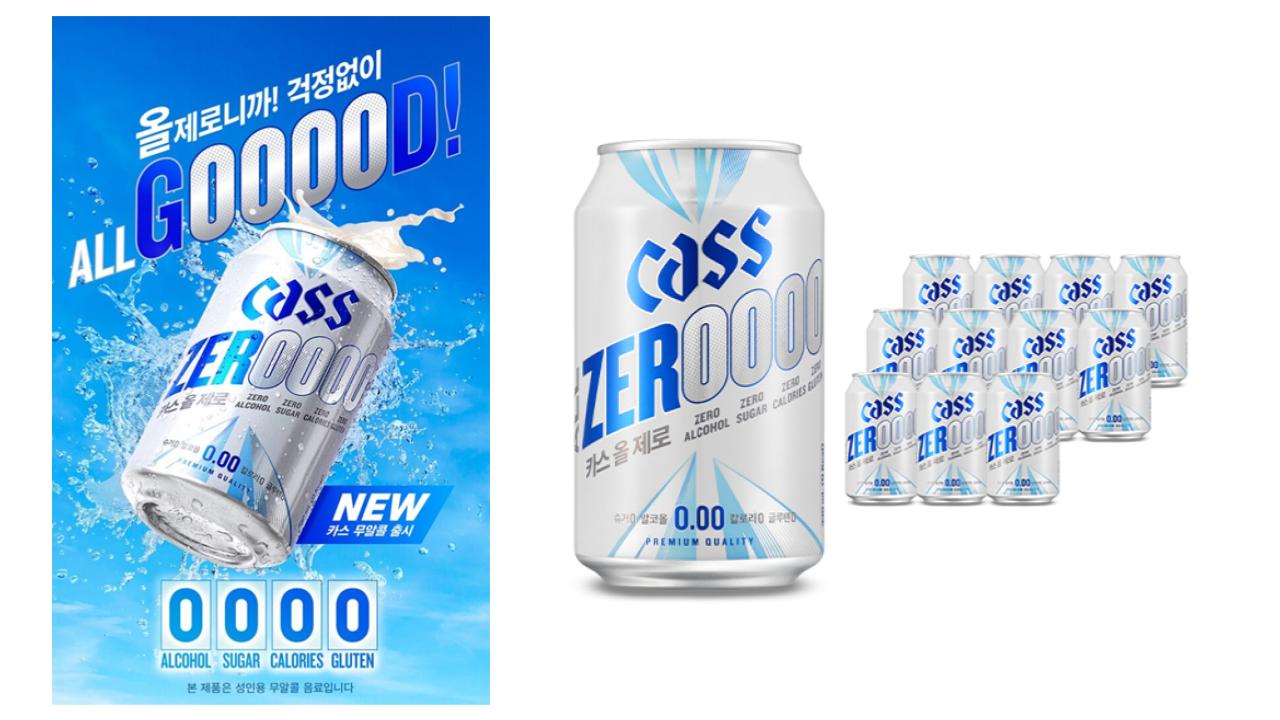
One example is OB Beer, which previously stated it had no intention of entering the nonalcoholic segment but recently reversed its position with the launch of Cass All Zero, a nonalcoholic beer. Cass All Zero follows a “4-No” concept, which is no alcohol, sugar, calories, or gluten, and is sold in 330 ml cans. The company is focusing on online channels for distribution. OB Beer explained, “This is a portfolio expansion to strengthen our category leadership in line with the growth of the nonalcoholic market. Zero will focus on restaurant channels, while All Zero will focus on online sales.”
South Korea’s beer market is evolving into a more diverse, consumer -driven landscape
- South Korea’s beer market is evolving from a few dominating brands to a more diverse and innovative landscape.
- Younger consumers are driving trends such as customized somaek and healthier, low- or no-alcohol options.
- Cass remains the clear market leader, but shifting tastes indicate potential opportunities for new or emerging brands.
- The nonalcoholic beer segment is rapidly expanding due to rising health consciousness.
- Major companies are adjusting their product strategies by launching new products or expanding into nonalcoholic lines to keep pace with changing consumer behavior.