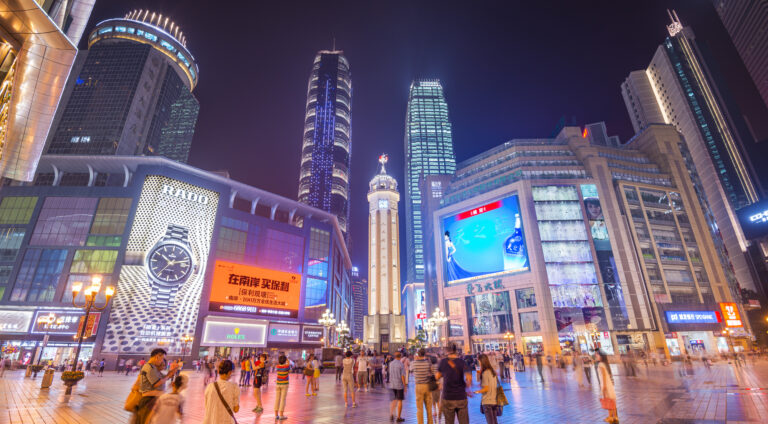


New consumption habits calls for new consumer spaces. Market share of online purchases in China has declined from 27.6% in 2023 to 26.1% in 2025. Malls have always played an important role in China’s consumer markets, and with the quick rise of e-commerce in China, the natural assumption would be that malls are increasingly irrelevant. But this couldn’t be further from the truth. In fact, with e-commerce growth slowing, malls could play an even more important role in China. Therefore, any retail strategy in China must take offline into account. This report highlights some of the future directions of shopping malls in China.
What to know about the evolving role of malls in China
Experiential spending is the next phase of consumerism. The global experiential luxury market grew 5% in 2024, whereas personal luxury spending fell by -1% to -3%. Chinese Gen Z have also expressed a preference for experiences over hard products as gifts. This consumer shift gives malls an opportunity to rise as cultural institutions in China.
China’s high-tier city malls are tourism assets, not just retail assets. Out-of-town spend is the only structurally growing demand pool: Shanghai’s overseas tourist spending +211.6% YoY during May Day 2025; China’s lower-tier city tourism flow follows the same logic. Therefore, a tier 1-2-3 mall in 2026 competes for visits, not for local wallets. The asset class has been redefined.
Malls can integrate the outdoors into urban life. China has around 400 million urban outdoor sports fans, and the sports market is one of the consumer segments with undeniable rapid growth, with sports equipment sales growing 15.7% year over year in 2025. This causes malls to question their unique attraction point, if urban consumers are increasingly seeking the outdoors, how can malls bring that to consumers?